South Korea Blocks KuCoin, BitMart, and MEXC
The FIU is expanding its crackdown on unregistered exchanges from app blocks to web access. South Korea is tightening oversight of foreign platforms and AML rules even further.
Key Takeaways
- South Korea is blocking the websites of 27 unregistered crypto exchanges, including KuCoin, BitMart, and MEXC.
- The FIU is expanding its approach from mobile apps to web access and can step in directly without a court ruling.
- Only registered providers are allowed to operate; South Korean investors moved about $110 billion in crypto abroad in 2025.
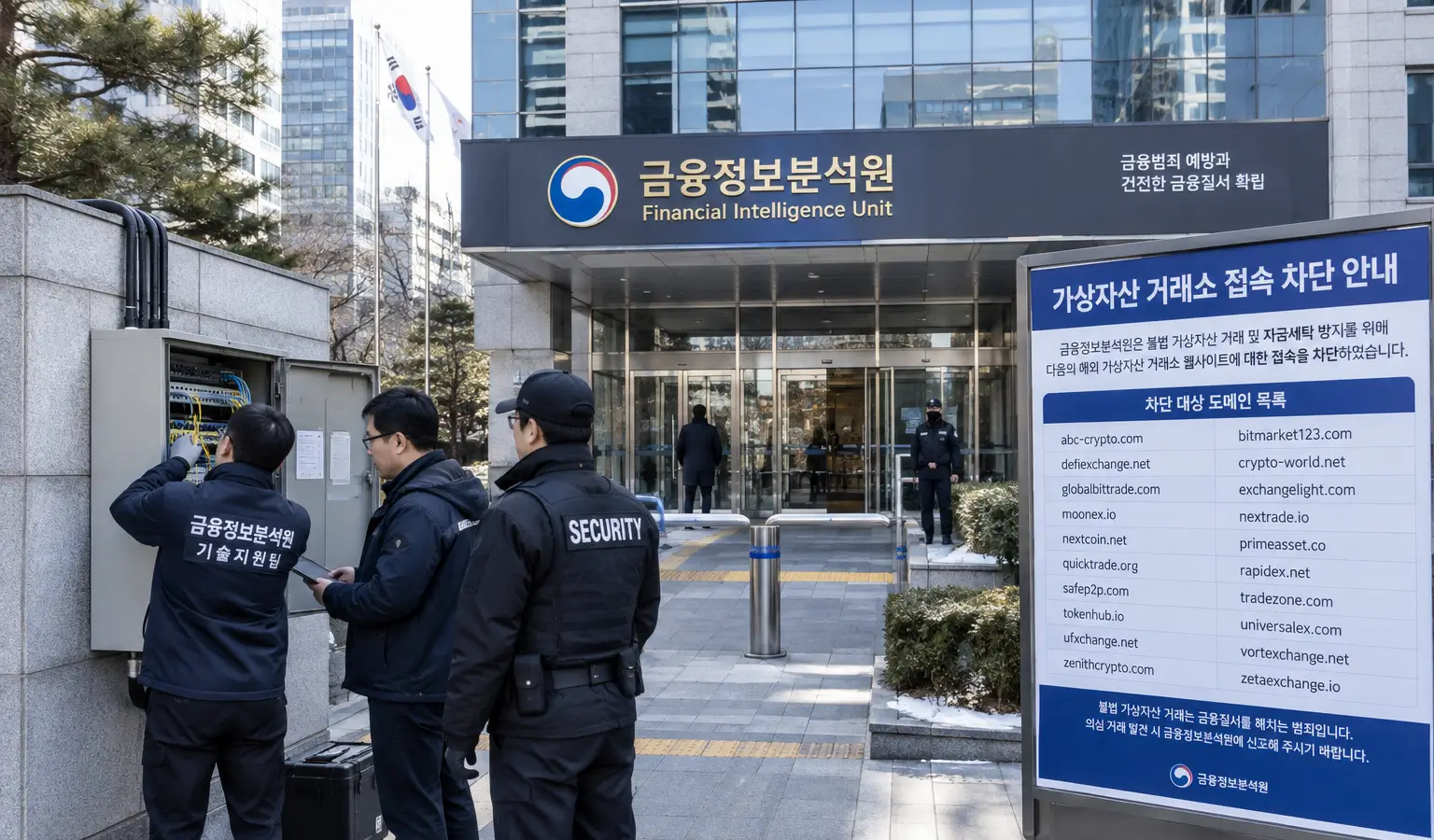
South Korea is blocking the websites of 27 unregistered crypto exchanges, including KuCoin, BitMart, and MEXC. That expands the country’s approach from mobile apps to web access in a new move against foreign platforms that serve South Korean customers without registration.
New Block on Websites
The Financial Intelligence Unit, or FIU, said Tuesday that the Korea Communications Standards Commission approved the measure after reviews on October 6 and 7. Websites operated from abroad will be blocked. Platforms that are active in South Korea without registration must stop offering their services.
The regulator wants to prevent users from still reaching unregistered providers through another route. Earlier, the mobile apps of these exchanges were already restricted on Google and Apple. According to the FIU, action can now be taken as soon as unregistered activity is detected, without first waiting for a court ruling.
Stricter Oversight of Exchanges
Anyone who wants to operate legally in South Korea must register with the FIU and meet requirements for security and anti-money laundering, or AML. The regulator did not say how long the blocks will last and also gave no deadline for the exchanges to register later.
KuCoin said in a response that the company follows the applicable laws and regulations in each jurisdiction and will keep strengthening its compliance framework. The platform added that user assets remain safe and protected. BitMart, Phemex, and MEXC did not immediately respond to a request for comment.
The measure fits into a broader South Korean push for tighter crypto oversight. The Financial Services Commission and the Financial Supervisory Service oversee virtual asset providers, while the Virtual Asset User Protection Act has required rules on separating customer funds, cold storage, and protection against market abuse since July 2024. The proposed Digital Asset Basic Act is supposed to add a broader legal layer on top of that later, but it is not fully in force yet.
For European crypto readers, this shows how quickly a regulator can limit access to a market when registration is missing. The FIU warned that traders on unauthorized platforms may have trouble getting their money back and is working with industry group DAXA to help customers withdraw their funds where blocks cause problems. Regulators are also cracking down hard in other markets: India recently warned 15 offshore exchanges to get their AML registration in order.
The regulator also said it will request further blocks against websites that reappear under a different address. According to the FIU, only 28 virtual asset service providers are currently registered. At the same time, the regulator estimates that South Korean investors moved about $110 billion (€98.4 billion) in crypto abroad in 2025, a sign that stricter rules have already been affecting behavior around local exchanges.