Sui Launches Hashi With $500 Million for Bitcoin Loans
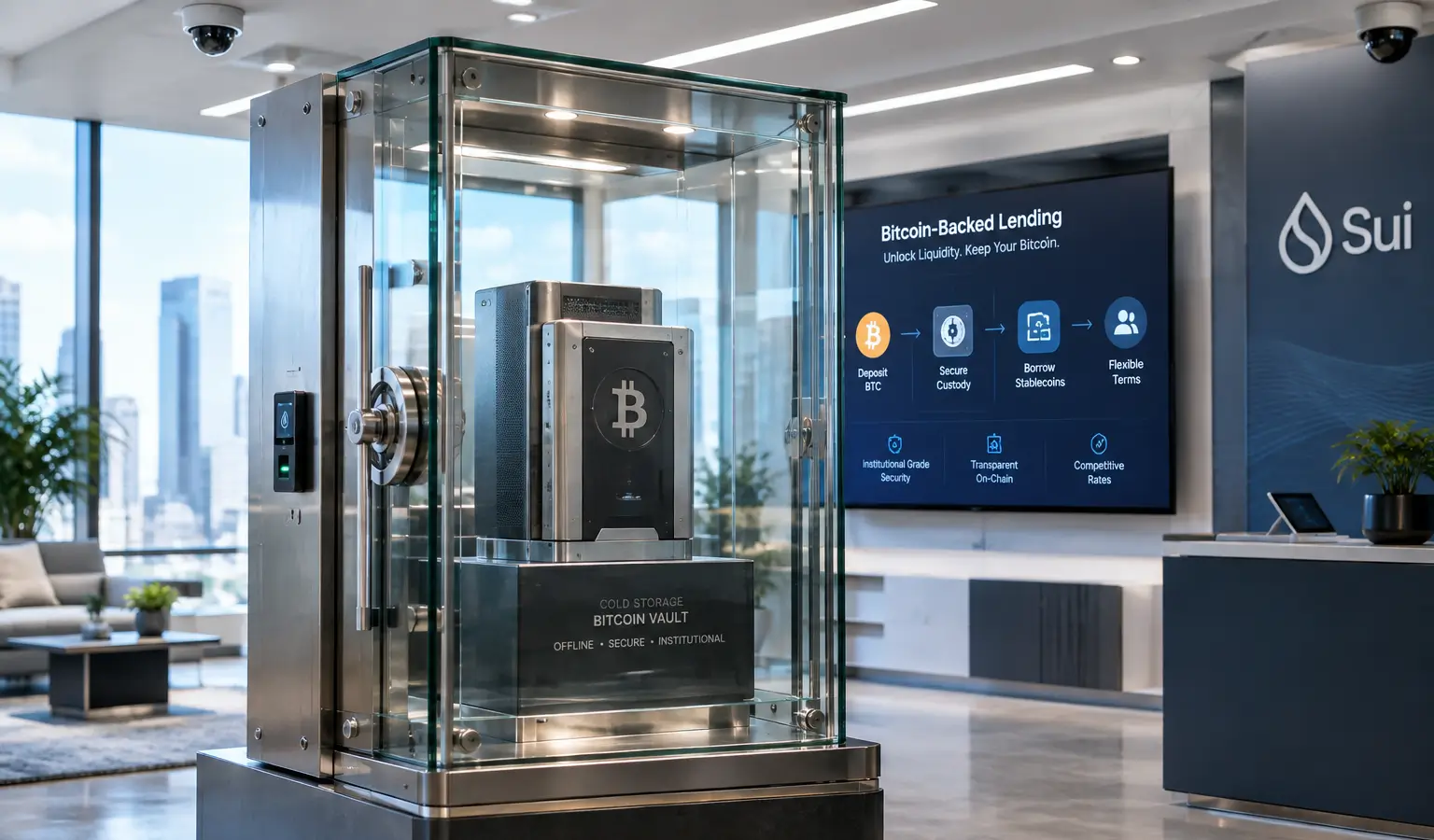
Hashi connects Bitcoin to lending on Sui, with hBTC as a backed voucher and extra focus on security and compliance for institutional players.
Key Takeaways
- Sui is launching Hashi, a protocol for institutional Bitcoin lending that keeps BTC as collateral on the Bitcoin network.
- The project has $500 million in capital commitments from more than 20 parties and will go live on mainnet in phases later this month.
- Users receive hBTC on Sui, while security and compliance have been reviewed by Certora and CommonPrefix.
Bitcoin is about to get a new lending model aimed specifically at institutional players. Layer-1 blockchain Sui is launching Hashi, a protocol that lets holders use Bitcoin as collateral without moving their BTC off the Bitcoin network. The mainnet rollout will happen in phases later this month, while the project has already raised $500 million in capital commitments.
Capital Is Meant to Fill Liquidity
Those commitments are not direct deposits yet, but they are meant to make sure the system does not launch empty. According to Sui, the money comes from more than 20 parties in the industry. That means Hashi can start with deep liquidity right away instead of having to build up users and capital first.
The timing fits into a broader trend around Bitcoin-backed lending. More and more companies and institutions want to use their BTC as collateral for loans without selling the coin itself. The market has long been talking about a much bigger role for this kind of financing, and some estimates say the market could eventually grow toward $1 trillion (€0.9 trillion). Compound has also been focusing for some time on a more institutional form of DeFi lending, with an emphasis on credit infrastructure and business users.
How Hashi Works
Hashi lets users lock up their BTC in a vault address on the Bitcoin blockchain. That address is secured with a 2-of-2 multisig, which requires cryptographic approval from both Hashi and its validators. There is also a separate guardian layer that is supposed to monitor and slow down suspicious collateral movements.
On Sui, hBTC is then minted, a voucher token that is directly backed by that Bitcoin deposit. With that hBTC, apps on Sui can borrow, lend, and set up credit markets. If a user wants to exit, the hBTC on Sui is burned and the original Bitcoin is released again on the Bitcoin network.
Why This Matters
For European crypto readers, the big takeaway is that products like this are increasingly tying Bitcoin to real financing instead of just trading. That could matter for parties that hold BTC on their balance sheets and are looking for ways to unlock liquidity without selling right away. At the same time, it shows that DeFi protocols are increasingly focusing on institutional requirements around transparency and control.
Sui says Hashi has also been reviewed for security and compliance. Certora formally verified the smart contracts, and CommonPrefix reviewed the MPC protocol's cryptography. That fits the project's institutional angle, which Mysten Labs says was built for parties that want to use Bitcoin without giving up the usual security and custody rules.