Tron Processes Billions in Stablecoins Per Week
According to Canary Capital, Tron processes up to $190 billion in stablecoin transfers each week, mostly through USDT. That is turning the network into an important digital dollar layer, even under tighter regulatory pressure in Europe.
Key Takeaways
- According to analysis, Tron processes about $150 billion to $190 billion in stablecoin transfers each week, mostly driven by USDT.
- The network has grown from a content project into a fast, low-cost payment rail with nearly 100 million transactions per week and low fees.
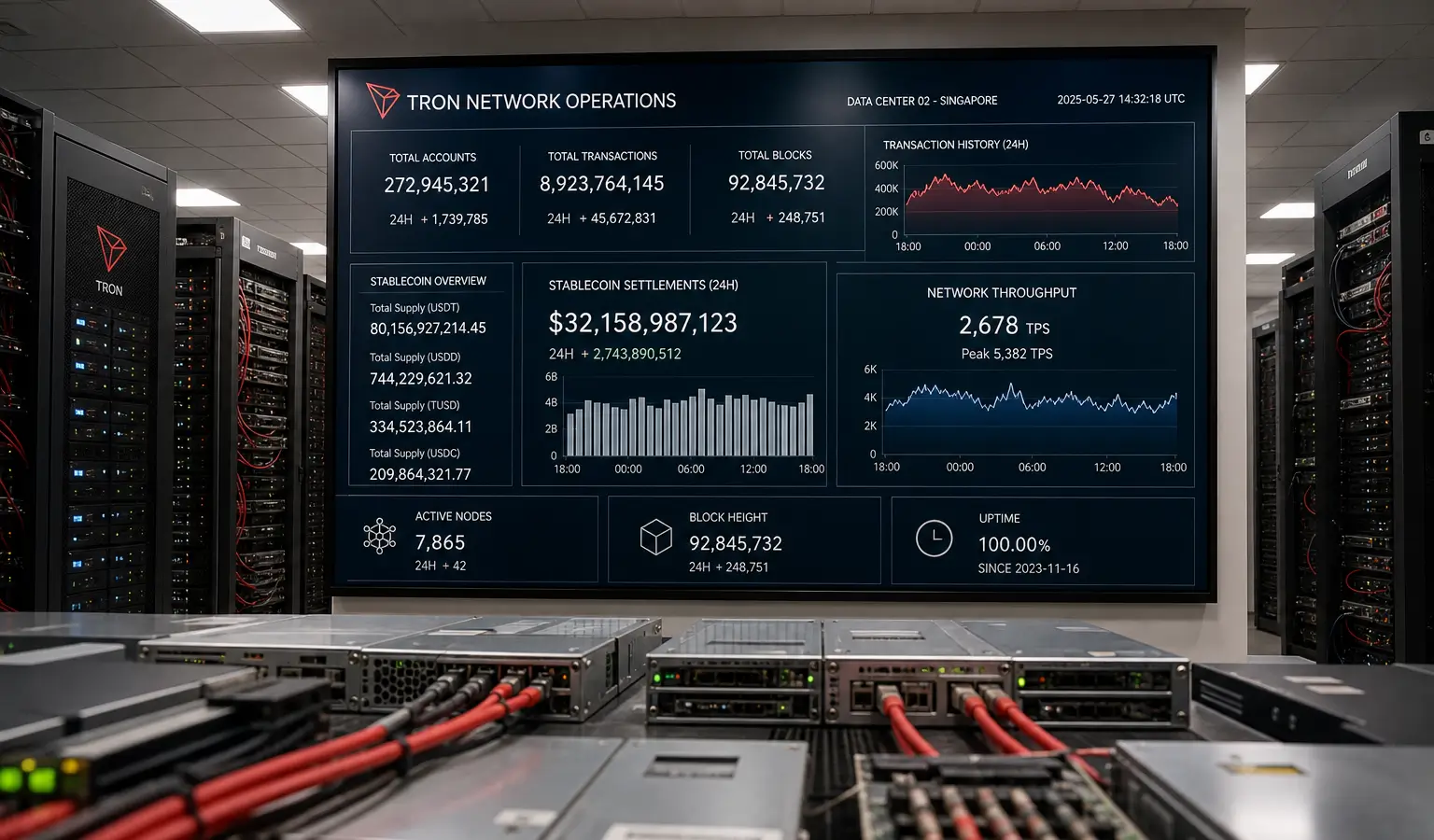
- In Q2 2026, Tron processed $2.08 trillion in stablecoin settlement volume, while the stablecoin supply rose to about $89 billion.
Tron has become one of the busiest blockchains in the crypto market, mainly because of its role as a settlement layer for stablecoins. According to Josh Olszewicz's analysis at Canary Capital, the network now processes roughly $150 billion (€131 billion) to $190 billion (€167 billion) in stablecoin transfers per week, with USDT as the main driver.
From Content Project to Payment Rail
Tron started in 2018 as an ERC-20 token on Ethereum and later moved to its own mainchain. The project was originally built around content distribution, but its practical role quickly shifted to fast and cheap payment settlement. That combination is exactly what makes Tron attractive in markets where low costs and fast settlement matter more than broad smart contract use cases.
The network uses delegated proof-of-stake. TRX holders stake their tokens and choose 27 Super Representatives that produce blocks and keep the network running. That model keeps processing fast and computing overhead low, although it also means power is concentrated in a limited group of validators.
Stablecoins Dominate Usage
The biggest shift in Tron's story is that stablecoins have turned the network into digital dollar infrastructure. The analysis points out that a large share of global USDT circulation now sits on Tron. That makes the network less dependent on DeFi hype or consumer apps and more tied to everyday crypto payments.
That role also shows up in usage. Weekly transactions on Tron have climbed to nearly 100 million, according to the analysis, while the average onchain fee is around seven cents, a multi-year low. In Q2 2026, Tron also processed $2.08 trillion (€1.8 trillion) in stablecoin settlement volume, with 1.1 billion transactions in that quarter. The stablecoin supply on the network also kept growing, with about $89 billion (€78 billion) in stablecoins, of which USDT makes up about 98.5%.
Why This Matters for Europe
For European crypto watchers, Tron matters because it shows how big the demand for cheap stablecoin settlement has become. That is especially interesting now that regulators are taking a closer look at stablecoin issuers and the rules around digital dollars. If those frameworks get tightened further, it could affect which stablecoins and issuers stay active on networks like Tron.
TRX itself has a direct link to that usage. Users can burn TRX or stake tokens per transaction to get network resources. That means the network's economic value depends not only on activity, but also on whether that activity keeps translating into staking, burning, and governance. Olszewicz does point out, though, that broader market conditions still play a big role in token performance.