Upbit and Visa Test Stablecoins and AI Payments
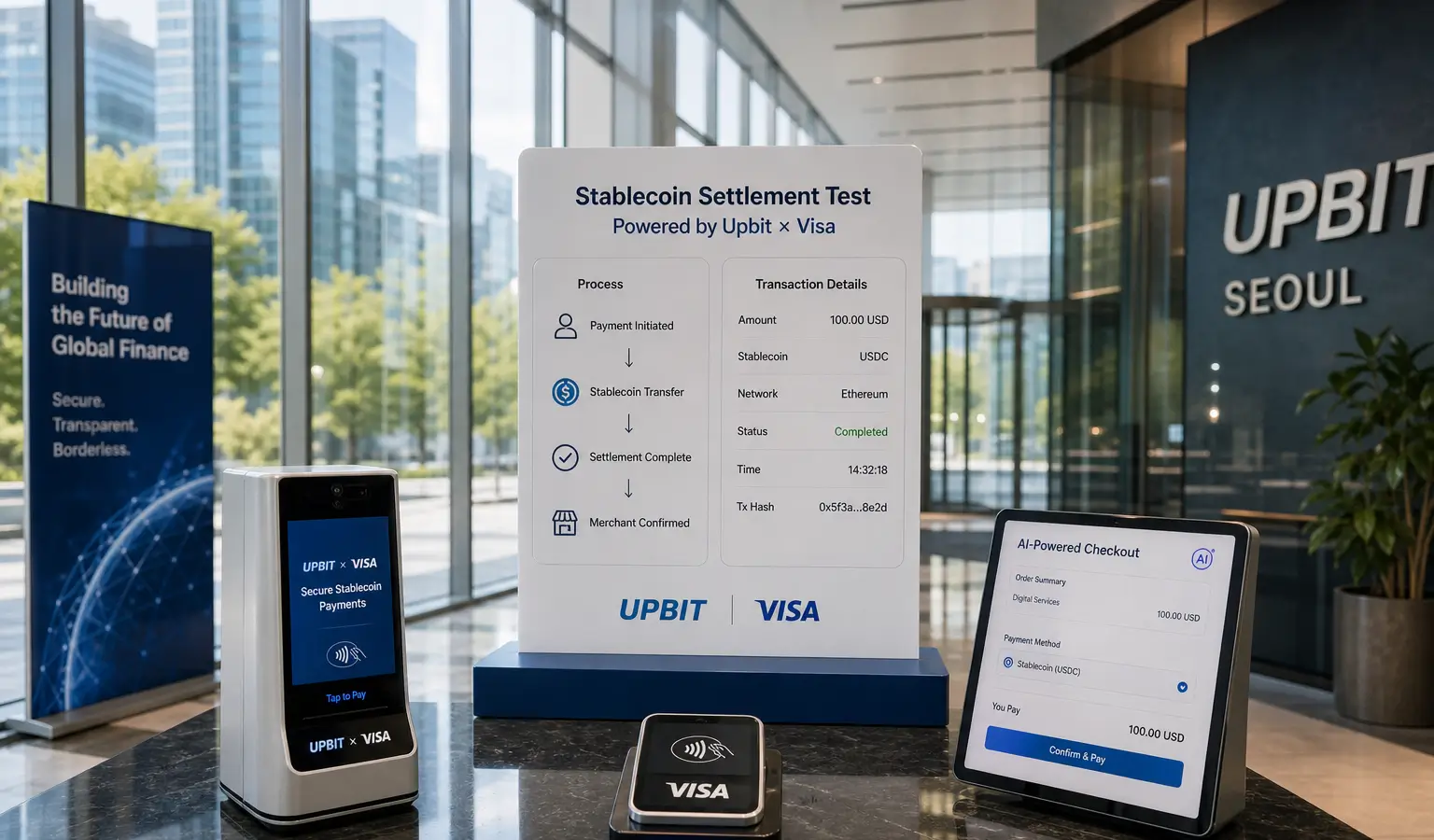
Visa and Upbit are exploring stablecoin settlement and AI payments in South Korea, where new rules and bank partners are speeding up the digital asset market.
Key Takeaways
- Visa is working with Upbit and Dunamu on stablecoin payments and AI-driven settlement in South Korea.
- The companies are also looking into new payment and settlement models around OUSD and agentic commerce.
- South Korea is tightening stablecoin rules while major players like Visa, Shinhan, and Samsung expand their crypto activities.
Visa is teaming up with Upbit, South Korea's largest crypto exchange, on stablecoin payments and AI-driven settlement. The deal comes shortly after a similar agreement with Shinhan Financial Group and shows that Visa is expanding its digital asset services further in one of Asia's biggest crypto markets.
New Step for Upbit
Dunamu, the operator behind Upbit, wants to develop financial payment services with Visa based on stablecoins and artificial intelligence. According to the Korea Herald, the two sides will also look at new payment and settlement models around OUSD, an open-standard stablecoin.
The partnership goes beyond payments alone. Visa and Dunamu also want to explore AI-driven payment services and infrastructure for agentic commerce, where AI agents search for products or services and complete purchases on behalf of users. That fits into a broader shift where crypto, stablecoins, and automation are increasingly being mentioned together in payment use cases.
South Korea Keeps Moving
The announcement comes at a time when South Korea is working hard on new stablecoin infrastructure. The country has at least 16 million crypto users according to CoinGecko, which makes it especially interesting for international payment companies and crypto firms.
Visa is not alone here. Earlier this week, the company already announced a similar deal on settlement infrastructure with Shinhan Financial Group. In May, Samsung bought a 4% stake in Dunamu, while Mirae Asset outlined its crypto ambitions for Digital X on Thursday after acquiring that exchange in July. Visa has also already leaned into this combination of payments and AI before, including in its broader stablecoin and AI strategy.
The rules are moving too. The Digital Asset Basic Act, introduced in early 2026, requires stablecoin issuers to hold at least 5 billion won in capital reserves. The Financial Services Commission has also proposed that reserves be held entirely in bank deposits or government bonds and kept 100% with licensed custodians. That makes it clear that stablecoins in South Korea are not just a business topic, but also a policy issue.
Why This Matters
For European crypto readers, this is especially interesting because it shows how stablecoins are increasingly being built into existing payment networks. If major players like Visa, banks, and crypto exchanges start testing the same infrastructure, the line between traditional payments and crypto could blur even more. It also shows that AI payments are no longer just a concept, but are already becoming part of real partnerships.