U.S. and U.K. Move to Align Rules for Tokenized Finance
Treasury and HM Treasury want tokenized securities and cross-border stablecoins to line up more closely, with the SEC, CFTC, FCA, and Bank of England involved.
Key Takeaways
- The United States and the United Kingdom want to bring the rules for tokenized financial products into closer alignment.
- The recommendations center on tokenized securities, cross-border stablecoins, and coordination between regulators.
- Traditional markets are part of the plan too, with focus on capital raising, derivatives oversight, and market data.
The United States and the United Kingdom have unveiled a plan aimed at making tokenized financial products easier to move between the two markets. It is a clear sign that Washington and London are pushing for closer alignment on blockchain-based finance, especially as tokenized assets and stablecoins become more embedded in the wider capital markets conversation.
Less Friction Between Markets
The recommendations were released Tuesday by the U.S. Department of the Treasury and HM Treasury through the Transatlantic Taskforce for Markets of the Future. Scott Bessent and Rachel Reeves launched the task force in September 2025 to strengthen cooperation between the two financial hubs. Earlier this year, in January, the group also held a joint industry session in London focused on deeper ties between the U.K. and U.S. capital markets, along with coordination on digital assets.
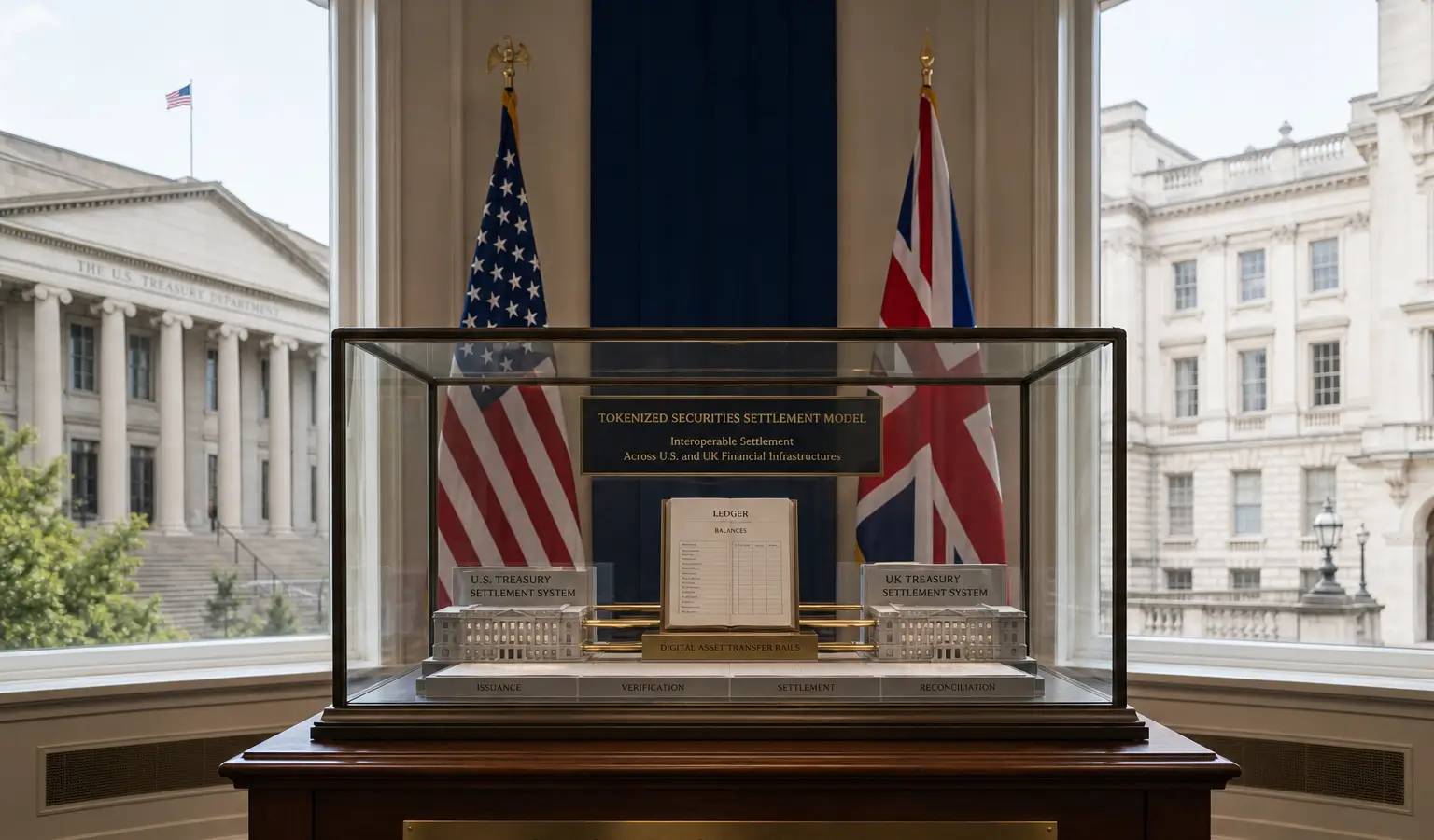
The report lays out ten recommendations covering both digital assets and traditional markets. On the crypto side, the two countries want to create an industry-led working group for cross-border tokenization projects, bring the rules for tokenized securities closer together, and support the growth of cross-border stablecoins. They also want to revisit international banking standards for cryptoassets and build policy frameworks where stablecoins, tokenized bank deposits, and other forms of digital money can operate alongside one another.
Stablecoins Get More Room
One of the clearest signals in the joint statement is direct support for cross-border stablecoin activity. The text says the private sector will be central to building digital money and payment systems. Rather than introducing new rules, the recommendations point regulators toward areas where they should coordinate more closely.
That group includes the SEC, CFTC, FCA, and the Bank of England. Together, they will examine how tokenized securities could be settled across borders and whether stablecoins or tokenized money market funds can serve as collateral in financial markets. For European crypto readers, the main takeaway is that tokenization is quickly moving from a niche idea to a topic for top regulators, with potential consequences for how digital assets fit into existing market structures. In the U.S., that discussion has already been underway for some time, including around tokenized stocks and the question of which rights and settlement rules should apply.
Traditional Finance Is Moving Along Too
The roadmap is not just about crypto. The SEC and the FCA will also explore ways to make cross-border capital raising smoother. In addition, the regulators plan to work together on derivatives oversight, market data transparency, and international accounting standards.
Treasury Secretary Scott Bessent said the recommendations reflect the strength of the U.S. and U.K. financial markets, as well as their shared focus on economic growth, innovation, and competition. In other words, the plan is less about creating a new law and more about bringing the rules for tokenized finance and traditional markets into closer alignment. In the U.K., that also fits with the regulators' recent direction, which was already visible in the easing of stablecoin rules and broader crypto licensing rules.