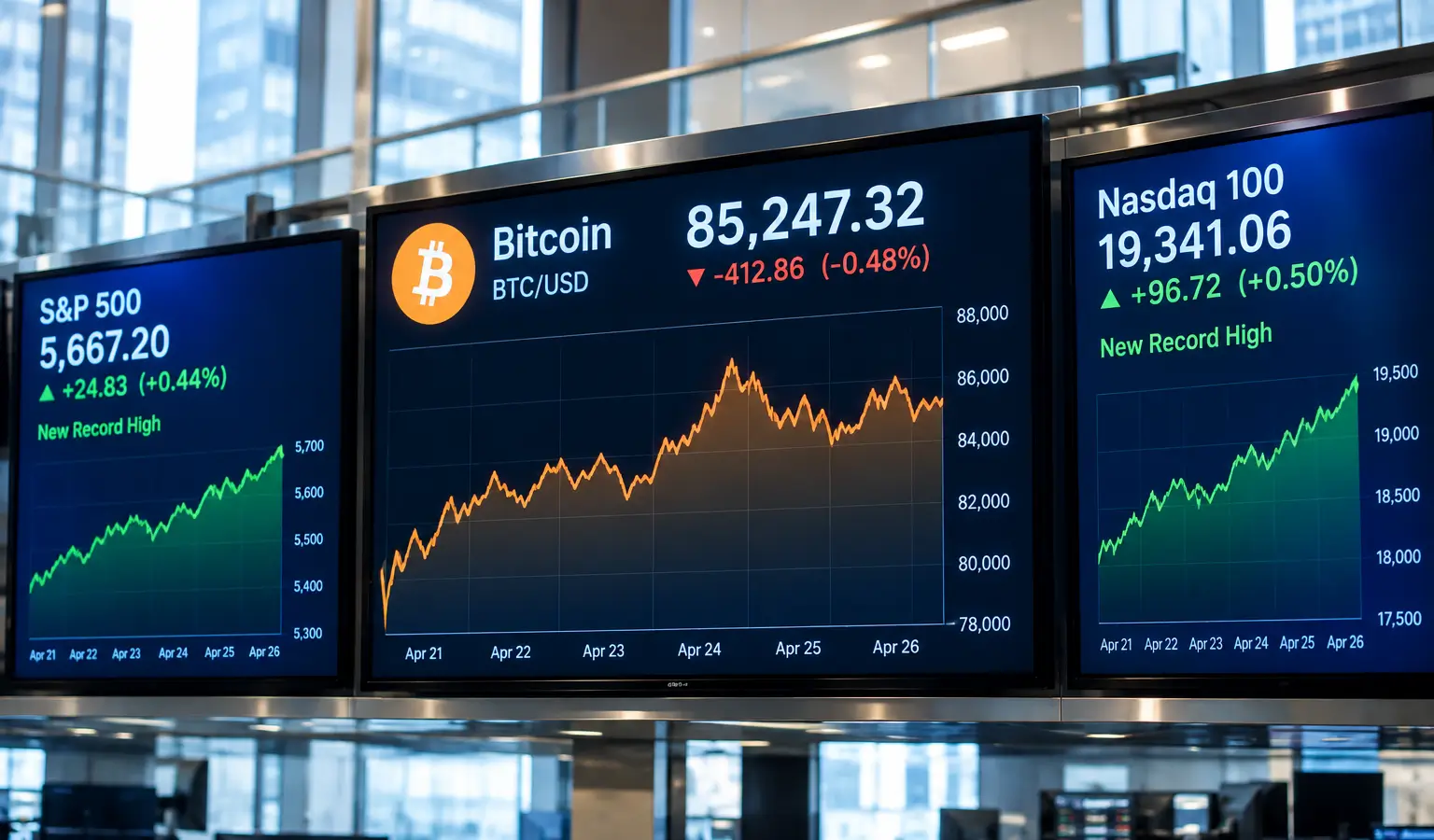
U.S. Moves More Than $100 Million in Bitcoin and BNB
The coins came from cases tied to Bitfinex, Potapenko/Turogin, and Alameda Research and were sent to Coinbase Prime. That is fueling speculation, although it does not appear to be a direct sale.
Key Takeaways
- U.S. government wallets moved more than $100 million in Bitcoin and BNB on Tuesday.
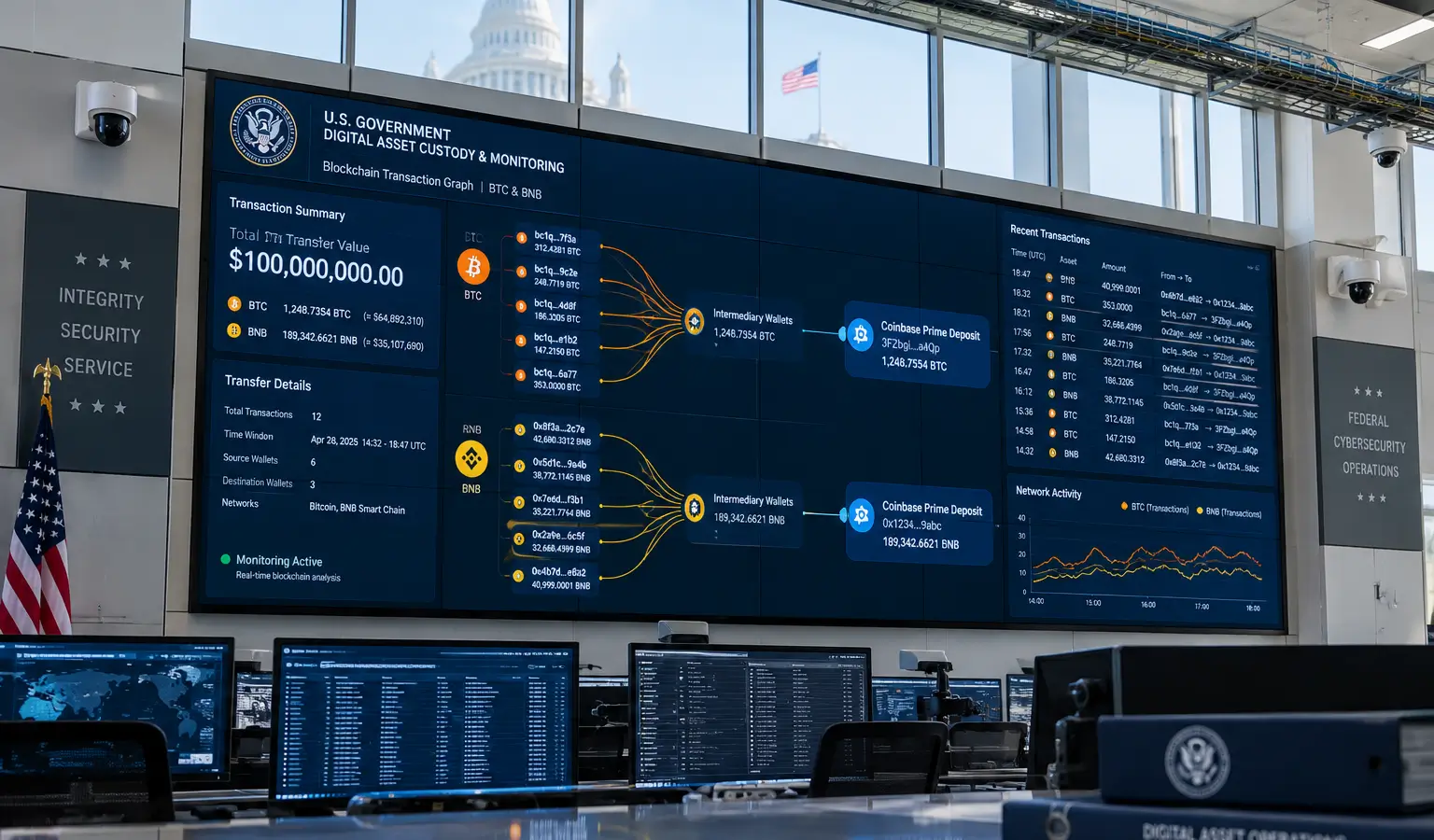
- The Bitcoin was routed through two addresses and then sent to Coinbase Prime deposit addresses.
- The transactions appear to be internal transfers of seized crypto, not a direct sale.
Wallets that Arkham says are linked to the U.S. government moved more than $100 million (€88.7 million) in crypto on Tuesday. The transfers involved Bitcoin and BNB, but they do not appear to point to a direct sale. Big transfers like this often quickly spark speculation in the crypto market.
Bitcoin Went to Coinbase Prime
The government sent 833.599 BTC, worth about $71.6 million (€63.5 million) at the time, to two addresses that Arkham does not label. Within hours, both addresses forwarded the coins to addresses that Arkham identifies as Coinbase Prime deposit addresses.
According to the data, these BTC came from a wallet that Arkham links to Potapenko/Turogin forfeited funds, worth 568.7 BTC, and from coins confiscated in the Bitfinex hack case, worth 264.9 BTC. The move fits into a broader stockpile of seized crypto that the U.S. government has held for years.
BNB From the Alameda Case
In addition to Bitcoin, a government-labeled wallet moved about 40.285 BNB, worth $31.63 million (€28.1 million), to another unlabeled address. That address then sent the full amount on to a second address. The BNB came from assets seized from Alameda Research.
According to the data provided, the U.S. government still holds about $27.5 billion (€24.4 billion) in crypto, all of it from enforcement cases. So far, no taxpayer money has been used to make new purchases.
Why This Matters for Europe
For European crypto watchers, this is mainly relevant because large transfers from government wallets are often closely watched as a signal for possible selling pressure or, on the other hand, the management of confiscated assets. In this case, the context suggests it is a transfer within the government sphere, not a direct dump. That lines up with the broader policy around the Strategic Bitcoin Reserve, where seized Bitcoin is treated as a reserve asset. The debate over a permanent government bitcoin stockpile also shows how sensitive these kinds of moves are in Washington.