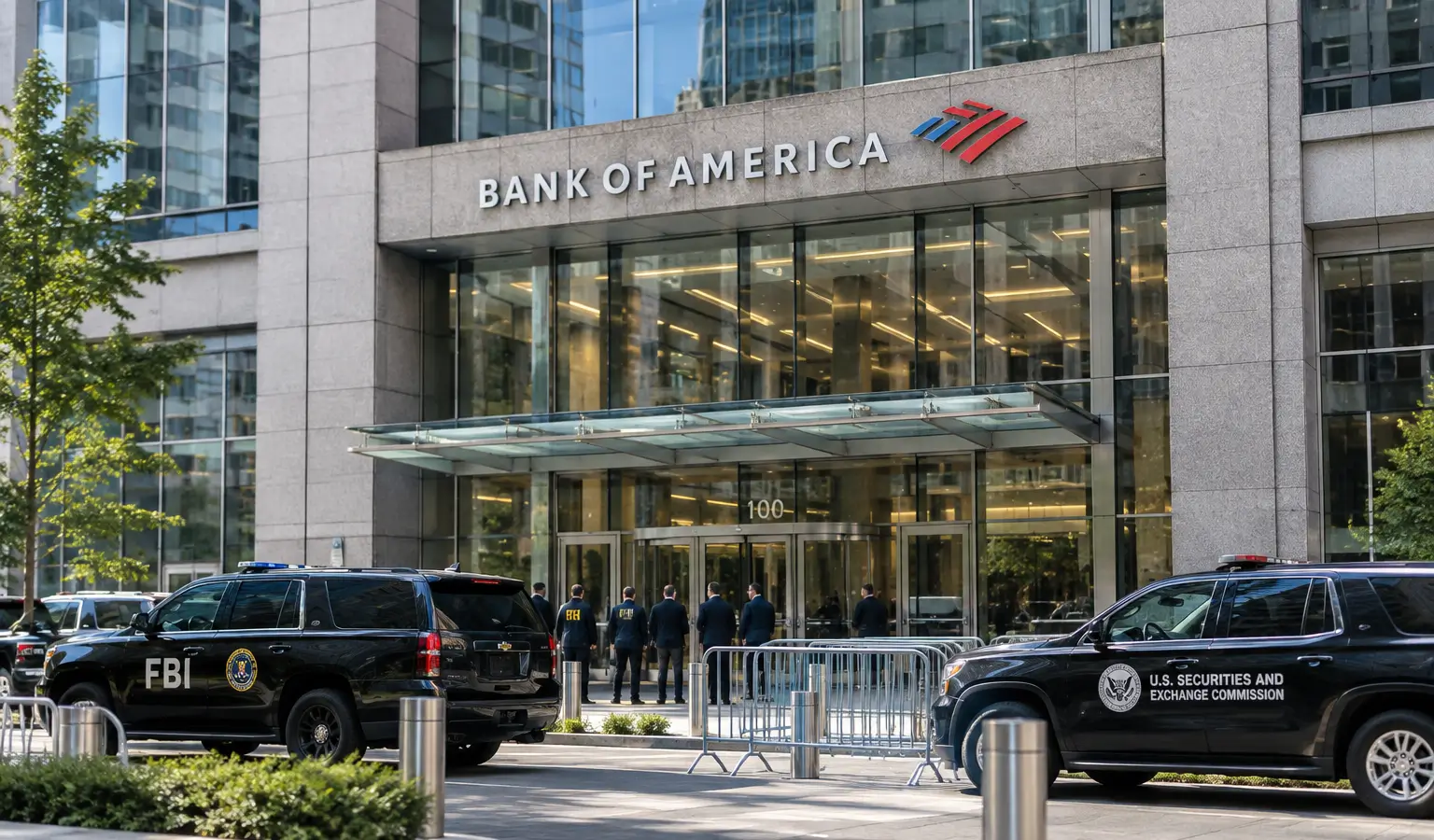
Wall Street Builds Its Own Crypto Rules as Congress Stalls
With the CLARITY Act stuck, U.S. firms are setting their own standards for tokenized assets, custody, and onchain trading. The SEC is offering temporary room, but without a permanent federal framework, everything remains conditional for now.

Key Takeaways
- Wall Street is not waiting for broad federal crypto rules and is building its own compliance, custody, and infrastructure for tokenized assets.
- The Senate did not move the CLARITY Act forward, after which the SEC introduced a temporary innovation exemption for tokenized U.S. stocks onchain.
- Companies are standardizing their processes, while separate roles and ongoing checks are becoming more important because of different federal and state rules.
Wall Street is no longer waiting for a crypto framework from Washington. Now that Congress has not put broad federal rules in place, financial firms are building their own compliance, custody, and infrastructure for tokenized assets and onchain trading.
SEC Fills the Gap
The reason is clear. When the Senate did not move the CLARITY Act forward on September 15, the U.S. was once again left without a complete federal framework for digital assets. Two days later, the SEC came out with a so-called innovation exemption, which allows certain trading platforms to trade tokenized U.S. stocks onchain.
That move gives the sector more room for now, but it is not a law. The exemption can be changed or withdrawn, and that is exactly why many firms are staying cautious. For financial firms, the question now is a practical one: what do you build when the rules are still not set?
Firms Keep Building
According to the newsletter, that theme came up during an event by Crain's New York Business, where tokenization, compliance, and cybersecurity were front and center. The message from several speakers was that companies are not waiting for a political deal, but are standardizing their own way of working.
At OKX, Adam Schumann pointed to the legal problem. U.S. firms have to deal at the same time with federal laws, federal regulators, and state-by-state rules. According to him, you can aim for more consistency, but not full uniformity. Aravind Raju of Uphold said compliance is now one of the company's biggest departments, precisely because each state has its own requirements.
The technical side is changing too. Instead of one closed system for trading, custody, and clearing, many institutions are now choosing separate roles. Traditional custodians hold the digital assets, while other parties carry out the transactions. At the same time, oversight is shifting toward ongoing checks instead of only periodic reviews.
Why This Matters
For European crypto readers, this shows how quickly the market adapts when legislation lags behind. The SEC exemption is temporary and applies under conditions, while the sector is meanwhile building private networks that do not automatically talk to each other. That makes interoperability, custody, and transparency more important than just the question of who makes the final call in Washington.
That development could also matter for parties that want to offer or use tokenized products. If ownership, redemption rights, and verification are not clear, due diligence stays difficult, especially when rules differ by country or by platform. That issue has also been around in the U.S. for some time: after the failure of the Clarity Act, the SEC and CFTC are increasingly stepping forward as the parties that have to guide the market for now.