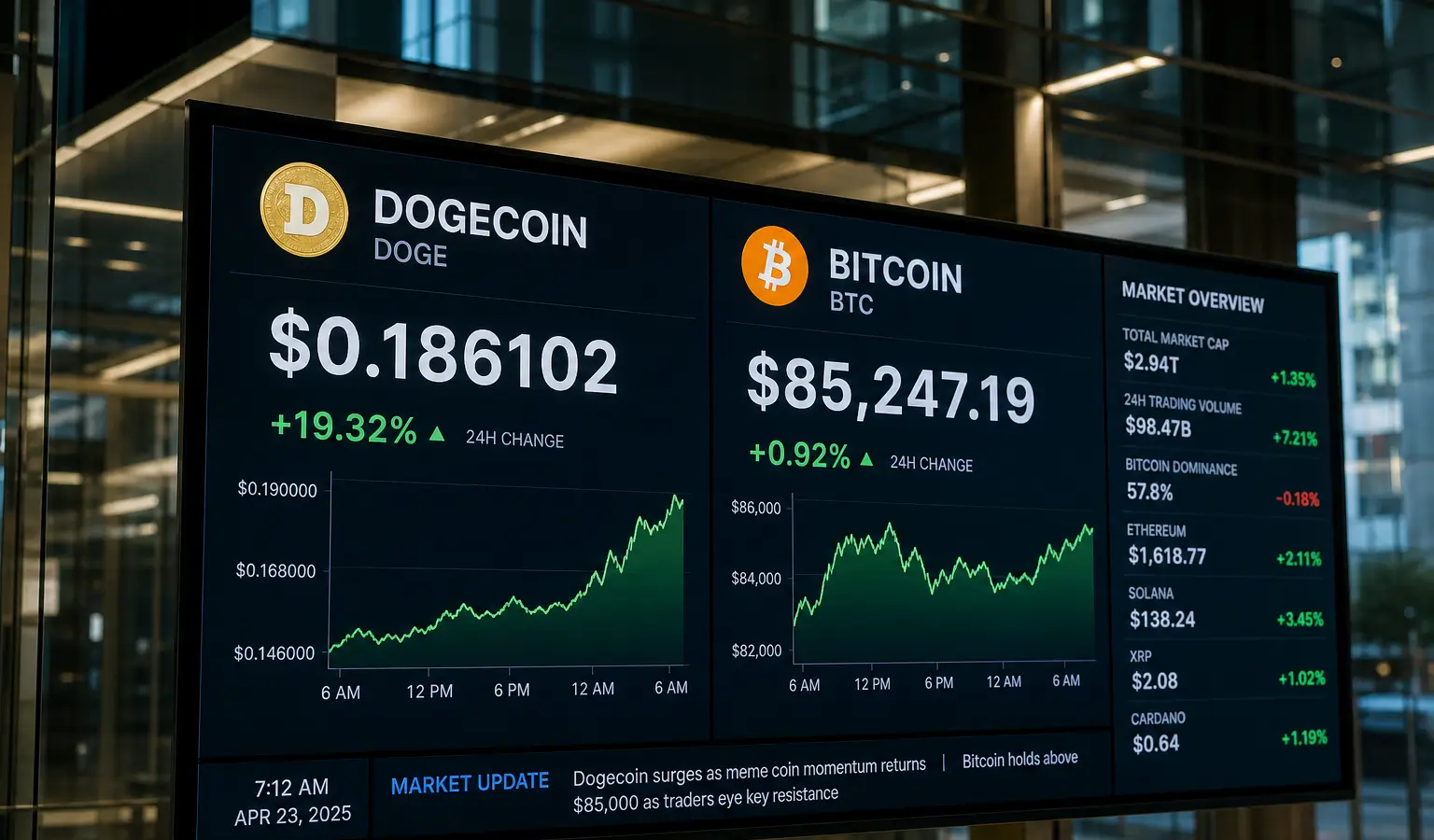
Dogecoin (DOGE)
Dogecoin (DOGE) is a cryptocurrency you can use to send value directly to someone else. The network doesn’t need a central bank or payment company to process the payment.
What is Dogecoin?
DOGE is the native coin of the Dogecoin network. The network has its own blockchain: a public record where payments are stored.
Dogecoin started in 2013 as a parody of the Doge meme featuring a Shiba Inu dog. It’s often called the first memecoin. A memecoin is a cryptocurrency closely tied to an internet meme.
The network uses Proof of Work. Miners use computing power to add transactions to new blocks. In return, they receive new DOGE and transaction fees. Dogecoin has no maximum supply, so new DOGE keeps being added.
An example of Dogecoin
Suppose Noor sends DOGE to a friend. Her payment goes to the Dogecoin network, where computers check that the transaction follows the rules.
A miner can then include the payment in a new block. Once that block is on the blockchain, the payment can be publicly tracked using the addresses involved. This shows how DOGE can be sent without a central payment processor.
Why is Dogecoin important in crypto?
Dogecoin often comes up in crypto as a memecoin and a payment network. It’s useful to know that DOGE has its own blockchain. That means it isn’t a token that runs on another blockchain.
When reading news about mining or the Dogecoin network, Proof of Work is important. Miners use computing power to create new blocks and receive a reward for doing so. This also uses electricity.
The supply can also be relevant. New DOGE keeps being added because there’s no maximum supply. That fact alone doesn’t tell you whether the price will rise or fall.