AI Chips and Bitcoin Show How Fast Hype Can Reverse
The comparison with AI chips and precious metals shows that bitcoin can benefit from a structural story, even as valuations and prices correct quickly.
Key Takeaways
- The latest run in AI chips and bitcoin shows that structural trends can be real, even when valuations later give back a lot of ground.
- Micron and Sandisk rallied sharply on AI demand, but both stocks have since pulled back from their highs.
- Gold, silver, and bitcoin also went through corrections, underscoring how strong narratives often come with cyclical price swings.
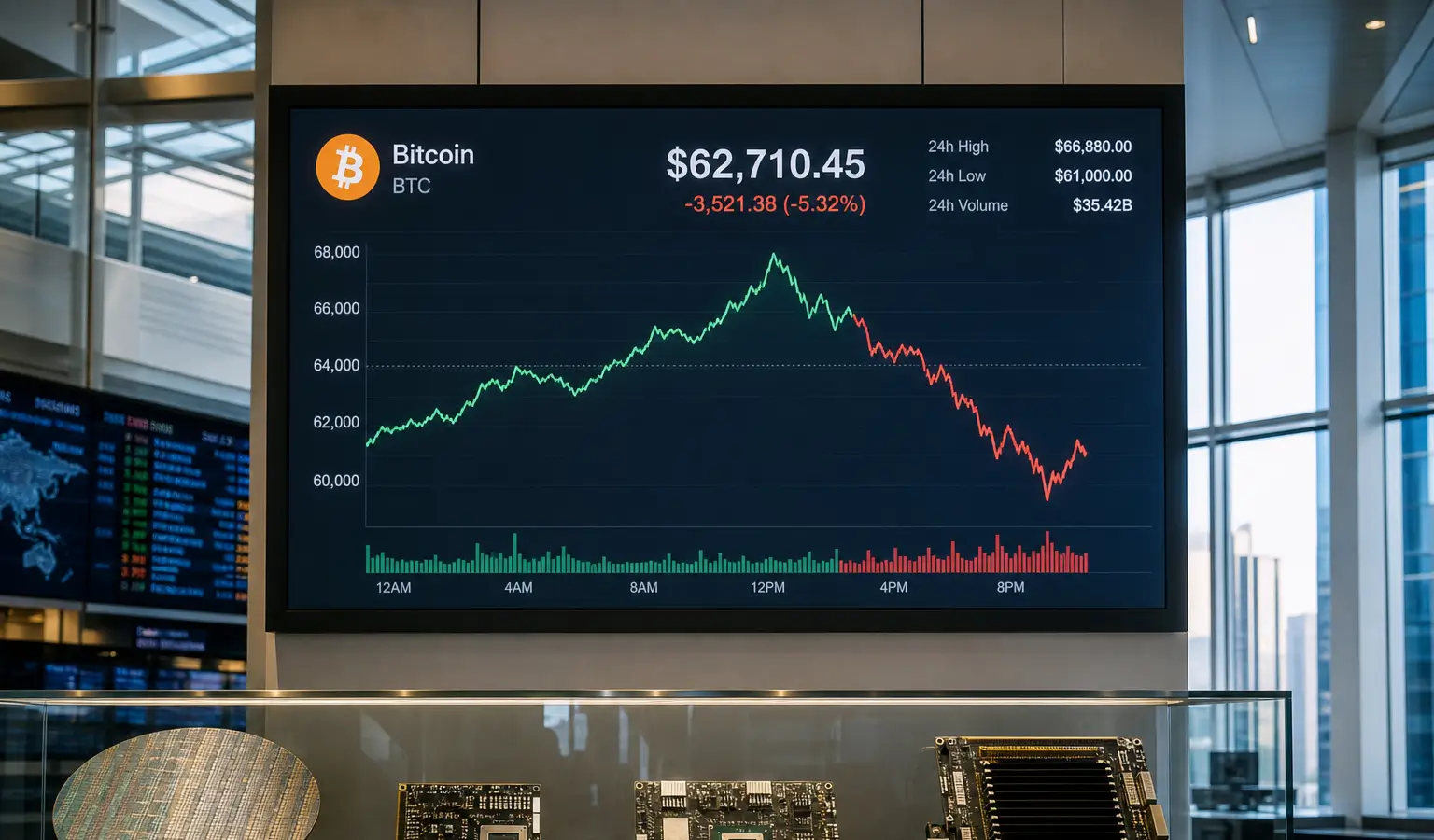
The recent surge in AI chips and bitcoin is a good reminder that long-term trends can be very real, even when prices later correct hard. A story that looks compelling at first can quickly turn into speculation once too much money chases it.
AI Hype Is Driving Chip Prices Higher
The AI boom has hit the semiconductor industry especially hard. Hyperscalers such as Amazon and Google are spending heavily on data centers packed with thousands of AI accelerators, which is boosting demand for high-bandwidth memory and NAND flash. That ripple effect is tightening supply and pushing chip prices higher.
Micron Technology, which produces DRAM, NAND, and other memory chips, climbed about 700 percent year over year. Sandisk, a company focused on NAND flash and solid-state storage, rose more than 4,000 percent. Both names have since retreated from their highs, showing how quickly sentiment can shift from euphoria to a cooldown.
The Semiconductor Industry Association also expects the global chip market to pass $1 trillion (€0.9 trillion) in revenue for the first time in 2026, after a record $791.7 billion (€693 billion) in 2025. That points to just how large AI-related demand has become, but it does not say anything about how far individual stocks can run in the short term.
Gold, Silver, and Bitcoin Also Took Hits
Precious metals followed a similar pattern. Gold and silver benefited from the so-called debasement trade, which is the idea that rising debt, money creation, and inflation weaken fiat currencies. Silver moved above $120 (€105) in January 2026, then gave back as much as 50 percent, while gold saw a smaller pullback.
Bitcoin showed a comparable dynamic through Strategy, the largest corporate holder of Bitcoin. The company sold shares at a premium to the value of its bitcoin holdings and used the cash to buy more Bitcoin. That premium has now dropped back toward net asset value, while the stock is trading about 80 percent below its peak.
The same pressure is showing up across other bitcoin treasury companies as well. A recent look at the sector made clear how exposed those stocks are to the price of BTC and to each company’s financing setup.
What This Means for Crypto Investors
For European crypto readers, the key point is that bitcoin does not move in a vacuum. In crypto as well, big themes around scarcity, adoption, and institutional demand can still come with sharp swings in valuation. That is what makes the comparison with AI chips and precious metals useful: the structural story can be right, but the price investors pay for it still tends to move in cycles.