Kospi Volatility Tops Bitcoin as AI Hype and Leverage Trading Bite
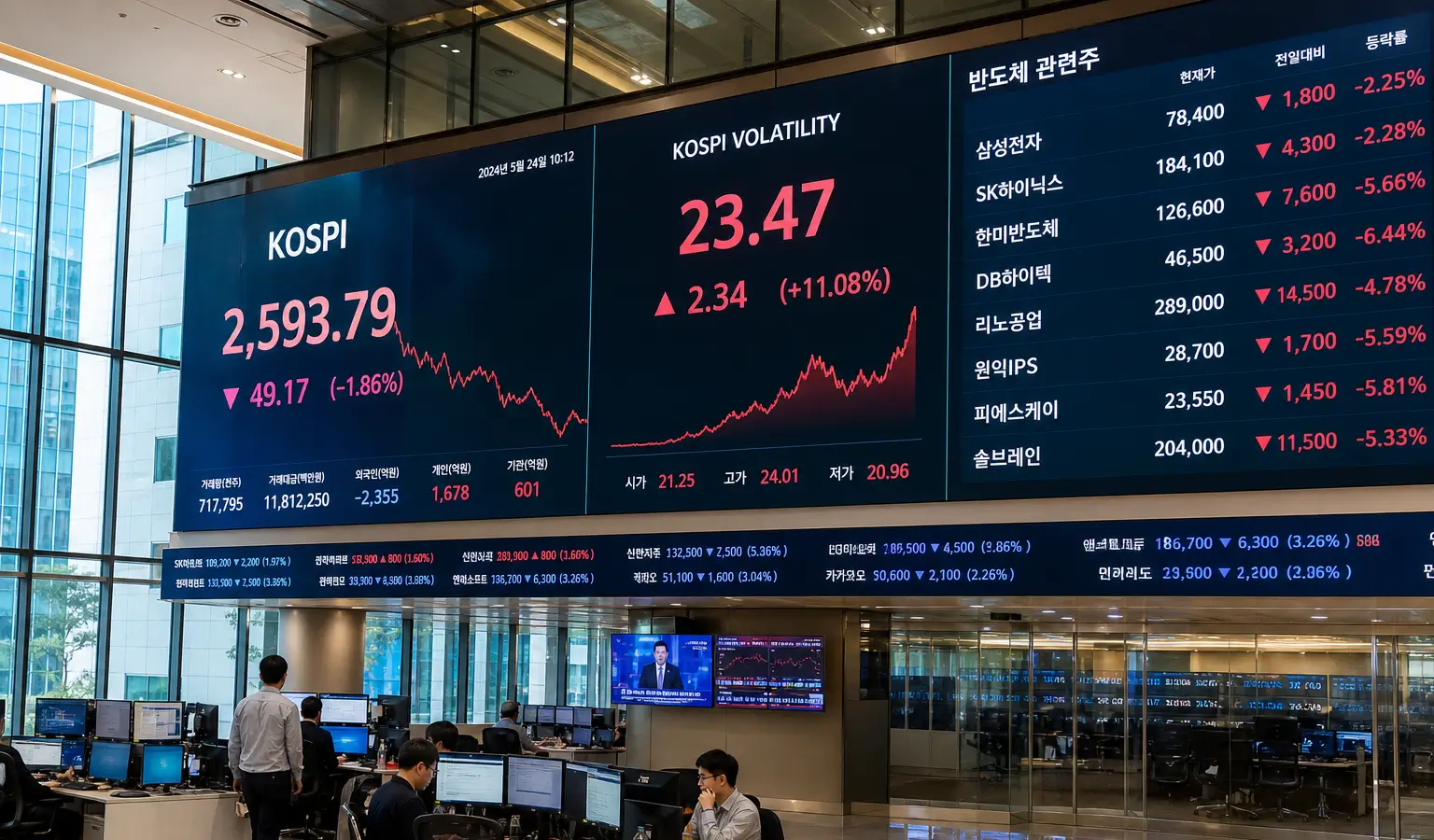
The South Korean index is being hit by AI stocks and leverage trading, with Samsung and SK Hynix carrying a heavy weight in the index. Implied volatility is now even above Bitcoin’s.
Key Takeaways
- South Korea’s Kospi index has dropped nearly 25 percent in four weeks and now carries an implied volatility of 81 percent.
- The text says Bitcoin is still more stable than the Kospi, even though BTC remains about twice as volatile as the S&P 500.
- The Kospi sell-off has been worsened by leverage trading, leveraged ETFs, and forced liquidations of more than $2 trillion.
While geopolitical tensions are weighing on Bitcoin and the wider crypto market, one comparison stands out: the AI hype has also fueled sharp swings well beyond crypto. South Korea’s Kospi index has lost nearly 25 percent over the past four weeks, and options traders now see it as riskier than Bitcoin.
Kospi Under Pressure
Bloomberg and Volmex data show the Kospi’s 30-day implied volatility at an annualized 81 percent. That is more than twice BVIV, the Bitcoin volatility gauge, which is around 38 percent. Implied volatility comes from options pricing and reflects how much protection investors are paying for against large moves.
A major part of the problem is the index’s composition. The Kospi is dominated by semiconductor names, especially Samsung Electronics and SK Hynix, which together account for more than half of the market cap. So when AI-related chip stocks cool off, the pressure hits the index almost immediately. That fits with the broader shift away from chip and AI names, as the recent pullback in the chip trade showed.
Leverage Trading Makes the Damage Worse
The sell-off has also been intensified by South Korean retail traders, who make heavy use of leverage and leveraged ETFs. Based on the data cited, that triggered forced liquidations of more than $2 trillion (€1.7 trillion) in under three months. It is a reminder of how quickly risk can pile up when speculation around new technologies takes over the market.
For Bitcoin bulls, it is notable that BTC looks steadier in this stretch than a major stock index in a developed economy. Even so, Bitcoin is still about twice as volatile as the S&P 500, whose 30-day volatility index is below 20.
Relevant for European Crypto
For European crypto investors, the bigger lesson is that the Bitcoin-Kospi comparison shows how fast risk appetite can change across markets. If the AI rally loses more steam, sentiment could also weaken for other high-risk assets outside Korea, including crypto. At the same time, Bitcoin remains sensitive to geopolitical headlines and to whether traders move further into options and stablecoins for protection.
For now, Bitcoin is trading below its closely watched 50-day average. Nansen also said that wallets that often react first to geopolitical shocks have not clearly moved into stablecoins. That points to short leverage positions being flushed out first, with accumulation potentially returning later.