Japan and South Korea Open the Door to Crypto Amid Market Stress
While the Kospi and Nikkei are under pressure, Japan and South Korea are pushing digital assets further into their capital markets. Japan is moving toward spot ETFs and tighter rules, while South Korea is recognizing crypto as state assets.
Key Takeaways
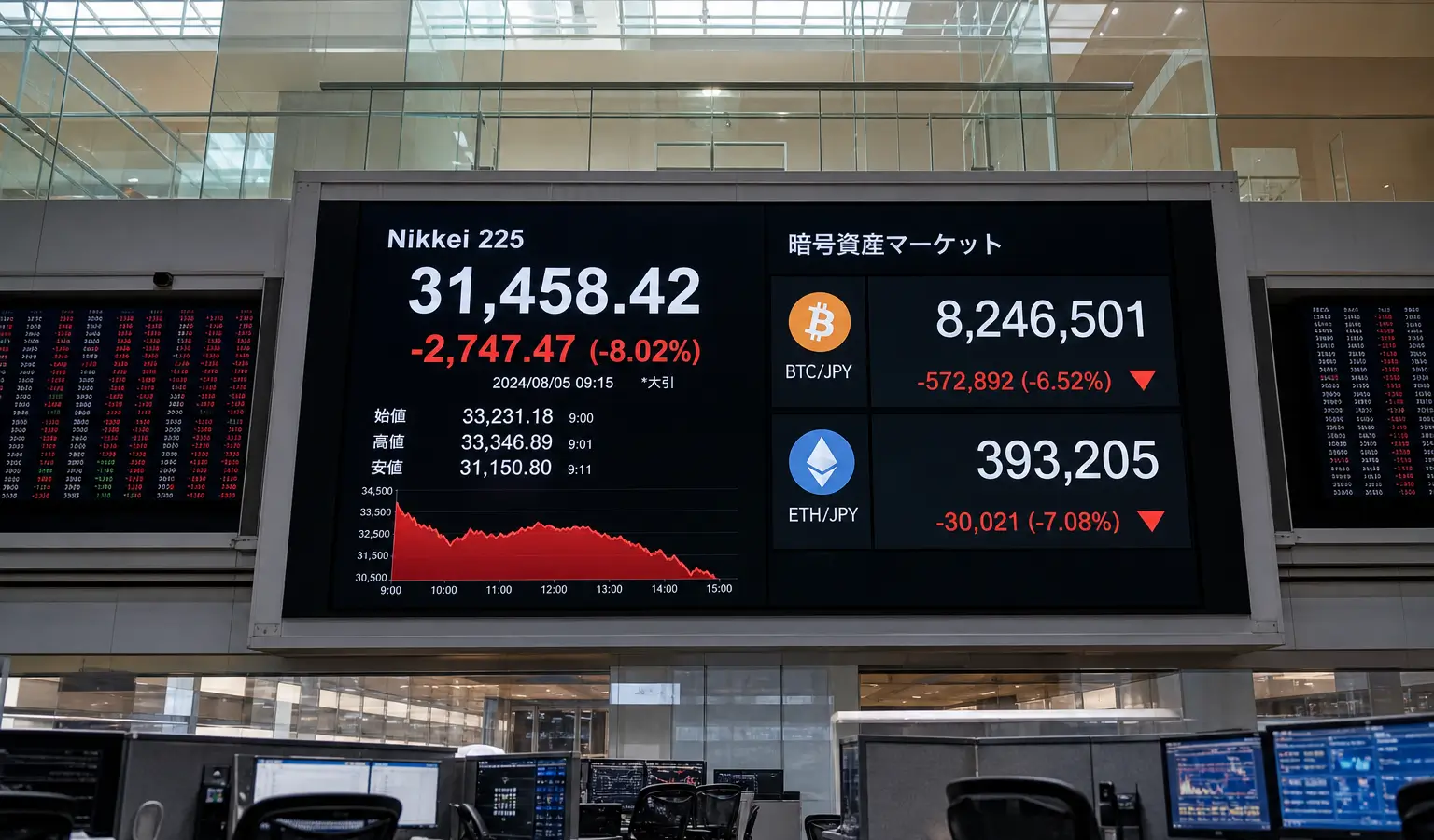
- The Kospi has fallen more than 20 percent, putting it in a technical bear market after a strong rally that was mostly driven by leverage.
- Japan has passed amendments that treat crypto as financial products under the law, with stricter rules and a possible flat 20 percent tax rate starting in 2028.
- South Korea now recognizes digital assets as part of state assets, while both countries keep folding crypto deeper into their regulated financial systems.
Japan and South Korea are both under stock market pressure, but crypto is getting pulled further into the mainstream financial system in each country. The Kospi has slipped into a technical bear market, and the Nikkei fell again, yet both governments are moving to give digital assets a clearer legal footing. For crypto, that creates an unusual backdrop: weaker equities, but more access for institutions and more room for regulated investment products.
Kospi Turns Sharply Lower
The Kospi is now down more than 20 percent from its recent high, which meets the definition of a technical bear market. That reversal follows a powerful rally earlier this year, when the index was still 116 percent above where it started 2026. Leverage helped push the move even further. In early July, the open value of leveraged positions reached 29.2 trillion won, or about $19.7 billion (€17.2 billion).
Retail traders were especially active in single-stock ETFs tied to Samsung Electronics and SK Hynix, using borrowed money to chase the AI hype. The sudden drop makes clear how narrow the rally really was. South Korea’s finance minister, Koo Yun-cheol, had already warned about the heavy concentration in chip stocks, which can make swings even more violent.
Japan Makes Crypto More Formal
Japan moved in the opposite direction on July 15, when parliament approved amendments to the Financial Instruments and Exchange Act. Under the new framework, crypto is no longer treated mainly as a payment tool. Instead, it is being placed alongside stocks and bonds as a financial product. The changes also add insider trading rules, tougher disclosure requirements, and penalties that can reach 10 years in prison.
A flat 20 percent tax rate is also on the table, with a possible start date of January 2028. That would replace rates that could have climbed as high as 55 percent. The new rules could also make domestic spot crypto ETFs legally possible, although approval is still not guaranteed. Market participants say exchanges may be aiming for initial listings around 2027.
The reform does not turn Bitcoin and Ethereum into securities, but it does move crypto more firmly into the regulated investment universe. For European readers, that is an important signal: major economies are increasingly treating crypto as part of capital markets policy, not as something separate from them.
Why This Matters for Crypto
South Korea took another step a few days earlier with the National Asset Basic Act, which now counts digital assets as part of state assets alongside real estate and intellectual property. The law covers about 1,400 trillion won in public holdings and replaces a framework that dates back to 1950. The same policy push also includes tokenized government bonds and security tokens for state-owned real estate.
What stands out most for the crypto market is the timing. In two economies dealing with stock market stress and concentration risk, the legal infrastructure around crypto is still expanding. That does not mean demand will automatically follow, but the policy direction is becoming easier to read. And in a broader market that remains under pressure, analysts are still watching for signs of a cycle bottom, as Cantor Sees Bitcoin Bottom Around October in Bear Market explains.