Bank of Italy: Stablecoin Payments Are Fast, but Expensive
The Italian central bank says purchase and exchange costs, in particular, drive up the bill, along with any gas fees on networks like Ethereum.
Key Takeaways
- Stablecoin payments can be fast, but a $200 transfer cost between 60 cents and nearly $18 in a Bank of Italy experiment.
- The biggest costs were not in the blockchain transfer, but in buying stablecoins and converting them back into local currency.
- Total costs depend on the route, network, and regulations; ESMA limits services in the EU around non-MiCA-compliant assets such as USDT.
Stablecoin payments can be fast, but they are not always cheap. According to an experiment by the Bank of Italy, sending $200 (€180) through stablecoins across ten international payment routes cost about 60 cents to nearly $18 (€16). Most of those costs were not in moving funds on the blockchain, but in buying the tokens and then converting them back into local money.
Where the Costs Come From
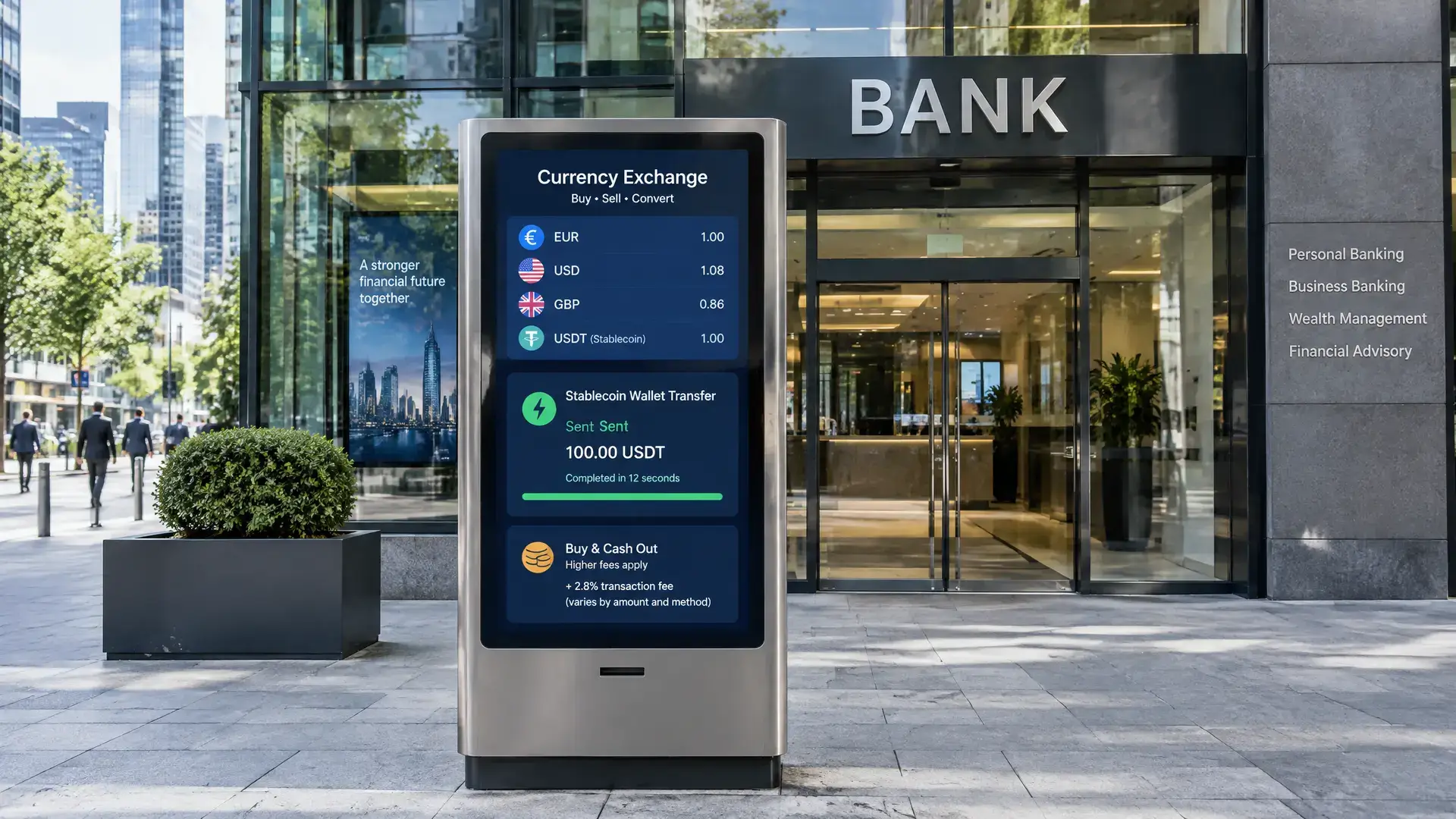
The study shows that a stablecoin payment can involve several steps. First, someone has to buy the tokens, then send them, and then sell them again for local currency. Even if the transfer fee looks low, the exchange-rate spread can sharply reduce the final payout.
That makes stablecoins less straightforward than people often think. For someone who gets paid in stablecoins, the money may arrive in a crypto wallet, while rent still has to be paid from a bank account. The Italian study cites a total range of 0.30% to nearly 9% for the full route it examined.
More Than Just Blockchain Costs
The Bank of Italy study is not alone. The BIS has also previously looked at the role of conversion and withdrawal costs in the competitiveness of stablecoins versus banks and fintech services. The blockchain used can also make a difference: stablecoins on Ethereum often have higher gas fees when the network is busy, while networks like Solana are usually cheaper to send on.
That matters for users who mainly see stablecoins as a payment method. The costs depend not only on the token, but also on the route, the network, and the party handling the on-ramp and off-ramp. For some payment flows, an apparently cheap transfer can still end up being expensive.
Why This Matters for Europe
For European crypto users, this is especially relevant because stablecoin payments are increasingly being pitched as a fast way to move money internationally. In practice, the final step often determines how much is actually left over. That makes the discussion about costs, wallets, and cashing out more important than speed alone.
The European regulator ESMA has also made it clear that crypto service providers in the EU may not offer services around assets that do not comply with MiCA, including Tether's USDT. That underlines that not only costs, but also allowed payment routes, can differ by market. The rise of regulated alternatives also plays a role: a euro stablecoin with a DNB license is meant to show how payment routes within Europe can be set up more cheaply and more clearly.