Binance and Coinbase Help in West African Scam Crackdown
Ghana and Nigeria cracked down on scam networks and crypto investment fraud, with support from Binance, Coinbase, and blockchain analysts. The DOJ says $11 million in funds could potentially be frozen.
Key Takeaways
- Authorities in Ghana and Nigeria arrested 28 people in an operation against scam networks and crypto investment fraud in West Africa.
- Binance and Coinbase helped out; the U.S. Department of Justice said more than $11 million in funds could potentially be frozen.
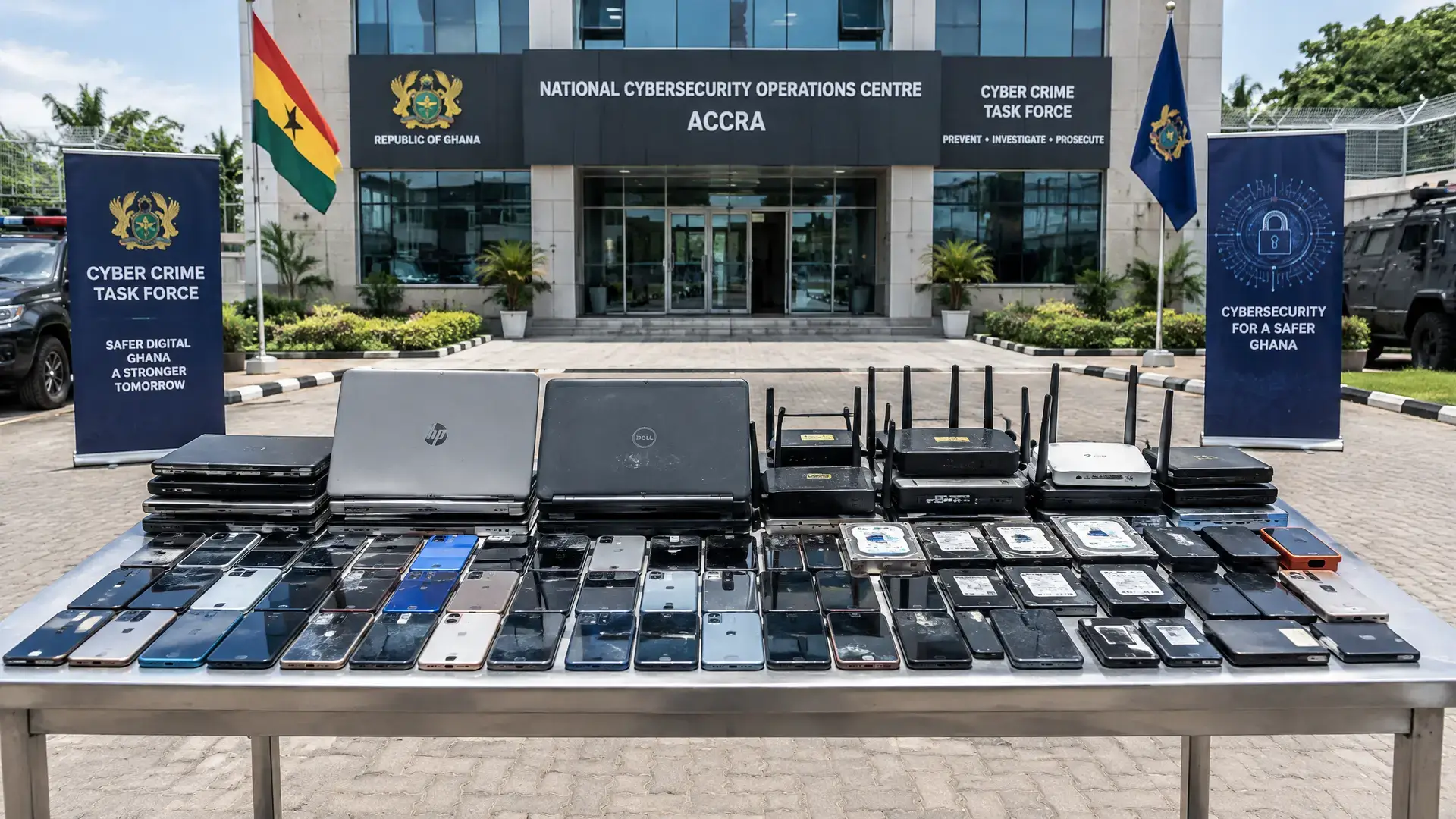
- In Ghana, 19 people were arrested and 303 devices were seized; in Nigeria, nine suspects were arrested.
Authorities in Ghana and Nigeria arrested 28 people in an operation against scam networks in West Africa, while also tackling crypto investment fraud. According to the U.S. Department of Justice, crypto exchanges Binance and Coinbase helped with the operation, which resulted in more than $11 million (€9.8 million) in funds that could potentially be frozen.
International Cooperation
The operation was coordinated by the U.K.'s National Crime Agency and brought together tech companies and law enforcement agencies. The DOJ called it the first joint operation specifically focused on West Africa. In addition to Binance and Coinbase, blockchain analysts from Chainalysis, Elliptic, and TRM Labs also took part.
Coinbase said it helped trace illegal money flows, support asset freezes, and share information with investigators. The company said it had identified more than 65 active victims of scams and prevented more than $415,000 (€368,800) in possible losses. TRM Labs said it exposed a large-scale peer-to-peer money laundering network.
What the Operation Delivered
In Sasaabi, near Accra, Ghanaian authorities arrested 19 people and seized 303 electronic devices. In Nigeria, another nine people were arrested. The NCA also reported 117 human trafficking victims in Ghana who were waiting to be repatriated to Nigeria.
The partners also reported crypto seizures, but did not disclose the value or which assets were involved. The $11 million (€9.8 million) mentioned refers to funds flagged for a possible freeze, not confirmed recoveries.
Why This Matters
The case shows how scam networks are increasingly operating across borders and how crypto exchanges, analytics firms, and law enforcement are working together to respond. For European crypto users, the key point is that these kinds of operations are not just about arrests, but also about tracing money flows and blocking possible abuse. Meta said meanwhile that it removed more than 3.7 million Facebook and Instagram accounts, pages, and groups that the company said were mainly targeting Americans and Britons through impersonation.