Binance Pool Shuts Down After Bitcoin Hashrate Drops
Miners still have four weeks to switch over; the shutdown increases concentration around Foundry USA, AntPool, and F2Pool.
Key Takeaways
- Binance is shutting down its mining pool after the computing power tied to it dropped sharply.
- Miners have until November 24 to move their machines, and starting November 10 Binance will stop crediting mining shares.
- The shutdown fits into a broader shrinkage of major mining pools, while Foundry USA, AntPool, and F2Pool together dominate most block production.
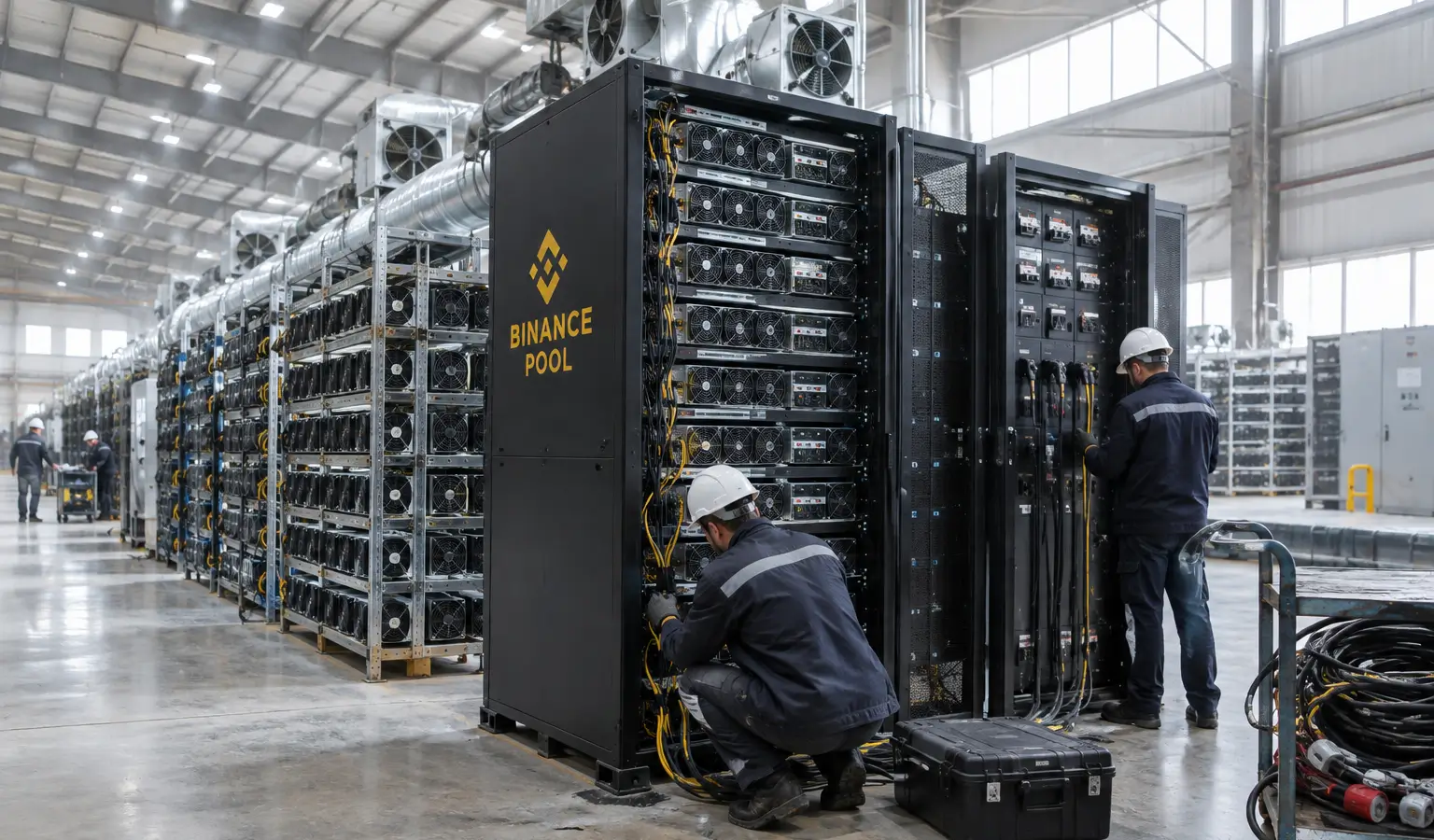
Binance is shutting down its mining pool after the computing power tied to it dropped sharply. Miners still have about four weeks to move their machines to another provider, while the pool will disappear for good on November 24.
Deadline for Miners
After November 10, Binance will stop crediting mining shares, the work records used to calculate payouts. Users of Pool Savings will then need to redeem their positions. Anyone still waiting for a final payout must complete the required identity checks by 11:59 p.m. UTC that same day.
The pool pages will stay available until November 24. After that, they will disappear permanently, giving customers two more weeks to download records and check their payout status.
Less Choice in Mining
The shutdown fits into a broader shrinkage in the number of major mining pools that were once launched by crypto exchanges. According to Hashrate Index, Binance Pool was the last remaining pool from that era. SBI Crypto and OKX had already shut down similar services earlier.
Bitcoin mining concentration is now in the hands of a small group of big players. In the latest table, Foundry USA, AntPool, and F2Pool together accounted for about 64.2% of block production. In September 2026, Foundry USA had about 24.2% of the network hashrate, followed by AntPool with 21.7% and F2Pool with 15.0%.
Why This Matters
For European crypto followers, this shows how few major providers are left in a market that directly affects Bitcoin transactions. Fewer pools does not mean miners lose their hardware, but it does mean they have fewer providers to choose from. That could matter for the debate over centralization, especially now that several major pools have already adopted Stratum V2 to ease those concerns.
Four years ago, Binance was actually trying to give miners more room. In October 2022, the company announced a $500 million (€447 million) lending program through the pool, with secured loans for 18 to 24 months at interest rates of 5% to 10%. The shutdown notice says nothing about that program and also does not mention any outstanding balance.
Binance has not yet said where the remaining miners will go. If that computing power shifts to the biggest pools, control over block production will become even more concentrated, although it is still up to miners themselves to move their machines to another provider.
The production cost for miners also plays a role in how quickly companies adjust their strategy. JPMorgan previously called $85,000 (€75,900) a soft floor for Bitcoin, because that level could ease selling pressure from miners.