Bitcoin Falls Below $63,000 on Coldcard Hack and Weak Demand
Bitcoin’s drop comes as new reports point to a Coldcard wallet exploit, with addresses still being drained based on the latest numbers. Even with more supportive macro conditions, sentiment remains fragile.
Key Takeaways
- Bitcoin slipped from $63,600 to $62,800 on Monday, even as macro conditions improved after new U.S.-Iran talks.
- Ether fell more than 1% to $1,858, while XRP, Solana, and Dogecoin also traded lower; BNB was the only major coin in the green.
- A new Coldcard wallet exploit, linked to 1,367 Bitcoin and nearly $89 million, continued to weigh on crypto market sentiment.
Bitcoin and ether both finished Monday in the red, even though the macro backdrop looked a little better after fresh talks between the U.S. and Iran. At the same time, the crypto market was still dealing with fallout from a Coldcard wallet exploit that, based on the numbers so far, does not appear to be contained yet.
Bitcoin Misses Macro Support
Bitcoin dropped from a Sunday high of $63,600 (€55,400) to $62,800 (€54,700), leaving it down 1% on the day and 4% over the past week. Ether fell more than 1% to $1,858 (€1,620) and has still not climbed back above $1,900 (€1,650) since last week. XRP, Solana, and Dogecoin were also under pressure, while BNB was the only major coin to post gains.
The wider market move suggested investors were leaning a bit more toward risk. Brent crude futures fell sharply after President Donald Trump said he had called off an attack on Iran and wanted to open new talks on Monday. At the same time, U.S. bond yields moved lower, Nasdaq 100 futures and European futures rose, and gold ticked higher. That kind of setup usually gives crypto a lift, but this time the market did not follow through.
Coldcard Concerns Keep Building
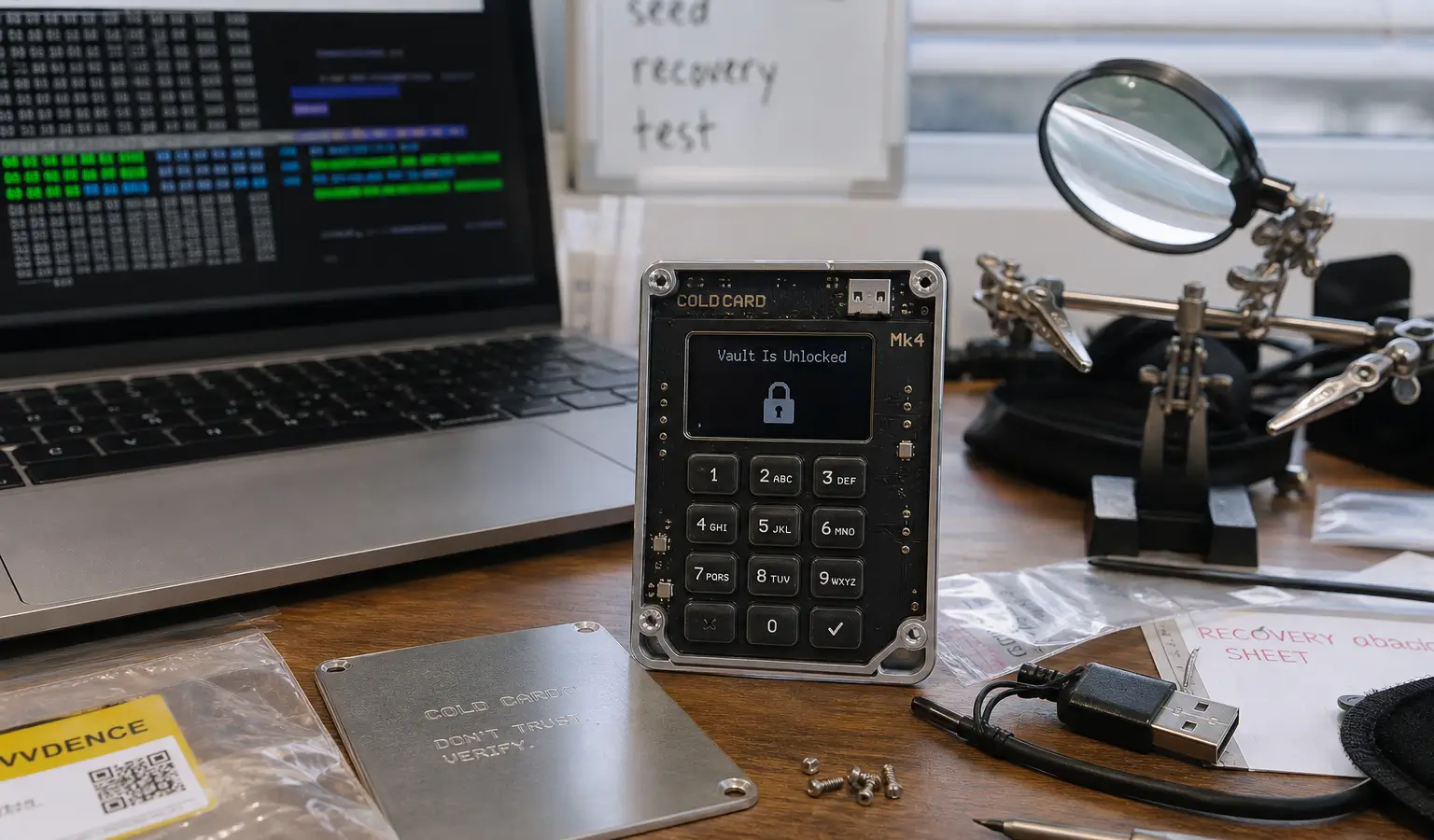
The latest weakness appears to be tied mostly to the security headlines around Coldcard. Earlier reports said a third wave of draining activity hit more addresses created with the hardware wallet, bringing the total to 1,367 Bitcoin and nearly $89 million (€77.5 million) across 4,585 addresses. That points to an attacker who did not stop at larger wallets and later moved on to smaller balances as well.
The situation is part of a broader run of security incidents across crypto. For users, it is another reminder that hardware wallets are an important part of self-custody, but they are not a complete shield if the attack reaches the environment around the wallet or the way keys are handled. In an earlier case, a Coldcard flaw already showed how quickly hundreds of bitcoin can disappear.
What This Means for Europe
For European crypto investors, the key point is that security incidents often move sentiment faster than macro data. With Bitcoin in particular, a fresh security scare can quickly overshadow rates, oil, and geopolitics, while altcoins tend to feel the pressure indirectly as well. The combination of a weak price reaction and ongoing wallet concerns suggests the market is still focused mainly on internal risks right now.