Bitcoin Miners Gain an Edge From U.S. AI Power Shortages
Permits and grid connections in the U.S. are making existing power capacity scarce. That gives Bitcoin miners with operating sites an edge over AI datacenters.
Key Takeaways
- Bitcoin miners in the U.S. increasingly already have connected power capacity, while AI companies have to wait a long time for new grid connections.
- CoinShares reports at least 225 moratoriums or restrictions for data centers in 30 states, with stricter rules in places including New York, Ohio, Michigan, Georgia, and Indiana.
- Because power and permits are so scarce, some miners also see their existing infrastructure as a base for AI datacenters.
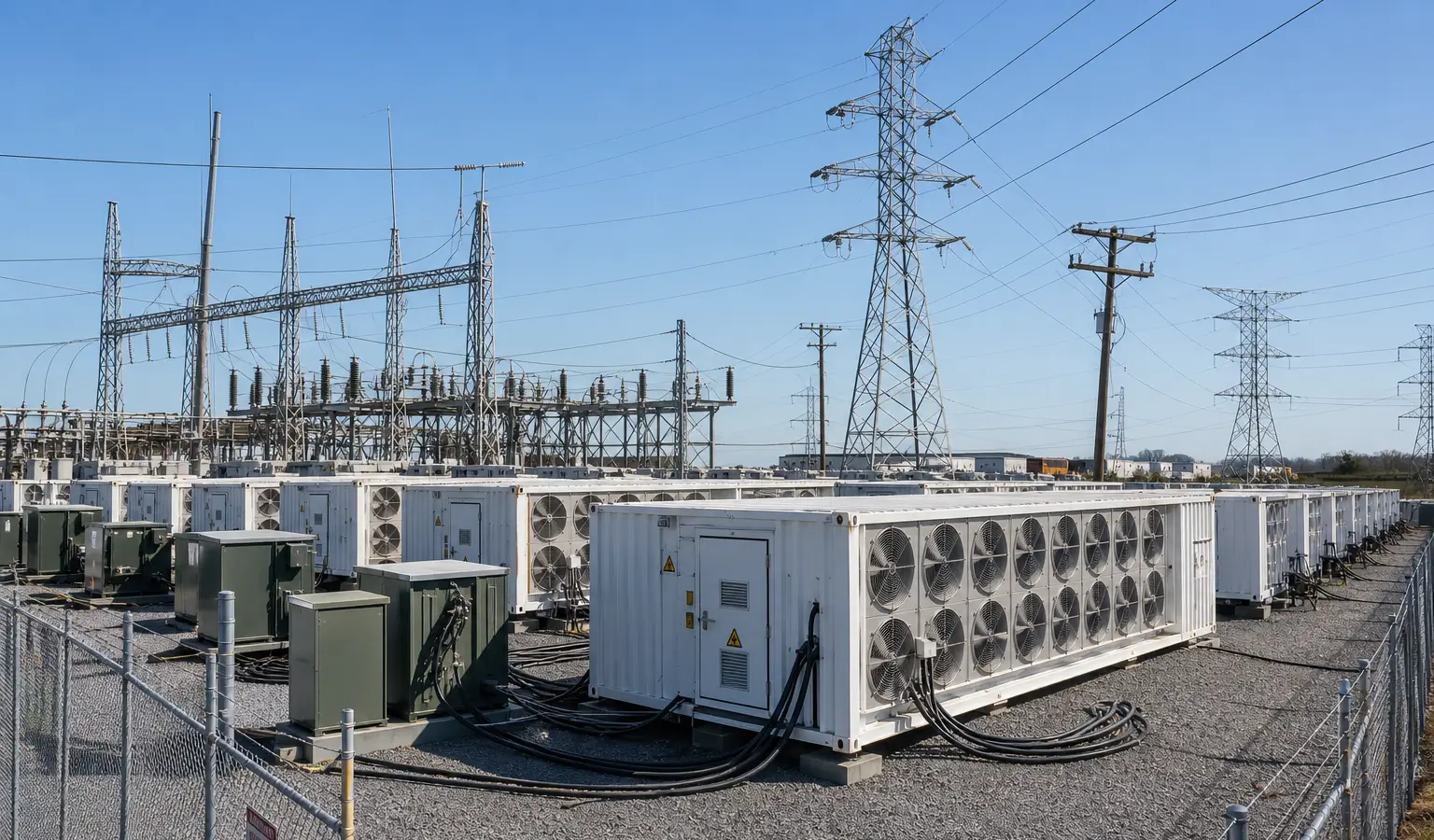
Bitcoin miners in the United States increasingly own something that AI companies cannot build quickly: already connected power capacity. Because of dozens of local and statewide restrictions on new data centers, that capacity has become scarce, while AI developers often have to wait years for a new connection.
Permits Are Running Out
CoinShares said in its mining report for the second quarter that at least 225 moratoriums or restrictions for data centers are in effect. According to tracking from ElectricChoice, which CoinShares cites, the rules cover 30 states. Maine even fully banned new data center construction in April.
New York is the biggest recent move, according to CoinShares. On July 14, the state temporarily paused environmental permits for facilities of 50 megawatts or more for one year. Rules have also been tightened at the county level in places including Ohio, Michigan, Georgia, and Indiana. In Pennsylvania, review rules for large projects have become stricter, while Texas has paused new grid connections pending an audit.
Why Existing Sites Matter
The real bottleneck is the queue for grid connections. According to the article, that U.S. interconnection queue totals about 2,600 gigawatts, roughly twice the country’s existing capacity. Research from Lawrence Berkeley National Laboratory showed that the median wait time for projects completed in 2025 was more than five years.
That makes an already operating site especially valuable. CoinShares said an electrified site cannot be rebuilt within a commercially relevant timeframe, no matter how much capital is available. In the same market, CBRE saw vacancy in the primary data center market fall to a record low of 1.4% at the end of 2025, while in Northern Virginia it dropped to just 0.3% in the first quarter of 2026.
Bitcoin Miners Are Looking for a New Role
That scarcity explains why some miners now also see their existing infrastructure as a base for AI datacenters. According to the report, converting mining sites into AI-ready facilities costs an estimated $8 million (€6.9 million) to $15 million (€13 million) per megawatt, far more than the $700,000 (€606,600) to $1 million (€0.9 million) needed to set up a site for mining.
For European crypto readers, this matters because it shows how Bitcoin miners are becoming less dependent on block rewards alone and more often deriving value from infrastructure itself. That means the debate is not just about Bitcoin, but also about power, permits, and who can even expand in a tight energy market. Miners already betting on AI are also benefiting from that shift, because the market is increasingly valuing their infrastructure as a separate business model.