Global Bond Yields Surge, Bitcoin Feels the Pressure
The rise in 10-year yields in the U.S., Europe, and Japan is fueling worries about inflation and debt. Bitcoin is reacting sharply to those tighter financial conditions.
Key Takeaways
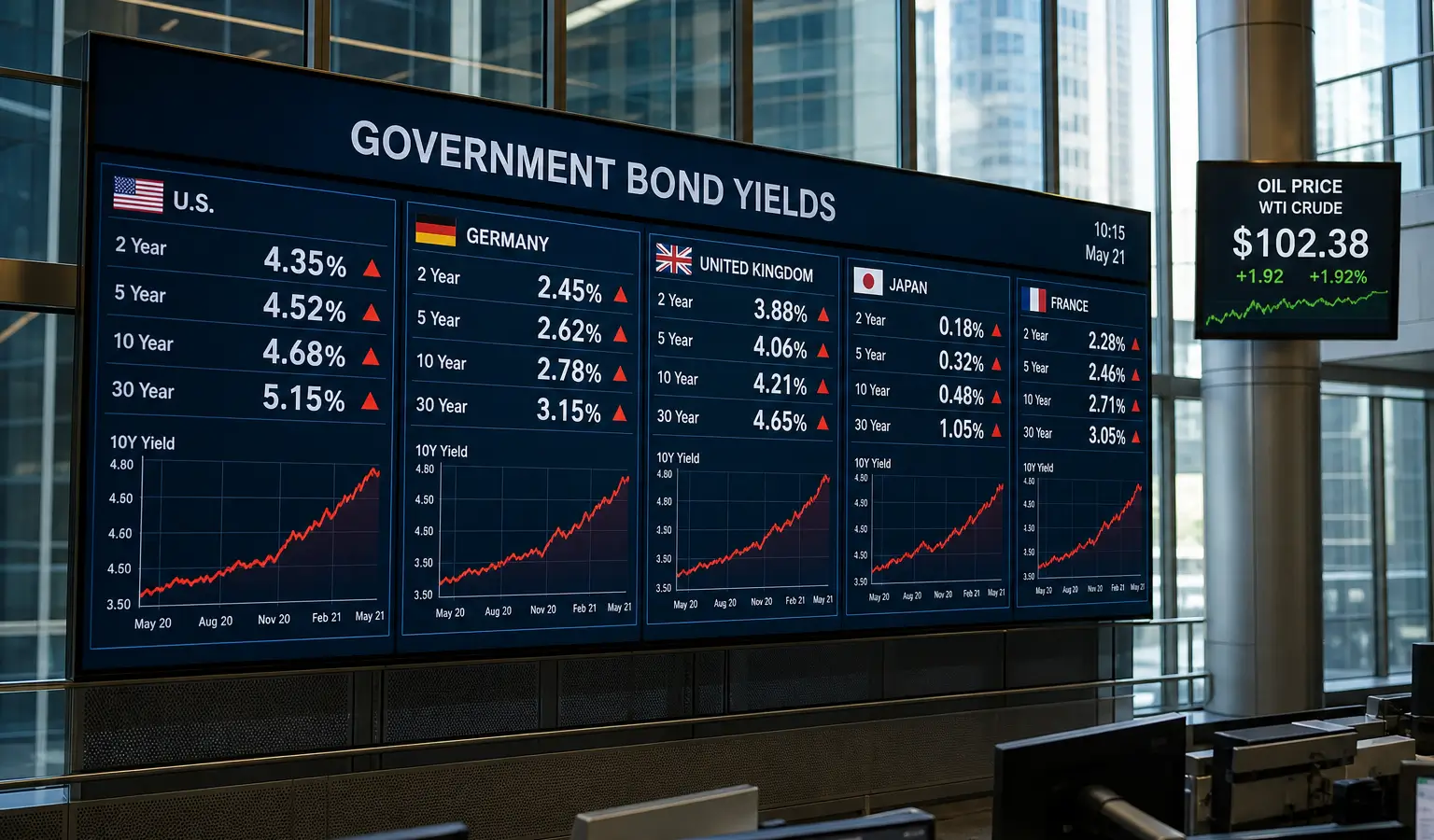
- Global 10-year yields rose to multi-year or even decade highs in the U.S., the U.K., Japan, Germany, and France.
- The move comes alongside oil above $100 per barrel, fresh tensions in the Middle East, and renewed inflation worries.
- Higher long-term yields make financial conditions tighter and, according to the article, put pressure on Bitcoin and the broader crypto market.
Global bond yields have climbed this week to levels not seen in years, while oil stays above $100 (€87) per barrel and inflation worries return. For Bitcoin, that matters because since its launch, the coin has never faced such high long-term yields before. The move is affecting not only the U.S., but also Europe and Japan, and it shows that investors are once again looking at inflation and government finances at the same time. That fits into the broader debate about the impact of higher rates on crypto, as also shown by the U.S. 10-year yield above 5%.
Yields Hit Multi-Year Highs
The 10-year yield on government bonds rose in five major economies to multi-year or even decade highs. In the U.S. and the U.K., levels reached the highest point since 2007. In Japan, a level was reached that had not been seen since 1996.
Yields also kept rising in Europe. The German 10-year yield climbed to its highest level since 2009, while France reached a level not seen since 2008. According to market watchers, that is a sign that investors around the world are once again demanding a higher premium for sovereign risk and inflation.
Oil and Debt Are Part of It Too
The rise came alongside higher oil prices and fresh tensions in the Middle East. That is fueling fears that inflation will stay sticky for longer, just as several central banks meet this week. Investors are also factoring in the Fed, where the market, based on current pricing, sees a high chance of a rate hike.
On top of that comes heavy government borrowing. The U.S. has already gone through one of its weakest bond years in more than two centuries, which increases the amount of debt the market has to absorb. Japan remains especially vulnerable because its government debt is more than 200% of gross domestic product.
Why This Hits Crypto
Higher long-term yields feed into mortgage rates, financing costs for companies, and government budgets. That can make broader financial conditions tighter, including for the crypto market. For European readers, the key point is that this is not just a local move, but one happening at the same time in the U.S., Europe, and Japan. That makes it a broader repricing of inflation expectations and sovereign risk, with Bitcoin as one of the most sensitive major crypto assets in this kind of environment.