Crypto Still Has Little Political Power in Latin America
Crypto is growing fast in Argentina and Brazil, but political influence remains limited. Scandals like LIBRA carry more weight in the debate than user numbers and transaction data.
Key Takeaways
- Crypto still has little direct political power in Latin America, despite the rapid growth in users and transactions in 2025.
- In Argentina, the LIBRA scandal dominated the political conversation, while about 12.4% of the population used a crypto app every month.
- The region reached about $730 billion in crypto transactions in 2025, but adoption still does not automatically translate into political influence.
Crypto still has little direct political power in Latin America, despite a fast-growing user base and a market that expanded sharply in 2025. In the United States, the industry shows how money, lobbying, and election pressure can influence politicians. In Latin America, that same power base is still largely missing, and that makes the region a very different playing field.
Washington as a Contrast
On September 15, the U.S. Senate voted 49 to 50 on whether to start debate on the CLARITY Act, a market structure bill that the crypto industry had worked on for more than a year. It needed 60 votes, and not a single Democrat voted in favor. According to the industry, that had less to do with the text itself than with the political baggage crypto has picked up by now.
Shortly after that, Fairshake announced it would spend $30 million (€26.9 million) against Sherrod Brown's Senate campaign in Ohio. The super PAC is largely funded by Coinbase, Ripple, and Andreessen Horowitz. At the same time, Stand With Crypto, the advocacy group Coinbase launched in 2023, warned that senators who blocked the bill could pay for it at the ballot box on November 3.
Scandals Carry More Weight
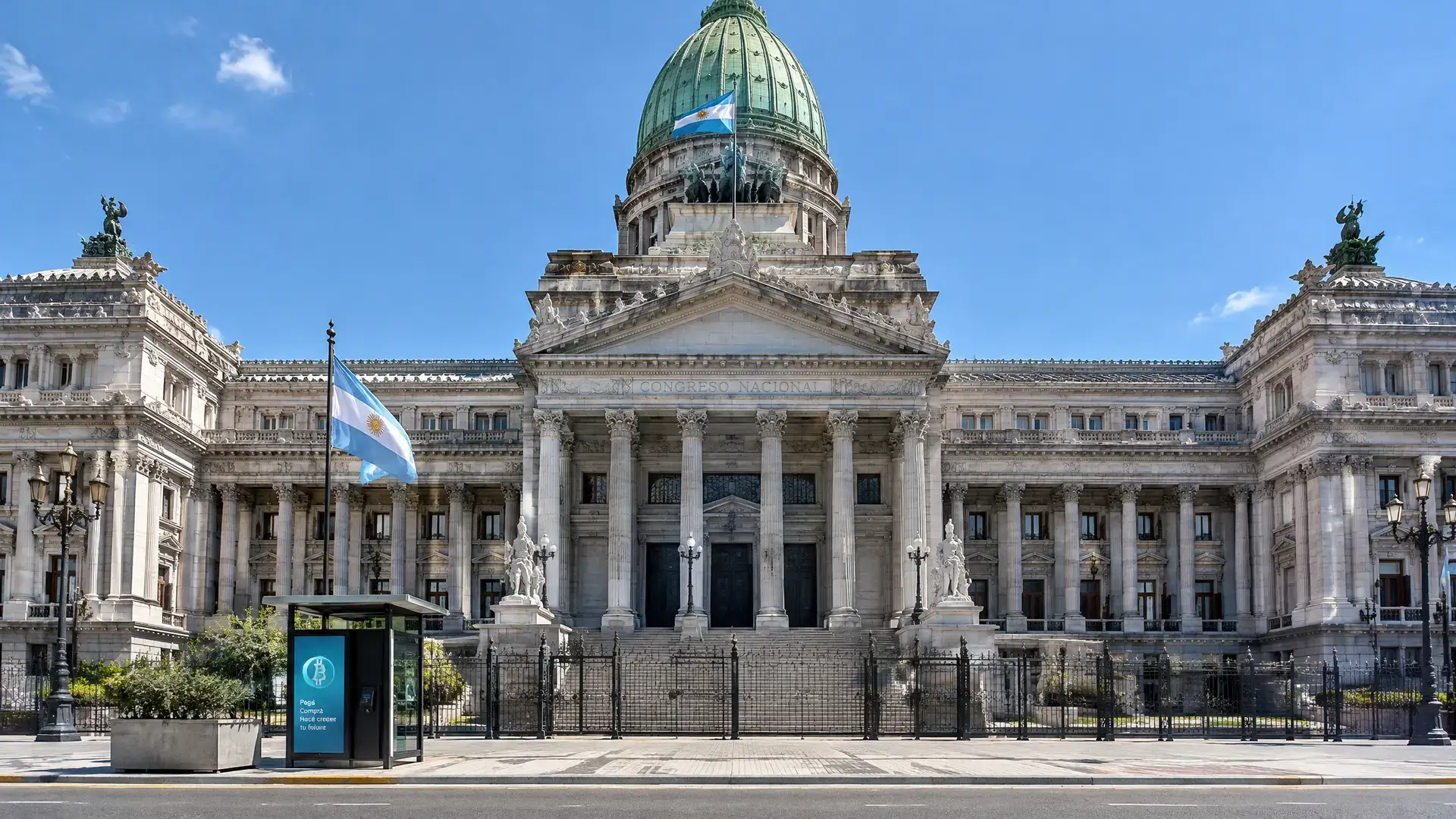
In Latin America, that approach works much less well. The region does not have a comparable political budget around crypto, but it does have a different problem: many politicians see a scandal first and users second. In Argentina, a conversation with senators and representatives about a technical tax difference eventually turned mostly into a discussion about LIBRA, the token President Milei shared on X in February 2025 and that collapsed within hours.
That is especially striking because crypto is widely used there. According to a industry report, about 12.4% of Argentina's population used a crypto app every month in 2025, the highest rate in the region. Across Latin America, the crypto market reached about $730 billion (€655 billion) in transactions in 2025, up 60% from a year earlier. Brazil was the biggest market, with $318.8 billion (€286 billion) in crypto volume, helped by institutional trading and more clarity for financial institutions.
Why This Matters for Europe
For European readers, this shows that adoption does not automatically lead to political influence. Even in markets where crypto is used a lot, lawmakers may react mainly to incidents, not user numbers. That matters for the broader debate over regulation, because it shows how important visibility and data are in the crypto conversation.
In Argentina, another factor is that crypto is often used for cross-border payments and stablecoins, partly because fintech companies are increasingly building those rails into their payment flows. That makes the sector economically visible, but not automatically politically influential. The lesson for the region, according to the author, is that the industry should not only talk to regulators, but also use numbers to show who is actually using it. A similar tension between usage and political weight is playing out elsewhere too: in the U.S., market players warned that the failure of the Clarity Act only made the debate over crypto rules even more political.