The Dollar Has Lost 97% Since 1913. Is Bitcoin the Way Out?
Since 1913, the dollar has lost a lot of purchasing power; Bitcoin offers scarcity, but its volatility means it is not a stable alternative. Spot Bitcoin ETFs have also made the coin more accessible to institutional investors.
Key Takeaways
- Since 1913, the U.S. dollar has lost about 97% of its purchasing power, according to the Bureau of Labor Statistics' CPI-U.
- Bitcoin was designed with a fixed limit of 21 million coins and a declining issuance schedule as a scarce digital asset.
- At the start of September 2026, Bitcoin was trading around $79,852, after peaking at about $126,080 in October 2025.
Since the Federal Reserve was founded in 1913, the U.S. dollar has lost about 97% of its purchasing power, according to the Bureau of Labor Statistics' CPI-U. Over that same period, Bitcoin grew into an alternative built around scarcity, but the coin remains extremely volatile.
What 113 Years of Inflation Shows
A dollar from 1913 buys only about 3 cents worth of goods today. In other words, $1 (€0.86) from 1913 works out to about $33 (€28) to $34 (€29) in 2026. That is not a slogan, but the result of an official price index that includes more than a century of inflation, wars, and the sharp price increases from 2021 to 2023.
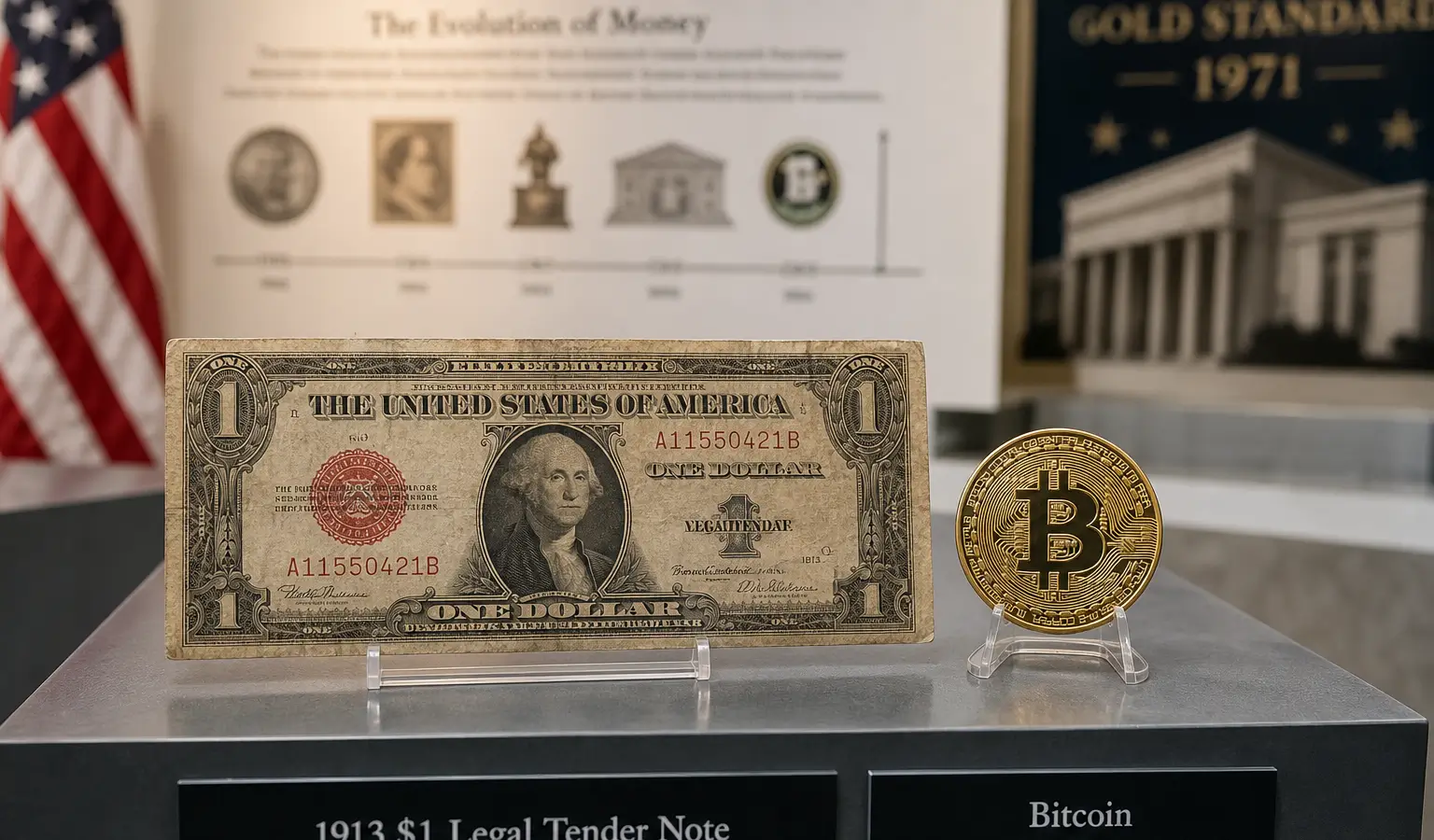
The end of gold convertibility in 1971 also played a role in that longer decline in the value of cash. Money that sat still for years quietly lost purchasing power during that period.
Bitcoin as an Alternative
Bitcoin was designed as a response to that system, with a fixed limit of 21 million coins and a declining issuance schedule. Of course, the coin did not exist in 1913, so the comparison with the dollar is not one-to-one. Still, the main point is clear: Bitcoin was positioned as a scarce digital asset, while the dollar lost purchasing power.
Since launching in 2009, Bitcoin's price has moved wildly in both directions. Early buyers saw their purchasing power rise sharply, while later entrants in some cycles saw drops of 50% to 80%. At the start of September 2026, Bitcoin was trading around $79,852 (€68,700), still below its October 2025 peak of around $126,080 (€108,500).
Why This Matters for Investors
The debate over Bitcoin as a way out of inflation matters for European crypto readers because it shows why the coin is often seen as a store of value, but not as a stable unit of account. Spot Bitcoin ETFs in the United States, approved in 2024, have also made that role more accessible for institutional players who do not want to manage private keys. According to SoSoValue, a total of $55.62 billion (€47.9 billion) flowed into those products through September 4, 2026.
That makes Bitcoin easier to access for some investors, but it does not change the core point: cash usually loses value slowly and predictably, while Bitcoin can move fast and hard. Whether it is mainly a reserve-like asset or a speculative position therefore depends heavily on the time horizon. That volatility also shows why timing tricks are almost impossible: a big part of Bitcoin's returns often comes from just a few sharp trading days.