ETH Staking Reaches 34% as EIP-8361 Pressures Yields
The staking ratio is rising on institutional demand and staking ETFs, while EIP-8361 could lower protocol rewards when network usage is high.
Key Takeaways
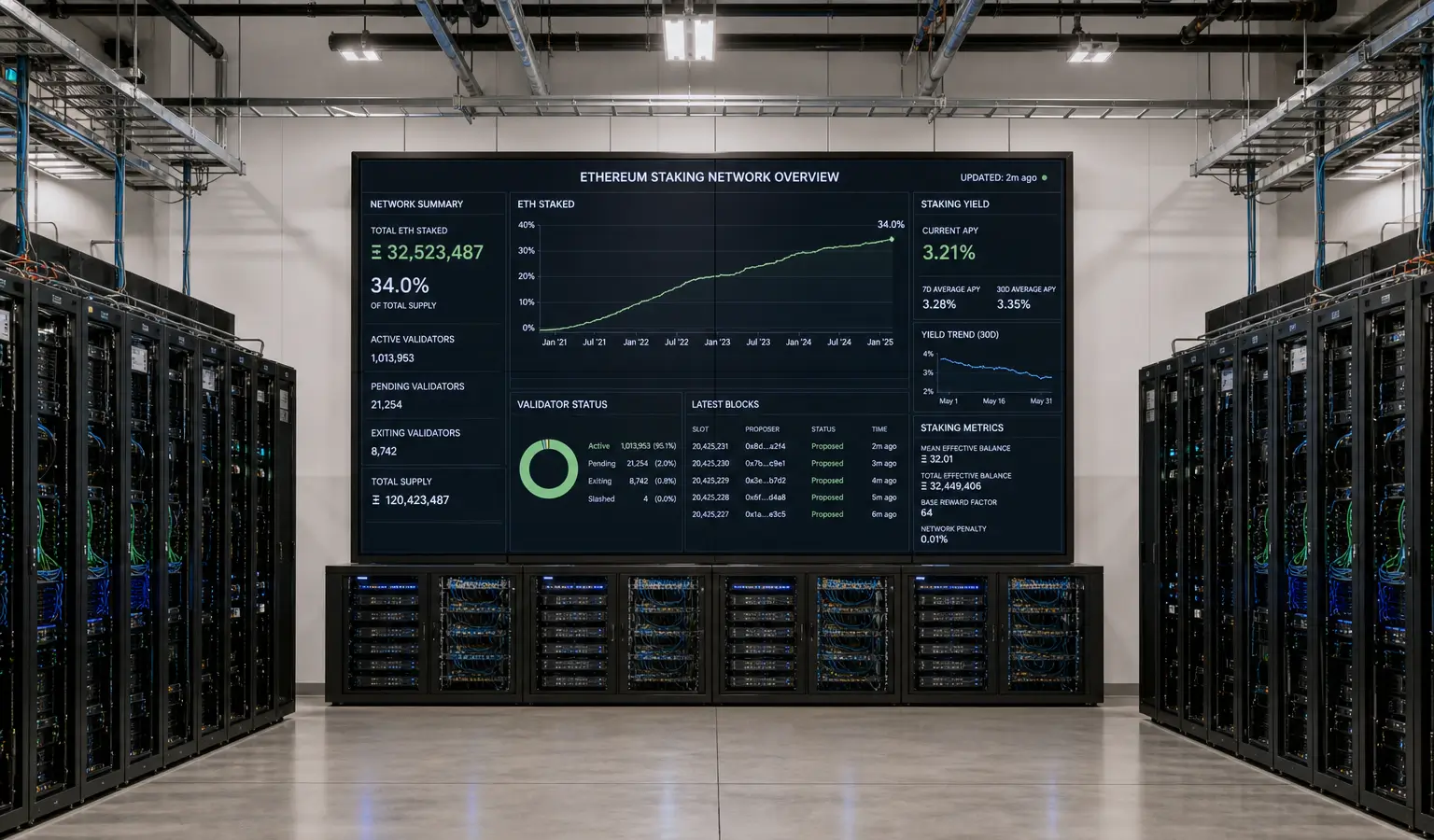
- The share of staked ETH has climbed to about 34% of circulating supply and, according to CryptoRank, keeps rising steadily.
- Bitmine sharply expanded its ETH staking position and reports about $257 million in annual staking revenue.
- EIP-8361 can lower protocol rewards by burning consensus issuance above 60,250,000 ETH, which squeezes staking yields.
The share of staked ETH has climbed to about 34% of circulating supply, while a new proposal could put heavy pressure on staking rewards over time. That puts Ethereum's appeal as a staking asset under the microscope, especially now that big players are expanding their positions further.
Staking Keeps Growing
According to CryptoRank, the 34% level was broken for the first time in April and has been steadily climbing since then. The validator queue has grown by about 1.75 million ETH per month since spring, pushing the staking ratio higher in a structural way. If that pace continues, more than 70 million ETH could be staked by January 1, 2028, equal to more than 55% of supply.
That trend fits into a broader institutional shift. Since the 2023 Shanghai upgrade, withdrawals have been possible and the barrier to large-scale staking has gotten lower. In 2026, extra support came from staking-enabled ETFs, such as BlackRock's ETHB, which give institutional investors access to staking yield without having to directly manage ETH themselves. Large custodians are also moving along: BNY adds staking to crypto custody platform for institutional clients, which could further expand the infrastructure for this market.
Bitmine Expands Its Position
Bitmine is playing a notable role in that growth. The treasury company launched its own staking platform in March 2026 and then expanded its position sharply. DLNews reported in January that it had about $6 billion (€5.2 billion) in staked ETH, nearly half of Bitmine's total crypto portfolio at the time of $13 billion (€11.3 billion).
Cointelegraph now reports that Bitmine brings in about $257 million (€223 million) a year in staking revenue. That is separate from the $45.7 million (€39.6 million) in quarterly revenue from ETH staking that the company reported for the quarter ending May 31, when staking already made up 98% of total revenue. The Ethereum Foundation also put 70,000 ETH to work in staking in April 2026, showing that not only commercial players but also larger ecosystems are increasingly putting their ETH to work.
What EIP-8361 Changes
Against that growing demand stands a possible brake on the protocol's supply side. EIP-8361 is still in Draft status and is not tied to a specific hard fork, but the proposal would introduce a SATURATION_BALANCE threshold of 60,250,000 ETH. Above that level, consensus issuance would be burned according to the proposed text.
For stakers, that could change the math. Lower protocol rewards mean lower yields, unless other income sources such as MEV make up for it. Analysts are already pointing out that record staking lines up with three-year lows in real yields, because rewards are being spread across more and more validators. For European crypto readers, that matters because staking is increasingly seen as a structural part of the Ethereum market, not just extra return on top of price gains.