Europol Warns of Quantum Risk for Bitcoin Wallets
Europol sees wallets as the main weak spot, not the Bitcoin blockchain itself. The agency is calling for a gradual move to post-quantum cryptography.
Key Takeaways
- Europol warns that future quantum attacks will mainly threaten wallets, not the Bitcoin blockchain itself.
- The agency is calling for a phased shift to post-quantum security for developers, miners, exchanges, and users.
- Early Bitcoin addresses from the Satoshi era are especially vulnerable because their public keys are already visible onchain.
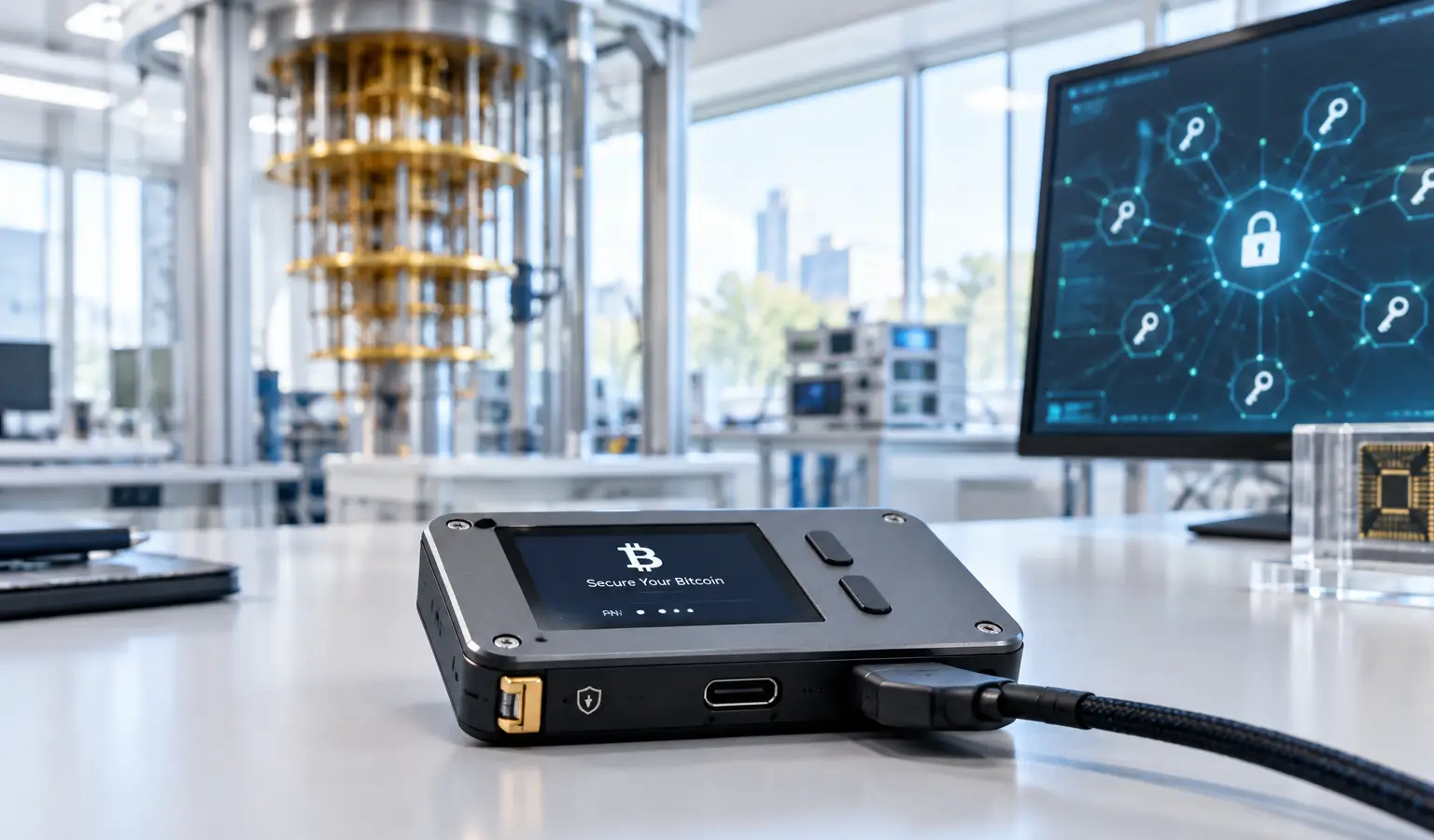
Europol warns that the biggest weakness in future quantum computer attacks is not in the blockchain itself, but in crypto wallets. According to the European police agency, the industry should already start moving toward post-quantum security in stages, because a powerful quantum computer could in theory derive a private key from a visible public key.
Wallets as the Weak Spot
The report from the European Cybercrime Center says the underlying hash functions of a blockchain are much more resistant to quantum attacks than the cryptography that secures wallets. That distinction matters, Europol says, because the debate often focuses too much on a possible attack on the blockchain itself. The agency stresses that the risk is really about ownership of coins stored in wallets.
Europol also explicitly says crypto will not collapse because of quantum computing. The immediate concern is whether someone could gain access to funds in wallets, not whether the Bitcoin blockchain could be rewritten.
Call for a Phased Migration
The police organization is urging developers, miners, exchanges, and users to start working together now on wallet upgrades and post-quantum cryptography. According to the report, a gradual transition is more realistic than a sudden emergency measure, because exposed keys cannot be made safe afterward.
Early Bitcoin addresses from the so-called Satoshi era stand out in particular. Their public keys are already visible onchain, which means they could in theory be more vulnerable if quantum computers ever become powerful enough. Europol also cites an earlier study that estimated converting all Bitcoin UTXOs to a quantum-resistant format would require a lot of blockspace, making the migration technically and organizationally difficult. Ripple is also preparing the XRP Ledger for post-quantum cryptography with a phased migration plan for wallets and transactions.
Why This Matters for Bitcoin
For European crypto investors, this is especially relevant because it shows where the real security risk is: not in the whole chain, but in the way ownership is currently recorded and managed. That makes wallet security and key management a bigger topic for the industry, especially now that more and more players are thinking about long-term Bitcoin protection. Europol is not describing an immediate crisis, but it is pointing to a technical problem the market cannot ignore. A similar debate is also playing out around quantum-safe wallets without a new address, where developers are looking for upgrades without forcing users to move to new addresses.