Kalshi Under Fire After Accusation of Fake Volume in ETH Perps
Critics point to a striking gap between volume and open interest in ETH-PERP; Kalshi says the numbers were reported according to CFTC rules and market conventions.
Key Takeaways
- Kalshi is under fire after critic Beni questioned the high trading volume in ETH-PERP against much lower open interest.
- Kalshi says the numbers are correct and that volume in these contracts reflects the maximum potential payout, not the cash put in.
- The debate highlights the growing role of regulated U.S. crypto derivatives and the importance of transparency for European market watchers.
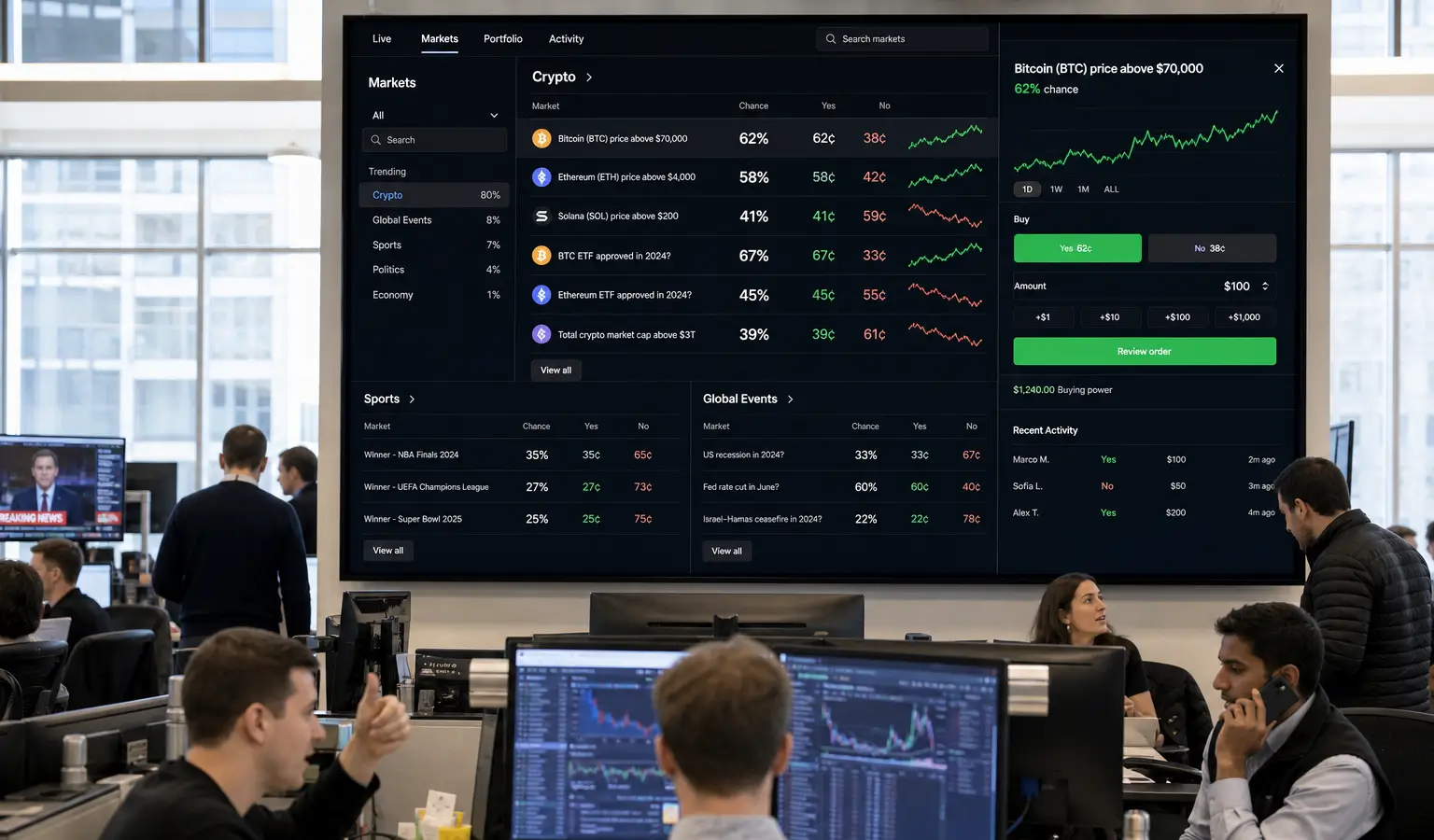
Kalshi is under fire after a critic on X questioned the trading volume of its new crypto perpetual futures. The debate mainly centers on the ether contracts, where, according to the critic, a strikingly large volume lines up with much smaller open interest. Kalshi says the numbers are being interpreted wrong and that the reporting matches how the market measures this kind of contract.
Accusation Around ETH Volume
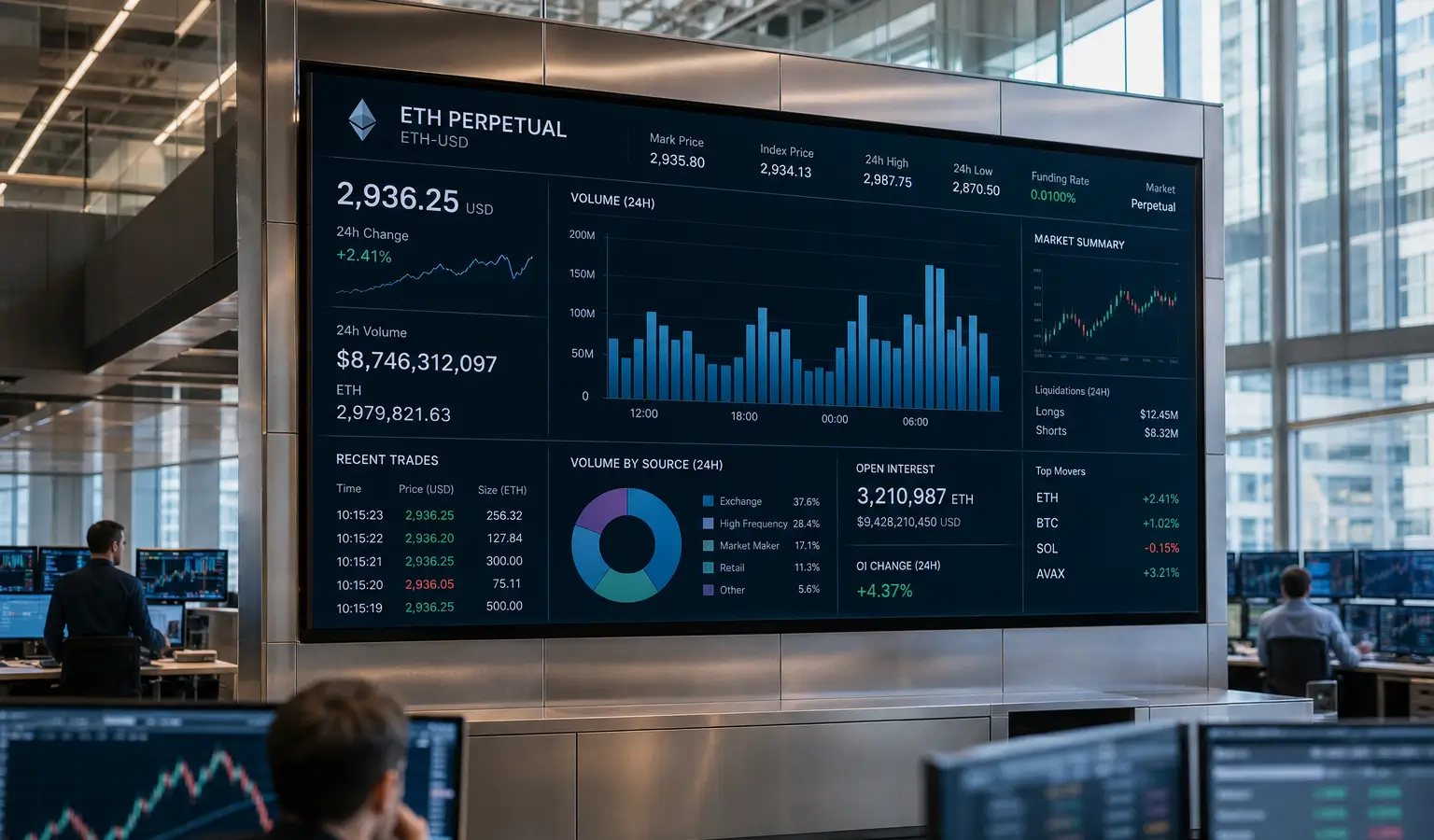
The criticism came from Beni, a quantitative analyst and co-founder of Stealth Neolab. He pointed to Kalshi's ether contract ETH-PERP, which he said showed $539 million (€470 million) in 24-hour volume versus just $3.1 million (€2.7 million) in open interest. That is a ratio of 174 times, something that in the crypto market often immediately raises questions about wash trading or artificially inflated activity.
Beni also pointed to a pattern of repeated $5,500 (€4,800) trades, which he said accounted for up to 58% of total volume in ether perpetuals on four different days. He also referred to a rebate structure that for certain Self-Clearing Members can result in net zero costs, which he said could increase the incentive to inflate volume.
Kalshi Points to Reporting
IcoBeast.eth, who works in product development at Kalshi, rejected that reading. According to him, the original criticism already contained an error, because the Artemis chart being cited showed prediction-market volume, not perpetual volume. He also stressed that Kalshi uses the same reporting convention as Polymarket: volume stands for the maximum potential payout, not the amount a trader spends upfront.
That makes the headline numbers higher than the cash put in. If someone buys 100,000 contracts for 30 cents, that trader pays $30,000 (€26,200), but $100,000 (€87,300) is recorded as volume because each contract can eventually pay out $1 (€0.87). According to Kalshi, this is about real demand for contracts, not fake volume.
Why This Matters for Europe
The case shows how quickly the crypto derivatives market is shifting from offshore platforms to regulated U.S. venues. Kalshi launched its crypto perpetual futures in May 2026 and got the green light for them from the Commodity Futures Trading Commission, a move that made these products more accessible in the U.S. For European crypto followers, what matters most is that transparency, reporting, and access requirements are becoming more important here too, especially now that more regulated players are experimenting with perps.
Kalshi also stressed that it does not offer rebates on its crypto event prediction contracts and that anyone who meets CFTC requirements can become a Self-Clearing Member. The company says that as a regulated Designated Contract Market, it must file all incentive programs publicly with the regulator. In doing so, Kalshi is clearly trying to set itself apart from offshore perp exchanges, where those kinds of arrangements are often less visible.
The broader rise of prediction markets also plays a role. Kalshi and Polymarket recently saw their combined volume fall for the first time in a year, showing how sensitive this market is to shifts in trading activity and liquidity.