Kazakhstan Restricts Coinbase and Five Other Crypto Exchanges
The AFSA is cracking down on unlicensed crypto services in the AIFC; the measure applies only to users in that financial center, not nationwide.
Key Takeaways
- Kazakhstan has had Coinbase and five other crypto exchanges restricted in the AIFC for offering services without a license.
- The measure applies only to users in the Astana International Financial Centre and is not a nationwide ban.
- The AFSA enforces its own licensing regime for digital asset services and app distribution in the AIFC.
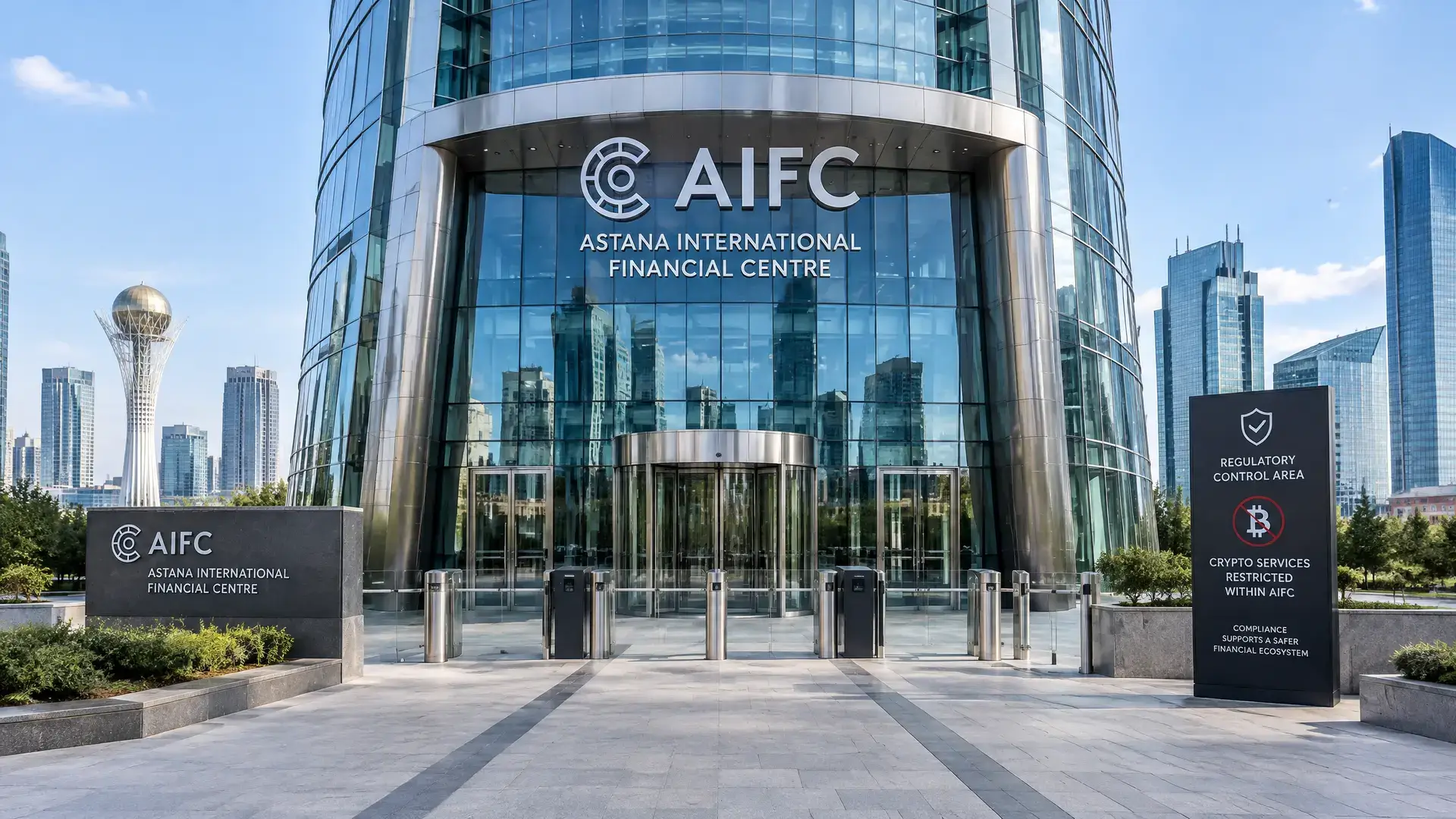
Kazakhstan has used the courts to restrict Coinbase and five other crypto platforms from offering services without a license inside the Astana International Financial Centre (AIFC). The measure applies to users in that financial center in Astana and is therefore not a nationwide ban. The case shows how strictly the local regulator is acting against unlicensed crypto services in part of the country where its own regulatory framework applies.
Which Platforms Were Affected
The Astana Financial Services Authority (AFSA) said the orders apply to BingX, Bitcoin.com, Huobi Global, also known as HTX, BitMart, Coinbase, and WEEX. The platforms are not allowed to offer or promote unlicensed digital asset services inside the AIFC, and they also cannot distribute mobile apps for those services.
In a ruling from September 15, the judge noted that the restrictions apply only to the AIFC and to users located there. That means the rest of Kazakhstan is outside this specific measure.
The AIFC Has Its Own Rules
The AIFC is a financial center in Kazakhstan's capital that operates under its own legal framework. That framework is based on English common law and has its own regulator, the AFSA. Crypto companies need a license there to offer services within the center.
According to the AFSA, enforcement started in 2025 with warnings to more than 20 crypto platforms. Lawsuits followed in early 2026. LBank was also named in the first case, but was later removed after the platform addressed the regulator's concerns and blocked access in Kazakhstan.
Why This Matters
For European crypto readers, the key point is that Kazakhstan is not taking a one-size-fits-all approach, but instead uses a separate regime for the AIFC. That makes it clear that crypto exchanges in some markets have to deal not only with national rules, but also with local zones that have their own licensing requirements. For platforms that operate internationally, that can mean access varies a lot by region. Regulators are seeing the same thing in other markets too: South Korea blocks KuCoin, BitMart, and MEXC had already taken similar steps against unregistered foreign exchanges.