Morgan Stanley Cuts Circle Price Target on Weak USDC Outlook
Morgan Stanley sees slower growth and margin pressure for the USDC issuer, partly because of competition from tokenized money market funds and deposits. The bank also sees little traction for Circle's agentic payments.
Key Takeaways
- Morgan Stanley downgraded Circle to underweight and lowered its price target from $106 to $38 on a weaker earnings outlook.
- The bank expects USDC growth to slow as reserve income comes under pressure and transaction revenue carries thinner margins.
- Morgan Stanley sees more competition coming from tokenized money market funds, tokenized deposits, and newer stablecoin models.
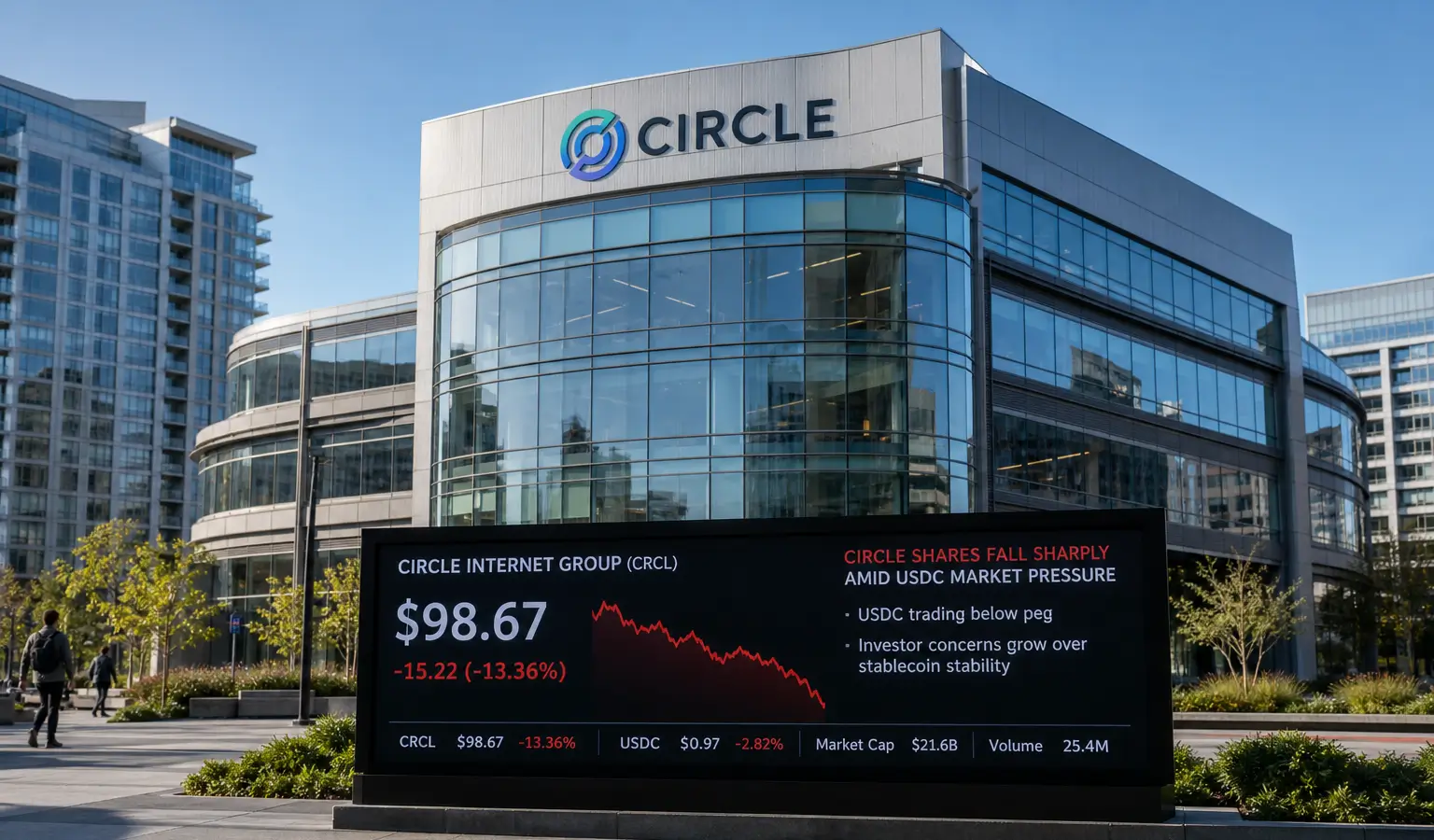
Morgan Stanley downgraded Circle to underweight and slashed its price target from $106 (€92) to $38 (€33). The bank said the USDC issuer faces a softer earnings outlook, even as investors are already factoring in more pressure on the company’s stablecoin revenue.
Circle shares dropped 6% on Monday after the note and are now down about 30% this year. That is an important signal for the company, since USDC still drives most of its revenue and investors are becoming less convinced that the reserve-based model can keep delivering the same results. It also comes as larger players look to capture some of that reserve income themselves, including through a new money market fund for stablecoin reserves.
Pressure on USDC Revenue
Analyst James Faucette said Morgan Stanley expects USDC growth to slow as reserve income gets squeezed and Circle leans more heavily on transaction revenue, which carries lower margins. The bank reduced its 2027 USDC supply estimate by about 33% and its 2028 estimate by 44%.
That leaves the firm’s expected 2027 GAAP earnings per share about 3% below Wall Street consensus, and its 2028 estimate about 20% below. The revisions highlight how exposed Circle is to both the size of USDC and the yield it earns on the short-term U.S. Treasuries backing those reserves.
Competition in Stablecoins Is Heating Up
Morgan Stanley also flagged tokenized money market funds and tokenized deposits as growing threats to Circle. In the bank’s view, those products could pull demand away from USDC and reduce reserve income, especially as the stablecoin market gets more crowded with new offerings such as Open USD, which Coinbase and BlackRock launched in June.
The bank is also unconvinced by Circle’s push into agentic payments. In the note, Morgan Stanley said daily transaction volume has fallen to about $41,900 (€36,300), with an average transaction size of roughly 24 cents. To the bank, that suggests the product has yet to gain meaningful commercial traction.
Why This Matters
For European crypto readers, the downgrade is a reminder of how quickly the outlook for stablecoin issuers can change when growth, interest income, and competition all move at the same time. It also shows that stablecoins are tied not just to crypto usage, but to the wider market for reserves, tokenized finance, and any future U.S. rule changes. If competition keeps building, the pressure could spread across issuers, exchanges, and distribution partners alike.