NYLIM Sees Tokenization as a Path to Personalized Portfolios
NYLIM is tying tokenization to customization in asset management and is already testing a high-yield bond strategy onchain through Centrifuge. Stablecoins and DeFi are next on the list.
Key Takeaways
- NYLIM views tokenization as a way to build investment portfolios that are far more personalized than what traditional markets usually allow.
- The firm is working with Centrifuge to move a high-yield corporate bond strategy onchain and improve back-office efficiency.
- Sy says stablecoins are the first realistic step into onchain finance, while wider institutional use of DeFi will take more time.
New York Life Investment Management says tokenization has a much broader purpose than just faster settlement or round-the-clock trading. Thomas Sy, head of multi-asset solutions at NYLIM, said blockchain stands out because it could let asset managers design portfolios in a far more customized way than traditional markets can handle.
Customization as the Main Use Case
In an interview, Sy said the future of asset management is centered on customization. He argued that blockchain is the only technology that can make personalization work at scale, since the customization can be built directly into the asset rather than layered on through operations.
That view lines up with a larger shift on Wall Street, where banks, asset managers, and market infrastructure firms are increasingly issuing tokenized versions of money market funds, private credit, and stocks. Citi estimates the tokenized real-world asset market could reach $5.5 trillion (€4.8 trillion) by 2030, up from about $30 billion (€26.2 billion) today. The wider tokenization market is also gaining momentum, with forecasts calling for a compound annual growth rate of 42.1 percent between 2026 and 2033.
NYLIM Takes the First Step
NYLIM recently partnered with Centrifuge to bring one of its high-yield corporate bond strategies onchain. In other words, the firm is not simply putting an existing fund on a blockchain, but testing a different way to construct portfolios.
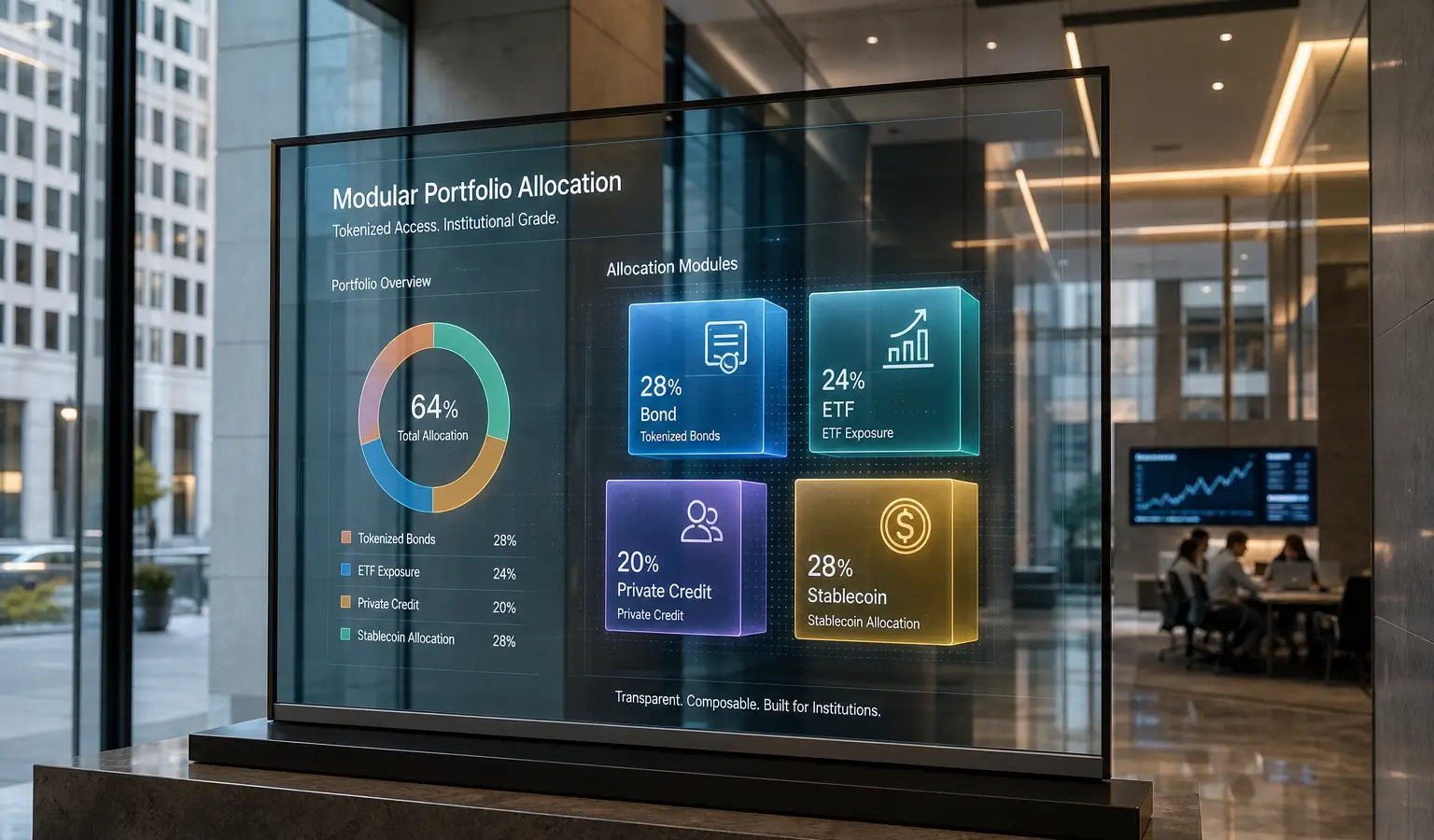
Sy noted that personalized strategies often blend ETFs, bonds, private credit, and other assets. That kind of mix is exactly why customization is so hard to scale efficiently. He also said tokenization could simplify transfer agency, settlement, and other back-office work, which may eventually help bring costs down for clients.
The market is already seeing more tokenized fixed-income products take shape. For instance, Baillie Gifford recently launched a tokenized bond fund on Ethereum and Solana.
Stablecoins Open the Door
Sy sees stablecoins as the first practical entry point for traditional financial institutions moving onchain. The stablecoin market has now grown to more than $300 billion (€262 billion) and is being used more often for cross-border payments and treasury management.
For European crypto readers, that matters because stablecoins and tokenized funds are increasingly being discussed together as part of the next phase of market infrastructure. If institutions begin operating onchain through stablecoins first, it could make it easier to adopt tokenized investment products later, even if broader rollout still depends on more institutional and operational maturity.
Sy also said NYLIM is looking into DeFi, but he expects wider institutional participation to take time. In his view, tokenized collateral, central clearing, and prime brokerage services will need to be in place before DeFi can be institutionalized at a larger scale.