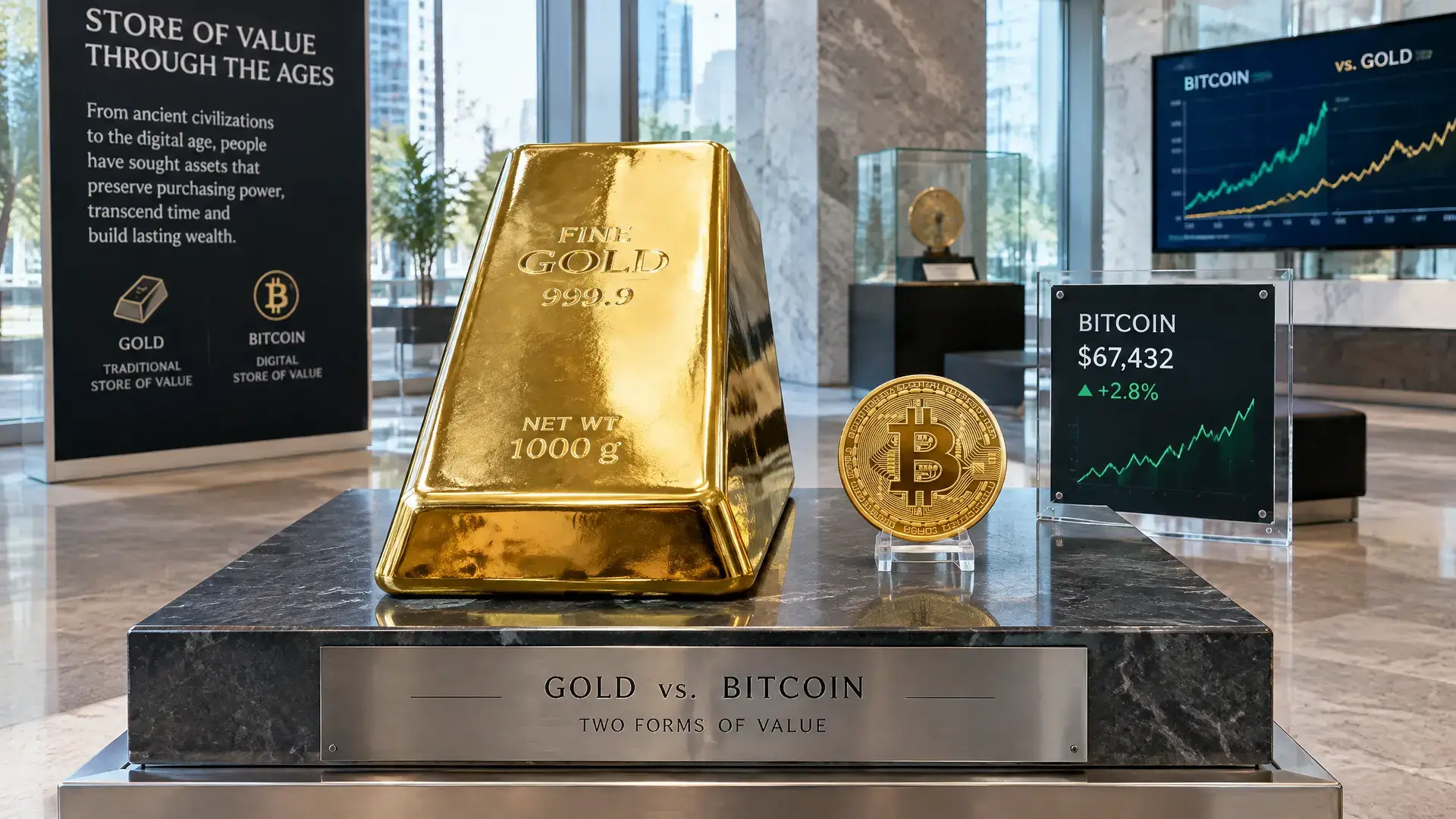
Oil in a Tension Zone Could Hit Bitcoin and Stocks
WTI is nearing a breakout point; a higher oil price could hit Bitcoin and Nasdaq stocks through inflation and interest rates.
Key Takeaways
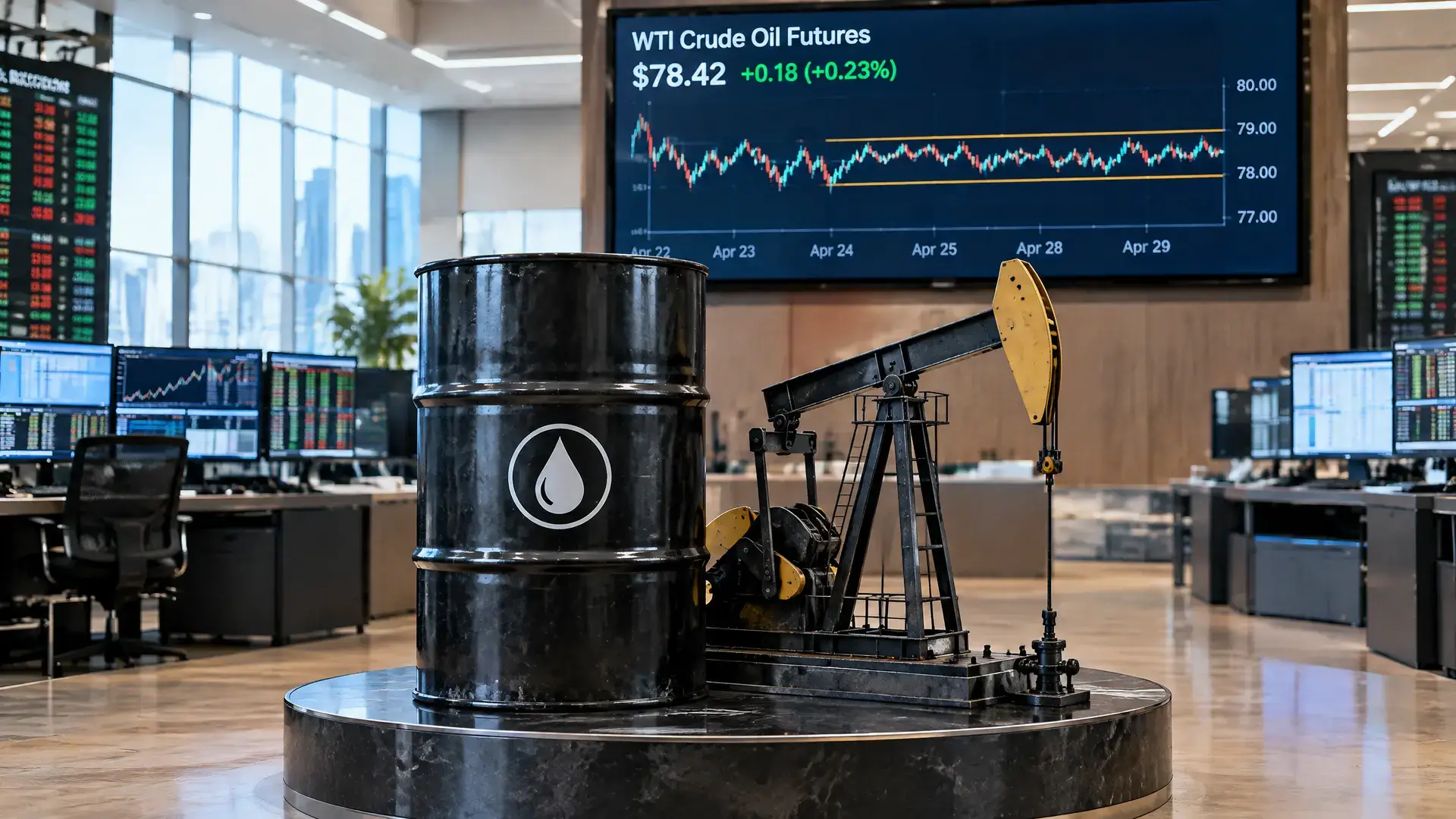
- WTI oil is trading in a narrow range around $102, with key levels at $105.50 above and $93 below.
- A higher oil price could push up inflation and interest rates, which would be unfavorable for Bitcoin and other risky assets.
- Bitcoin often moves more closely with stocks than with oil; the 30-day correlation with the Nasdaq 100 was 0.64.
Bitcoin investors are watching not just the crypto market this week, but oil too. The WTI price seems to be at a turning point. A breakout could have a big impact and, through inflation, also affect the broader market. That matters for Bitcoin, because in practice the coin often moves more in step with stocks than with the idea of digital gold.
WTI Is Stuck
The daily WTI chart shows an increasingly tight range. The wide swings in March and April have narrowed, and the price is now moving toward a narrow range around $102 (€92). Traders often call a pattern like this a coil or pennant: the market gets tighter, as if there is tension on a spring.
That does not say anything yet about the direction. A breakout can go either up or down, and that is exactly why traders are watching the levels around $105.50 (€95) on the upside and about $93 (€84) on the downside. Above $105.50 (€95), the area around $117 (€105) to $119 (€107) comes into view, while a drop below $93 (€84) would open the door to lower oil prices.
Why Bitcoin Is Watching Too
A higher oil price can fuel inflation and keep interest rates higher for longer. That would tighten financing conditions across the market, something that is often unfavorable for risky assets like Bitcoin and tech stocks. The Federal Reserve Bank of San Francisco previously warned that volatile oil markets cloud the economic outlook, while Vanguard sees high oil prices as a possible stagflation risk.
The Federal Reserve Bank of Dallas also pointed out that the war between Iran and Israel can affect inflation expectations through more expensive gasoline. At the same time, the U.S. economy is less dependent on oil than it used to be, which means the impact of price shocks may be smaller than in earlier decades. For European readers, that matters because oil prices do not just affect inflation in the U.S., but also set the tone for global risk appetite.
Bitcoin Often Follows Stocks More
Bitcoin is often described as digital gold, but in practice the coin often behaves more like a growth stock. According to CoinDesk, the 30-day correlation with the Nasdaq 100 was 0.64. With oil, that correlation was still plus 0.18 shortly before the war between Iran and Israel, but since then it has been minus 0.47.
That makes the breakout in oil extra important for the crypto market. If oil keeps rising, that could line up with higher interest rates and weaker demand for risky assets. If oil falls instead, some of the inflation pressure eases and that could give the market a bit of breathing room.