Perps Dominate Crypto Trading, but Funding Is Still a Pain Point
Perpetual futures draw the most volume, especially in altcoins, but funding costs can add up quickly. That makes perps a core part of both liquidity and price discovery.
Key Takeaways
- Perpetual futures are the preferred derivative for many crypto traders because they offer deep liquidity, low costs, and strong capital efficiency.
- Funding rates remain the biggest drawback, since they can make a position more expensive the longer it stays open.
- Perps now trade more than $200 billion in volume every day and are the main tradable derivative for many altcoins.
Perpetual futures, better known as perps, have become the default derivative for a lot of crypto traders. Because they never expire, offer high leverage, and attract huge trading volume, they are fast, relatively cheap, and efficient to use. But there is one cost that never really goes away: the funding rate, which can make holding a position more expensive over time.
Why Traders Choose Perps
For many traders, perps are not just one more product on the menu. They are the main way to trade crypto, especially outside Bitcoin and Ethereum, where dated futures often lack the liquidity to be useful and spot trading is less attractive for active traders who do not want to hold the underlying tokens.
Traders usually point to three main advantages: deep liquidity, low fees, and efficient use of margin. With a relatively small amount of collateral, they can take on a much larger position, which makes perps appealing to both retail and institutional traders. Since the market runs 24/7, price discovery also continues outside normal exchange hours.
That is a big reason perps now see more than $200 billion (€174 billion) in daily volume. For many altcoins, they are also the only meaningful derivative that trades at scale, since traditional futures on those tokens are often too thin to matter.
Funding Makes the Difference
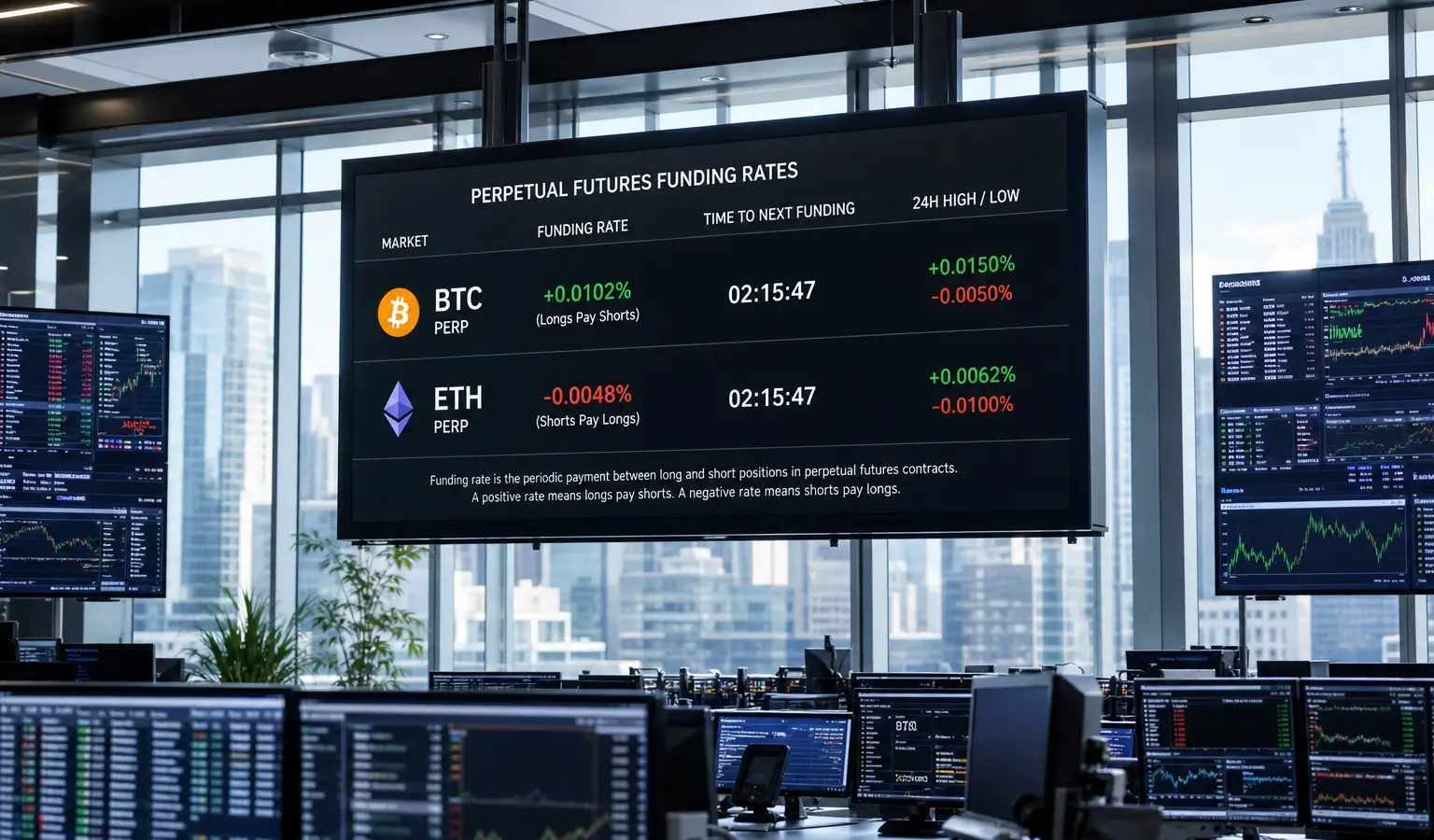
The trade-off shows up in funding. In addition to trading fees, traders pay a recurring funding charge to keep a position open. That rate changes with market conditions and is usually settled every eight hours, which makes it hard to know the exact cost in advance.
According to the traders quoted in the article, that can be a bigger problem than liquidation risk. A position may look profitable on paper, but if funding stays elevated for long enough, the trade can end up earning less or even losing money. Over longer holding periods, those costs can pile up quickly.
Market structure also plays a role. Perps are traded across multiple crypto exchanges, so traders can spread capital across different venues. That makes the product efficient, but it also means pricing, funding, and execution can differ a lot from one platform to the next.
What This Says About the Market
For European crypto readers, this is a reminder of how central derivatives have become to the broader market. Perps are not just a trading tool. They are also a major driver of liquidity and price discovery, especially for smaller tokens where spot markets and dated futures are less developed. At the same time, the discussion around funding shows that leveraged crypto trading comes with costs and risks that are not always obvious at first glance.
The traders also note that during periods of stress, perps can take over the market even faster because they are always open. That makes them relevant for anyone following crypto, whether they are actively trading or just trying to understand how prices are set outside traditional exchange hours.
Perps are not a new idea either. BitMEX helped bring the model into the mainstream in 2015 and played a major role in shaping the perpetual swaps market. A separate article on perpetual swaps explains how funding payments and leverage have since become standard features in crypto derivatives.