Riksbank Wants E-Krona Back on the Table Because of Stablecoins
The Swedish central bank fears that stablecoins and the digital euro could push the krona out of payments. An e-krona would make digital central bank money and offline payments possible.
Key Takeaways
- Sweden’s Riksbank wants lawmakers to take another look at an e-krona because of the rise of foreign stablecoins and the digital euro.
- The central bank sees an e-krona as digital central bank money that could protect the krona’s role in payments.
- Sweden is using less and less cash, while the Riksbank also sees an e-krona as a backup option during outages.
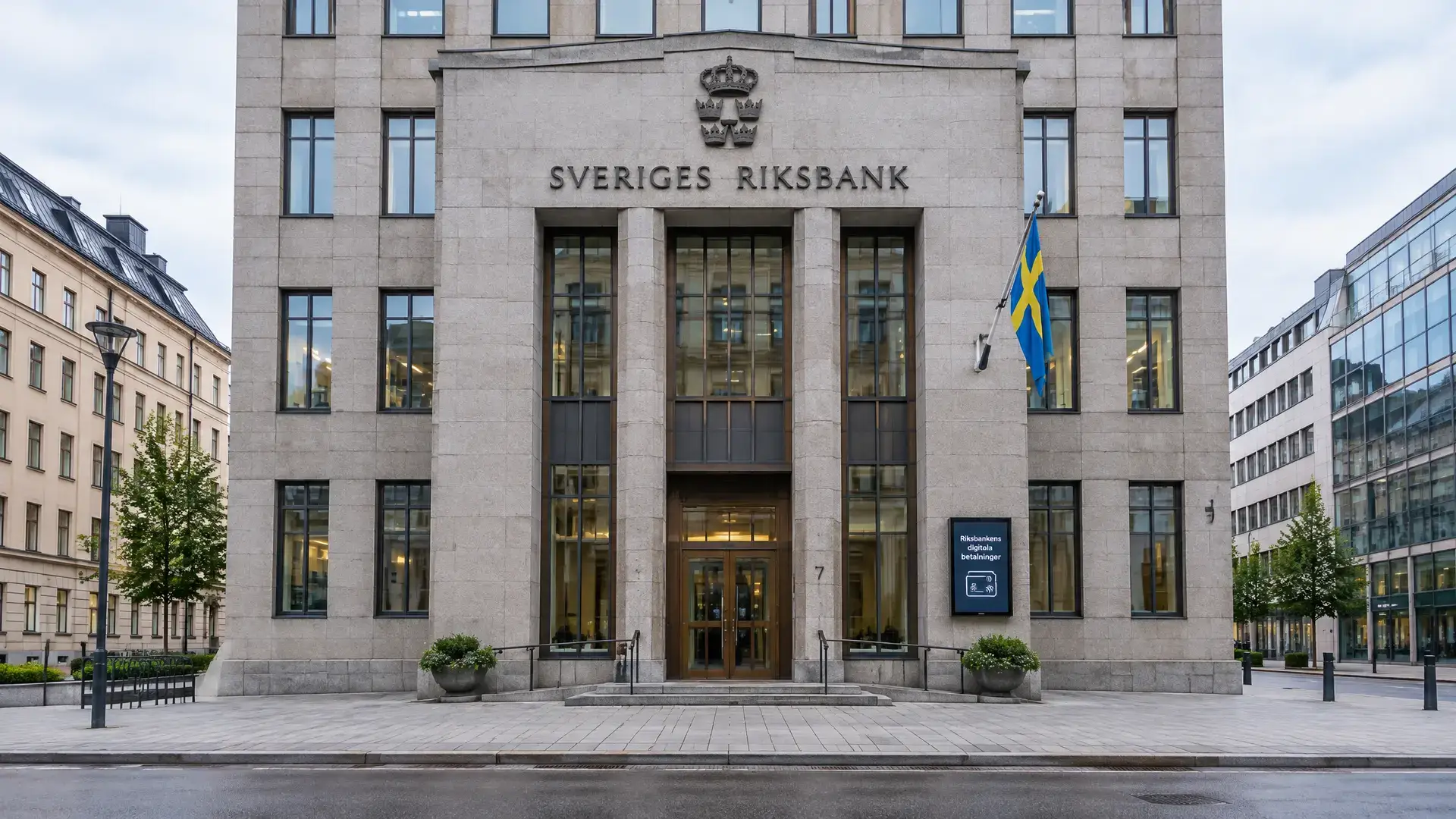
The Swedish central bank wants lawmakers to take another look at a digital krona now that foreign stablecoins and a planned digital euro could shrink the krona’s role in payments. The Riksbank sees an e-krona as a way to give the public access to digital central bank money and protect the national currency’s position in the payments system.
New Pressure on Payments
According to the Riksbank, this is not just about technology, but also about access and control. If cash keeps disappearing and Swedish kronor are not available in a usable digital form, the krona could have a harder time competing with other, more convenient digital payment methods that also work across borders, according to Deputy Governor Per Jansson.
The central bank is not taking a final position on issuance yet, but it does want lawmakers to start working on legislation now. According to the Riksbank, the process would take at least five years. That makes the debate timely, even though a government review in 2023 still concluded that there was too little public demand for an e-krona at the time.
Cash Is Disappearing Fast
The Riksbank ties the renewed debate to the rapid decline in cash use in Sweden. Only 5% of the Swedes surveyed used cash for their last purchase, according to data cited in the report. Less use of the krona in everyday payments could make it harder for the central bank to steer the economy and protect financial stability.
On top of that, the Riksbank also sees an e-krona as a backup during power outages or telecom network disruptions. Offline payments are among the possible features, which would also make the currency relevant as an emergency option outside normal online payments.
European Context Matters Too
The debate is not happening in isolation from Europe. The European Central Bank is continuing work on the digital euro, which could debut in 2029 if EU lawmakers approve the rules. The Riksbank says Sweden could even build on that infrastructure, showing how closely national and European plans for digital money are now tied together. Pressure to regulate digital payment forms is also growing elsewhere in Europe; a euro stablecoin with a banking license shows how quickly that market is developing.