Robinhood Chain Draws Memecoin Trading, but RWA Activity Is Still Small
Robinhood is pushing retail onboarding through its Wallet, tokenized assets, and onchain derivatives. For now, though, most of the volume is still coming from memecoins, while RWA activity remains limited.
Key Takeaways
- Robinhood Chain briefly climbed to No. 2 in DEX volume, but Robinhood is mainly focused on onboarding retail users into tokenized assets and onchain derivatives.
- Most of the activity came from memecoin trading, especially around CASHCAT, while actual TVL was much lower than bridged TVL.
- The chain is built for tokenized real-world assets and DeFi, but current usage is still small and heavily speculative for now.
Robinhood Chain turned heads over the weekend after jumping to No. 2 in DEX volume. But for Robinhood, the bigger story is not whether it can siphon trading away from crypto-native platforms. The real goal is to bring the app's more than 10 million active users into tokenized assets and onchain derivatives, without making them leave the app to find a specialized crypto exchange first.
Robinhood Is Betting on Onboarding
According to Seong Seog Lee, Robinhood Crypto's head of product, the company is not trying to win by taking volume from existing traders. Instead, it is targeting retail users who have never touched a perpetuals contract before, but can now access one through Robinhood Wallet. Lee said users in more than 120 countries can directly trade gold, silver, FX, and crypto perps through Lighter inside the wallet.
That fits into Robinhood's broader push to move traditional financial products onchain. Robinhood Chain went live for the public earlier this month after a test phase that began in February. Built as an Ethereum layer 2 on Arbitrum, the chain is meant to support tokenized real-world assets and DeFi applications.
Memecoins Are Driving the Early Activity
In reality, though, the early activity is coming from a different place. On July 12, Robinhood Chain handled about $878 million (€768 million) in 24-hour DEX volume, briefly putting it ahead of Coinbase's Base and Ethereum. But the next day, perpetuals activity was only $5.9 million (€5.2 million), well below Hyperliquid, which processed $8.9 billion (€7.8 billion) over the same period.
Those figures suggest that a large share of the capital on the chain is still parked rather than actively deployed. Robinhood Chain reported $734 million (€642 million) in bridged TVL, compared with just $211 million (€185 million) in actual TVL. In other words, assets have been moved onto the chain, but they are not yet flowing into lending markets or yield products at scale.
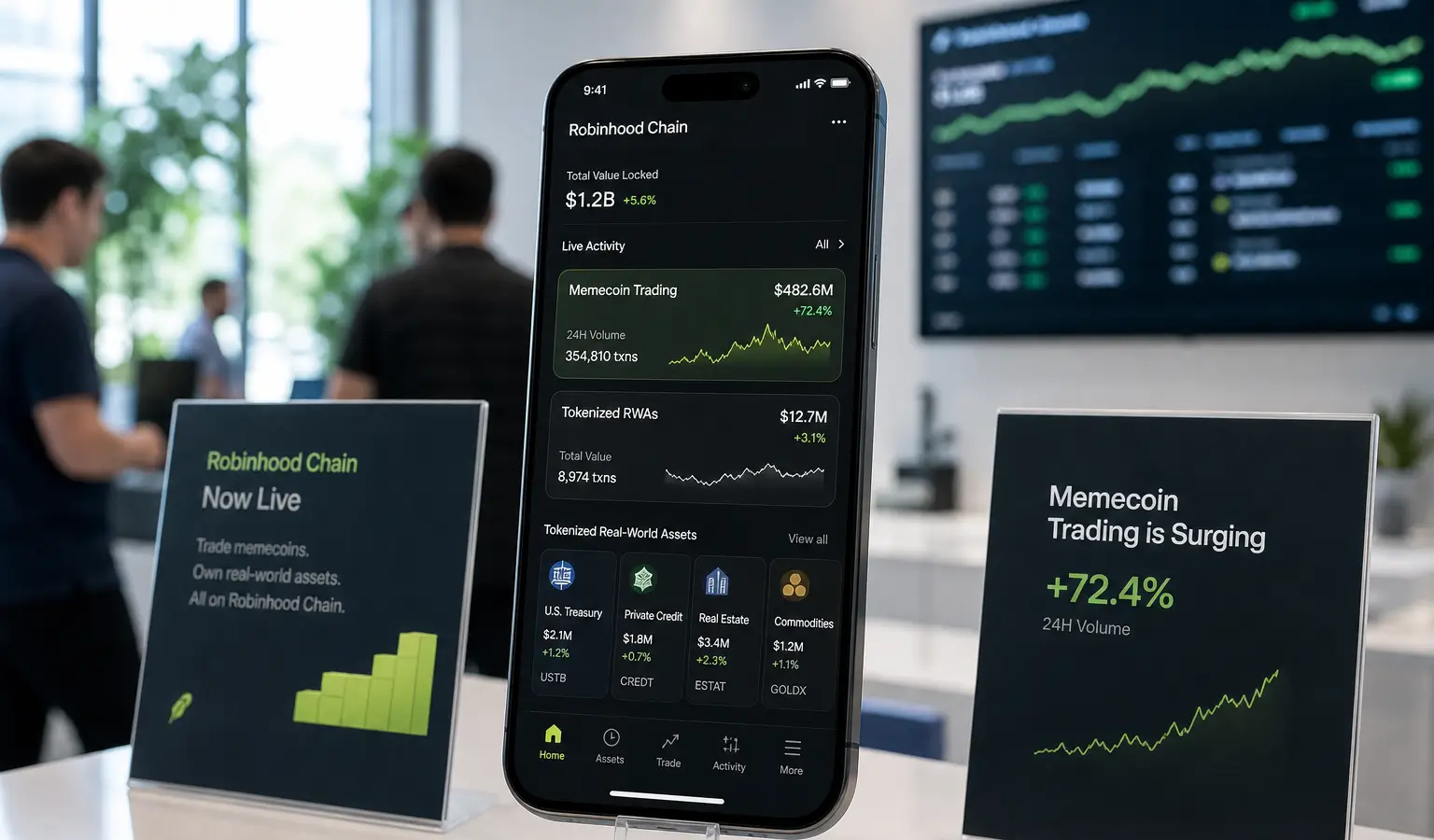
The biggest burst of trading came from memecoin buyers piling into CASHCAT, a token named after Robinhood's former mascot. The token surged more than 2,100 percent in its first week and briefly reached a market cap of $156 million (€136 million). That is more than 12 times the size of the chain's entire tokenized real-world asset market, which, based on available figures, stands at $12.66 million (€11.1 million).
What This Means for Europe
For European crypto readers, Robinhood Chain is notable because it shows how quickly a consumer brand can drive traffic to blockchain infrastructure, even when the core product story is still relatively small. The combination of wallet integration, tokenized assets, and onchain derivatives could matter for firms watching the next wave of retail adoption. At the same time, the memecoin-heavy trading mix is a reminder of how speculative early activity on new chains can be, especially before usage is tied to broader real-world financial products.
Robinhood is still leaning into the long-term pitch. The company says the chain is built to expand financial access and points to future use cases such as 24/7 stock token trading and onchain lending. Whether those products eventually overtake memecoin trading is something the market will have to answer in the months ahead.