SBI Expands With Coinhako in Its Asian Crypto Push
Coinhako will fit into SBI’s regional plan for regulated crypto infrastructure, alongside stablecoins, tokenization, and cross-border settlement in Asia.
Key Takeaways
- SBI Group has taken a majority stake in Singapore-based crypto platform Coinhako.
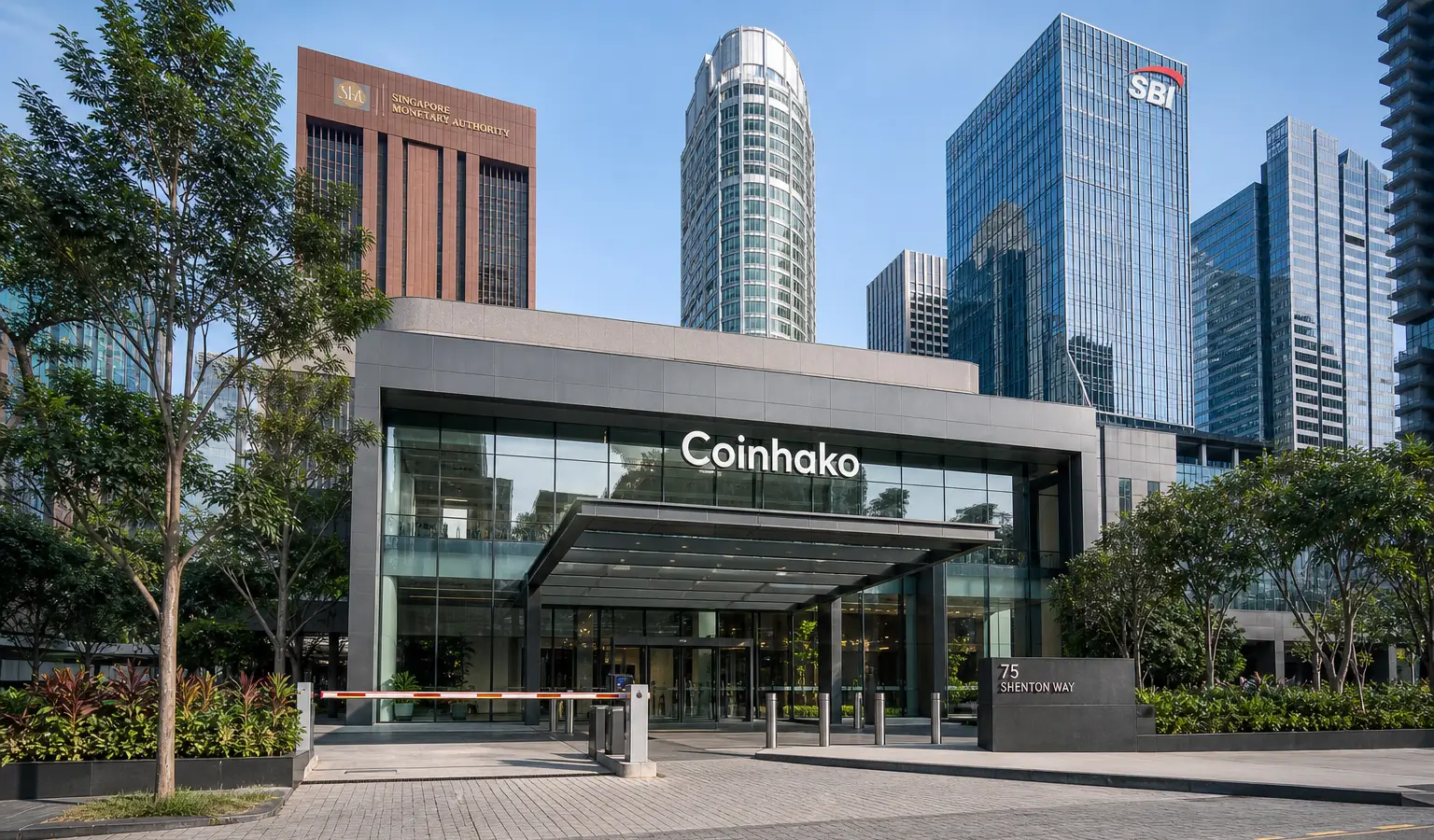
- Coinhako holds a Major Payment Institution license from the Monetary Authority of Singapore.
- SBI is building a digital asset chain in Asia for trading, settlement, tokenization, and infrastructure.
SBI Group has acquired a majority stake in Singapore-based crypto platform Coinhako, adding another piece to its plan to build a wider digital asset network across Asia. The Japanese financial group is aiming to connect trading, settlement, tokenization, and infrastructure into one regional framework.
Singapore as a Hub
Coinhako operates under a Major Payment Institution license from the Monetary Authority of Singapore, giving it a clear regulatory footing in the country. That lines up with SBI’s broader effort to link markets across Asia, especially at a time when regulation remains uneven across the region and Singapore continues to stand out as one of the more crypto-friendly jurisdictions.
SBI says it wants to create a global corridor for digital assets by connecting exchanges around the world. CEO Yoshitaka Kitao has previously said the company, which serves more than 14 million users and holds $308 billion (€269 billion) in assets under custody, should act as a bridge between traditional finance and blockchain-based infrastructure.
From Stablecoins to Tokenization
The Coinhako deal follows SBI’s partnership with Ondo Finance, where Japanese stocks and other assets are being tokenized with the JPYSC stablecoin as the settlement layer. SBI has also teamed up with the Solana Foundation, which is taking an equity stake in SBI R3 Japan, a company that will soon be renamed SBI Solana Global.
That new company is expected to focus on stablecoins and the tokenization of real-world assets, including corporate bonds and real estate. Taken together, the moves suggest SBI is pushing toward a model where issuance, settlement, trading infrastructure, asset management, and retail distribution all sit within the same chain.
Why This Matters
For European crypto readers, the deal is another sign of how quickly major financial groups in Asia are moving beyond one-off crypto bets and into full-scale infrastructure. That matters because these firms are not just buying exchanges. They are also building the rails for stablecoins, tokenization, and cross-border settlement. SBI also said the strategy is based on the long-term growth of the sector, not short-term market swings.
There is still one technical catch: JPYSC does not yet support withdrawals to external wallets. SBI says usage is currently limited to accounts inside SBI VC Trade, which means the stablecoin is not yet broadly usable for transactions on public blockchains.
SBI’s wider push into digital infrastructure is also reflected in its acquisition of Bitbank, which earlier strengthened the group’s position in Japan’s crypto market.