Tether Completes First Full Audit With KPMG
KPMG gave Tether an unqualified opinion on its 2025 financial statements. The audit is meant to bring more clarity to USDT reserves and the role of stablecoins in the market.
Key Takeaways
- Tether says it has completed its first full financial audit, with an unqualified opinion from KPMG U.S. on the 2025 financial statements.
- KPMG reviewed transactions, systems, valuations, counterparties, ownership records, and physically present gold bars, among other things.
- Tether says reserves exceeded liabilities by $6.814 billion as of December 31, 2025, while USDT remains important for trading and liquidity.
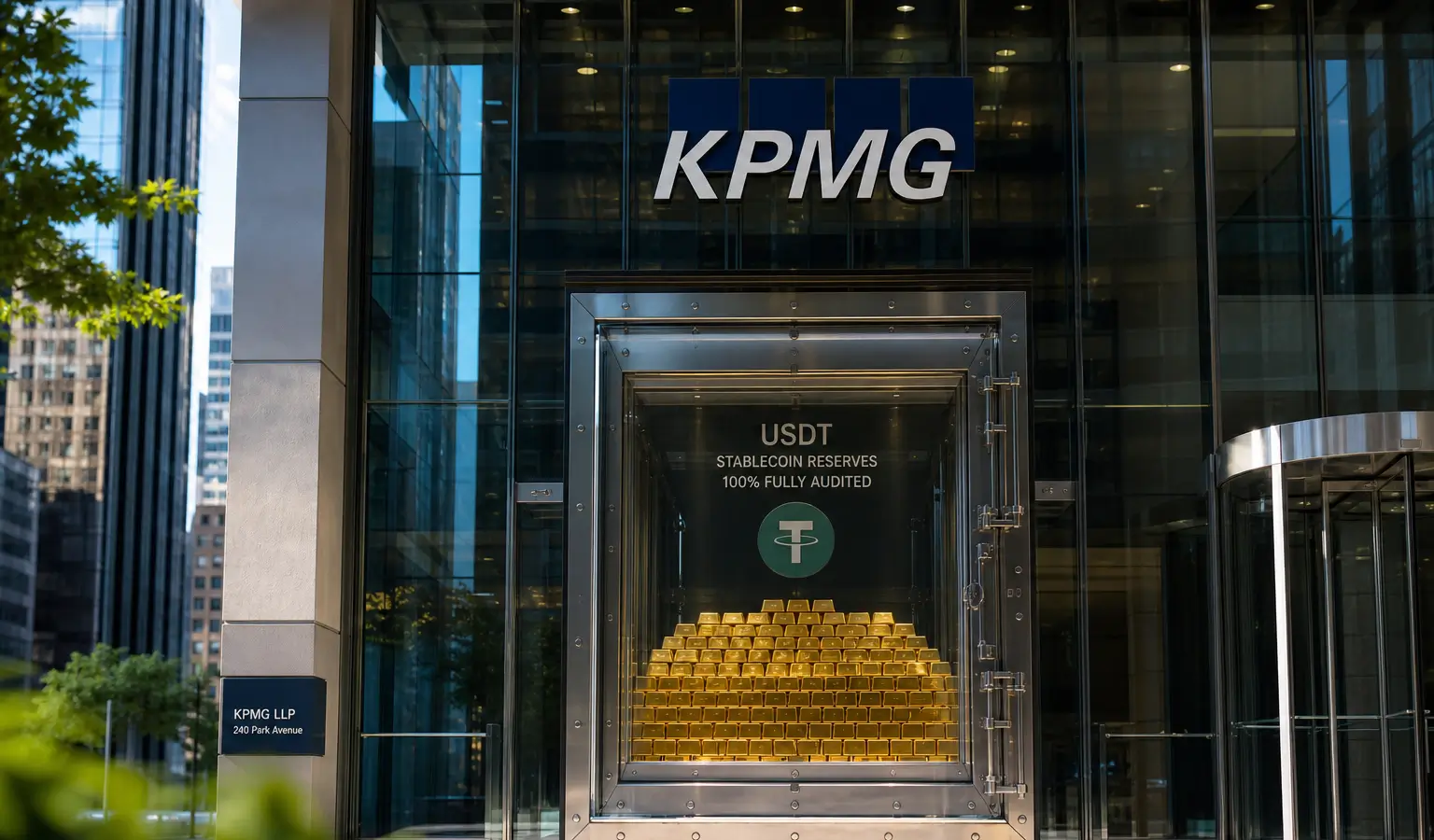
Tether says it has completed a full financial audit for the first time, a step the USDT issuer had promised for years while questions about the underlying reserves kept coming back. According to the company, KPMG U.S. gave Tether International's 2025 financial statements an unqualified opinion.
What KPMG Reviewed
According to Tether, KPMG looked at transactions, systems, valuations, counterparties, and ownership records. The auditors also reportedly counted and inspected the company's gold bars in person. That means the review goes beyond the quarterly attestations Tether published for years after a settlement with the New York attorney general's office.
An attestation gives insight at a specific point in time into things like the makeup of reserves. A full audit is broader and also tests transactions, assets, liabilities, revenue, cash flows, and the evidence behind them. Tether says the financial statements as of December 31, 2025 showed that reserves exceeded liabilities by $6.814 billion (€5.9 billion).
More Than Just Reserve Numbers
The move matters because USDT plays a core role in crypto trading and market liquidity. Tether has also become a major buyer of U.S. Treasury bills as part of its reserve management, which makes the company more visible outside the crypto market too.
The debate around Tether is not new. In 2021, the company was fined $41 million (€35.5 million) by the CFTC for misleading claims about dollar backing, which further increased attention on its reserve practices. That is exactly why the completion of a full audit will likely be seen by many market participants as an important test of the transparency Tether has promised for years.
That fits into a broader shift where stablecoins are increasingly judged on their role in payments and settlement. For example, a recent analysis describes stablecoins and tokenization as infrastructure for moving capital faster in always-on markets.
Why This Matters for Europe
For European crypto investors, this is especially relevant because USDT is still one of the main trading pairs on crypto exchanges. More clarity around reserves could feed the broader debate about stablecoin risks, especially now that regulators in multiple regions are taking a harder look at backing, reporting, and governance. At the same time, an audit by itself does not change the fact that the market mainly judges USDT based on trust, liquidity, and how it is used in day-to-day trading.