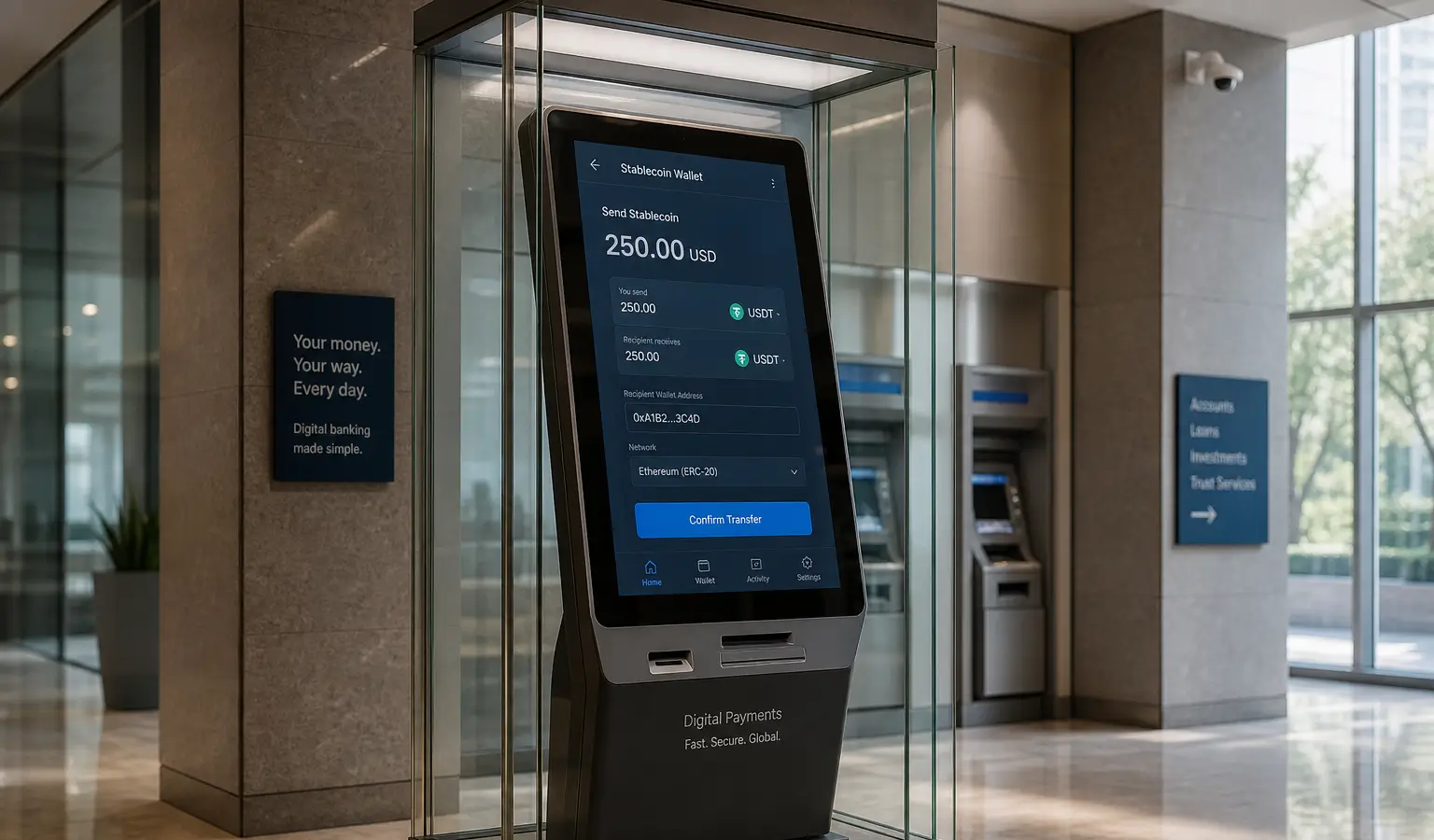
Visa Connects VisaNet to Onchain Lending for Stablecoins
Visa is testing a model with Credit Coop that combines settlement data and onchain transactions to finance stablecoin card programs and fintechs.
Key Takeaways
- Visa is linking VisaNet settlement data to onchain lending to help stablecoin card programs and fintechs access working capital.
- The company is testing this with Credit Coop and says it has financed more than $2.5 billion in settlement volume since 2023 without defaults.
- Visa says it has more than 160 stablecoin-linked card programs, with payment volume nearly 200% higher than a year earlier.
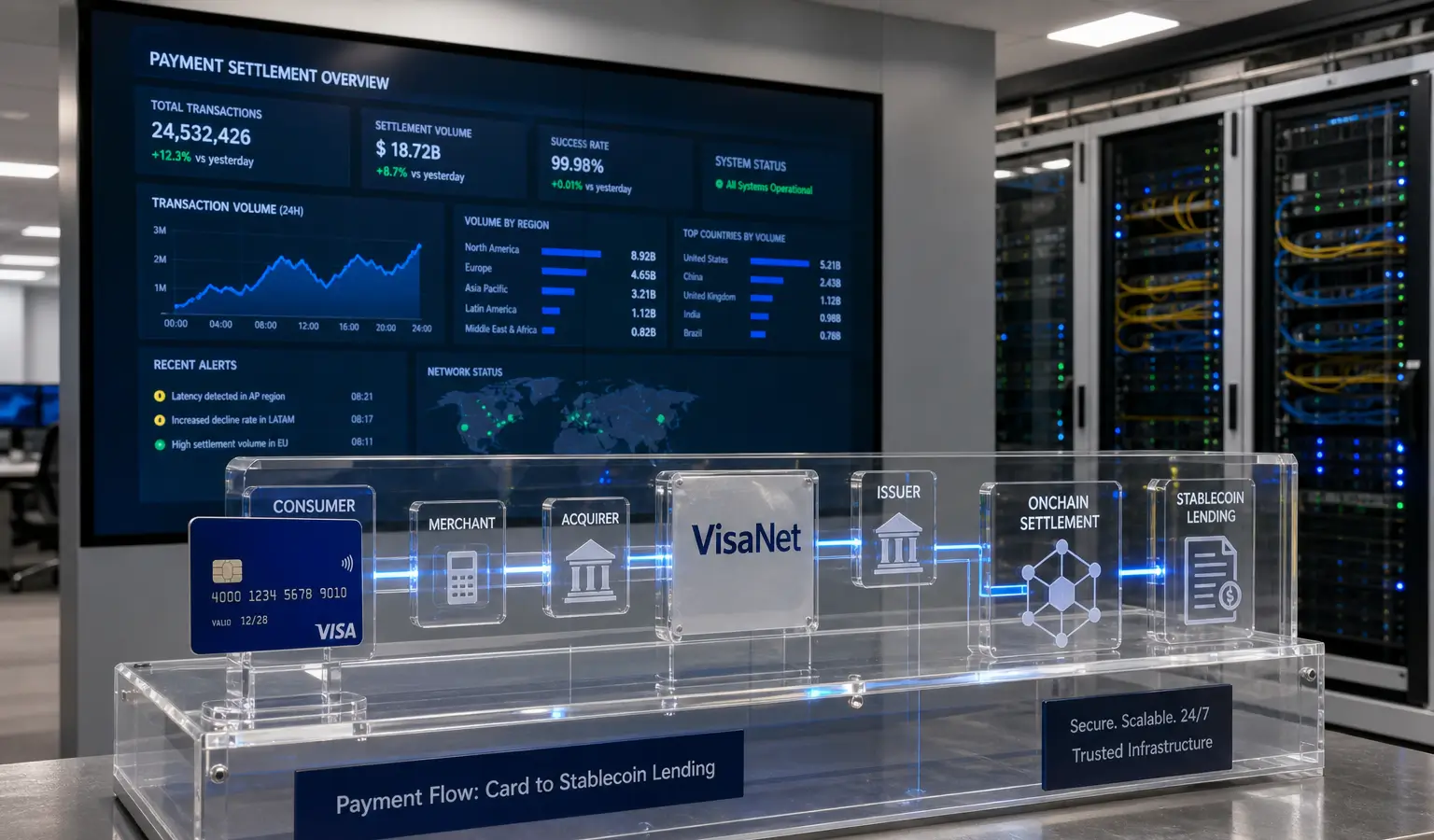
Visa is linking its VisaNet settlement data to onchain lending to help stablecoin-related card programs and fintechs access working capital. According to the company, combining payment data and onchain transactions can give lenders a clearer view of settlement receivables, the amounts a program is still owed after payments are completed.
How the Model Works
With the customer’s permission, Visa can combine that settlement data with onchain transactions to assess credit performance and automate parts of the financing around settlement. That is especially relevant for young payment companies, which often struggle to get traditional financing because banks want to see scale, history, or manual review before extending credit.
Visa said more than 160 stablecoin-linked card programs now run on its network. Their payment volume was nearly 200% higher than a year earlier. At the same time, stablecoins are playing a bigger role in the broader payments market, while major players like Visa, Mastercard, and Stripe keep building out their infrastructure around them.
Credit Coop as a Pilot
Visa is already testing this approach in an early version with Credit Coop, a decentralized lender that uses smart contracts for financing, collateral management, and repayment. According to Visa, the model has supported more than $2.5 billion (€2.2 billion) in financed settlement volume since 2023, with no defaults in the participating facilities.
The system also processed more than 3,000 lending events and 9,000 repayments programmatically onchain. For the crypto market, that is a sign that stablecoin infrastructure is not just about payments, but also about the financing around them.
Visa’s broader stablecoin strategy has been visible for a while. In an earlier article about Visa’s stablecoin platform, it became clear that the company already lets banks, fintechs, and crypto firms issue, store, and settle directly through its network.
Why This Matters for Europe
For European crypto and fintech companies, this matters because stablecoin payments are increasingly being tied to real financial processes, such as working capital and settlement financing. That could be important for companies that want to work with crypto without having everything reviewed manually. Visa also said it has more than 160 stablecoin-linked card programs on its network, showing how quickly this segment is growing.