Solana (SOL)
Solana is a public blockchain where developers can build apps. SOL is the network’s native token and is used, among other things, to pay transaction fees.
What is Solana?
Programs that automatically perform certain actions can run on Solana. These programs are similar to smart contracts: pieces of code on the blockchain.
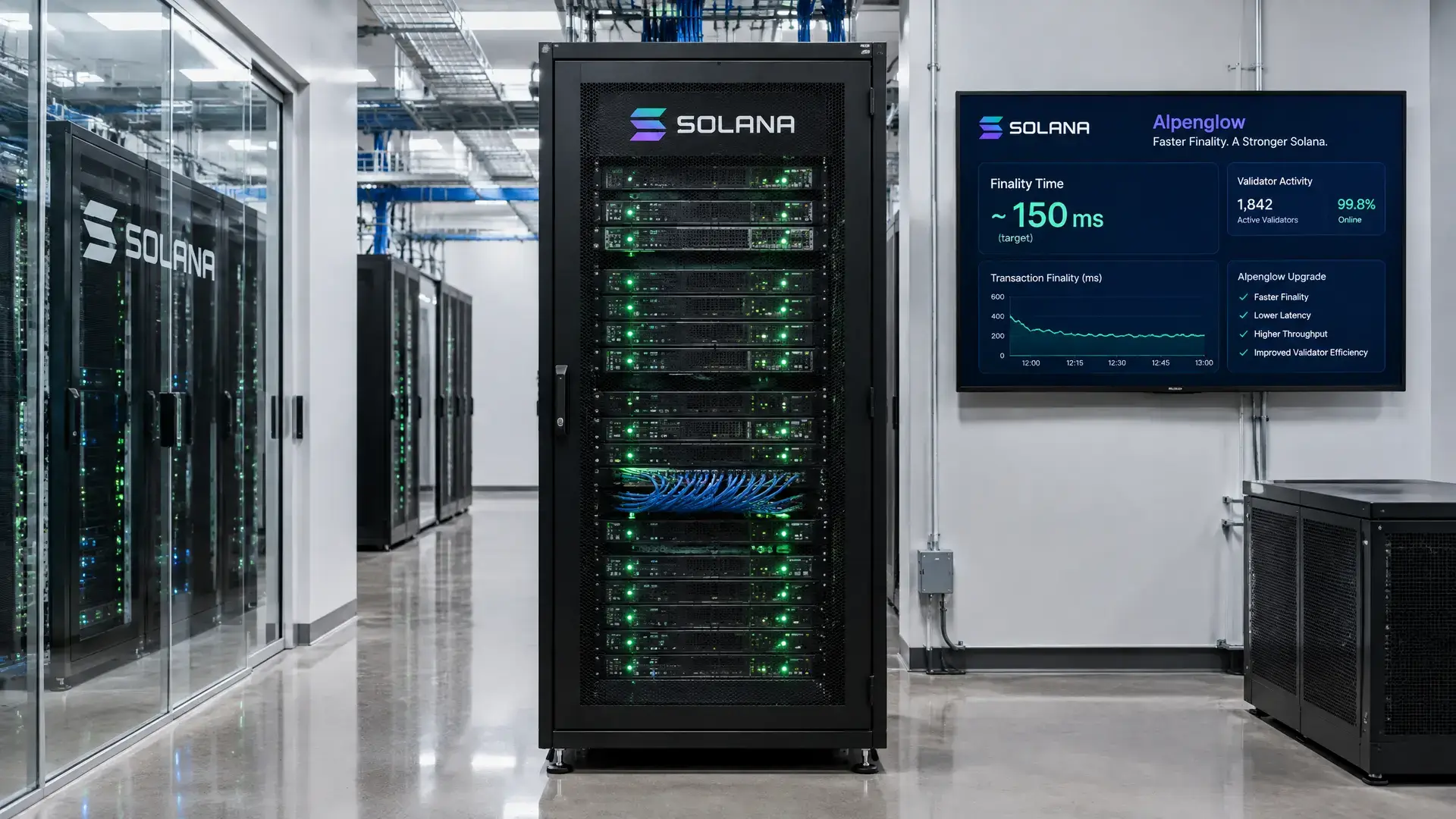
The network is validated by validators. These are computers that process transactions and work together to determine which data is correct. Solana uses Proof of Stake for this. A validator’s influence depends on the SOL delegated to it.
Solana also uses Proof of History. This is a verifiable timeline that helps record the order of events. It doesn’t replace validation by validators.
An example of Solana
Say you perform an action in an app on Solana. That action is sent to the network as a transaction.
Validators check the transaction and carry out the instructions. If everything checks out, the changes are recorded. You pay a fee in SOL for this transaction.
Why is Solana important in crypto?
Solana is a blockchain where developers can build applications. That’s why news about new apps, network updates, or the use of SOL may be about Solana.
The network tries to process transactions that don’t affect each other at the same time. This can help with processing, but not all transactions can always run in parallel. Transactions that want to change the same account must be processed one after another to keep things safe.
Network outages may also feature in news about Solana. In the past, Solana has had periods when no new blocks were confirmed. This shows that a blockchain can have availability issues, but it doesn’t automatically prove that the network isn’t working now.