Solana Sets Alpenglow Live for October 21
The upgrade replaces TowerBFT and is meant to speed up finality, which is especially relevant for validators and apps that rely on fast settlement.
Key Takeaways
- Solana is planning Alpenglow for October 21, with the goal of making transactions final in about 150 milliseconds.
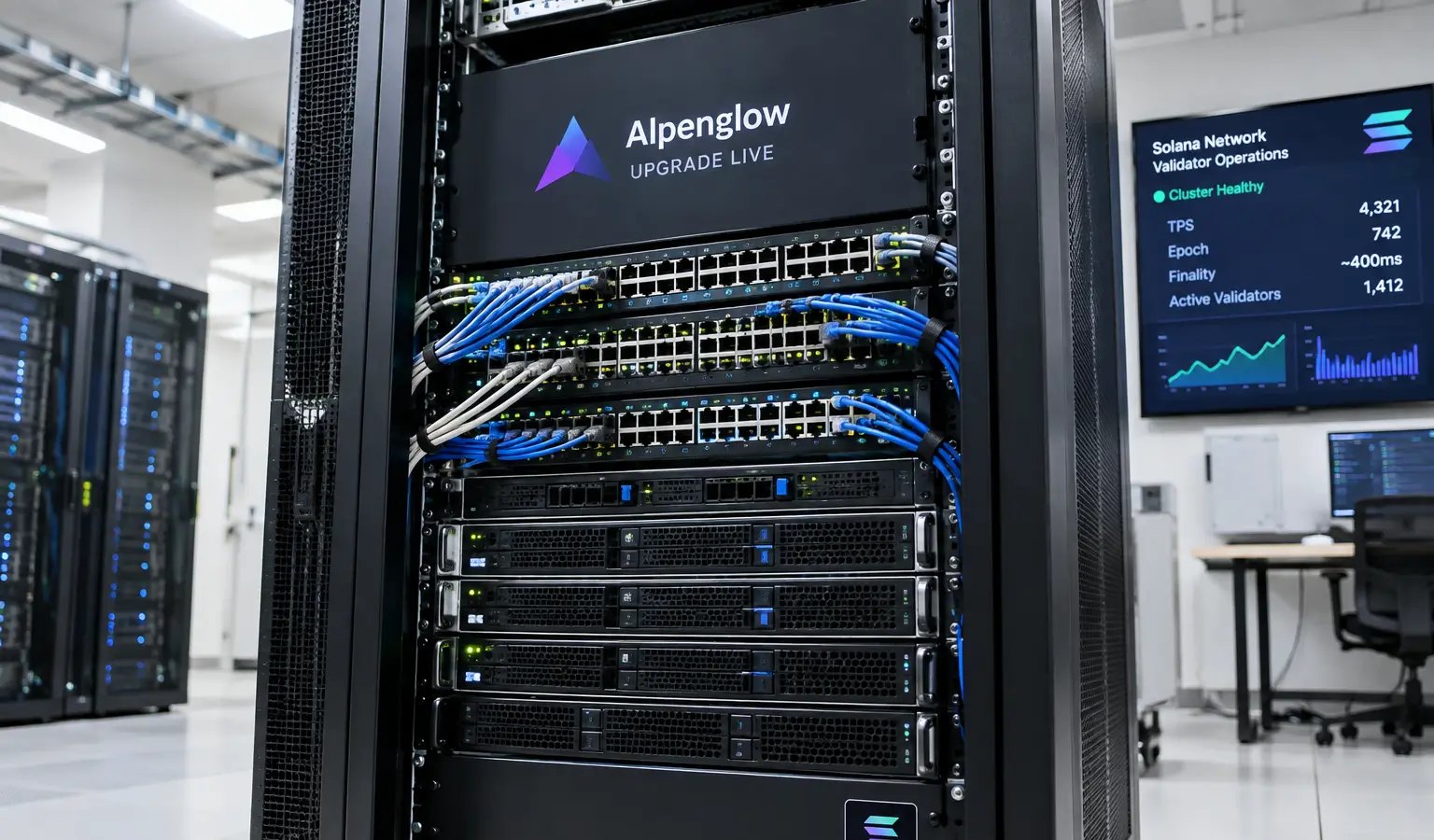
- The upgrade replaces TowerBFT and lets validators bundle approvals into a certificate for faster finality.
- Validators will need to move to Agave 4.3.0; voting costs will disappear and be replaced by a fixed 0.8 SOL access fee.
Solana has scheduled October 21 for Alpenglow, a major upgrade that is supposed to make transactions final in about 150 milliseconds. That changes how the computers on the network agree on payments and blocks.
What Alpenglow Changes
The upgrade replaces TowerBFT, the voting system Solana has used since its launch in 2020. Instead of putting votes on the blockchain as regular transactions, validators will soon be able to exchange them directly and bundle enough approvals into a certificate that makes a block final after one or two voting rounds.
Solana does stress that those 150 milliseconds remain a target. The actual speed depends on network conditions at the time. For users, the main change is that a payment will not only seem to go through quickly, but will also get the stronger assurance much faster that it can no longer be reversed.
What This Means for Validators
The move also requires something of validators. Operators will need to run software based on Agave 4.3.0. Firedancer and Frankendancer, alternative programs for running validators, do not support the first migration, which means their operators will have to switch over temporarily.
The cost structure is changing too. The current voting costs of about 1 SOL per epoch will disappear and be replaced by a fixed access fee of 0.8 SOL. An epoch is the period in which Solana divides up network responsibilities.
The migration is scheduled for epoch 1064, which is expected to begin around 15:00 UTC on October 21. Solana will keep using the old voting system for the first 5,000 slots, the short windows for block production, and then switch to Alpenglow about 18 minutes later.
Why This Matters
For European crypto readers, the main point is that Alpenglow shows how quickly Solana wants to keep tightening payment settlement. That could matter for parties that rely on fast finality, such as merchants and cross-chain bridges. At the same time, the upgrade could also affect how network activity is measured, because validator votes will disappear from blocks and the transaction count could therefore come out differently.
Earlier, Solana had already taken steps toward that faster settlement with Alpenglow on testnet, where developers could try out the new finality before the mainnet rollout was scheduled.