IMF Warns Dollar Stablecoins Could Accelerate Currency Crises
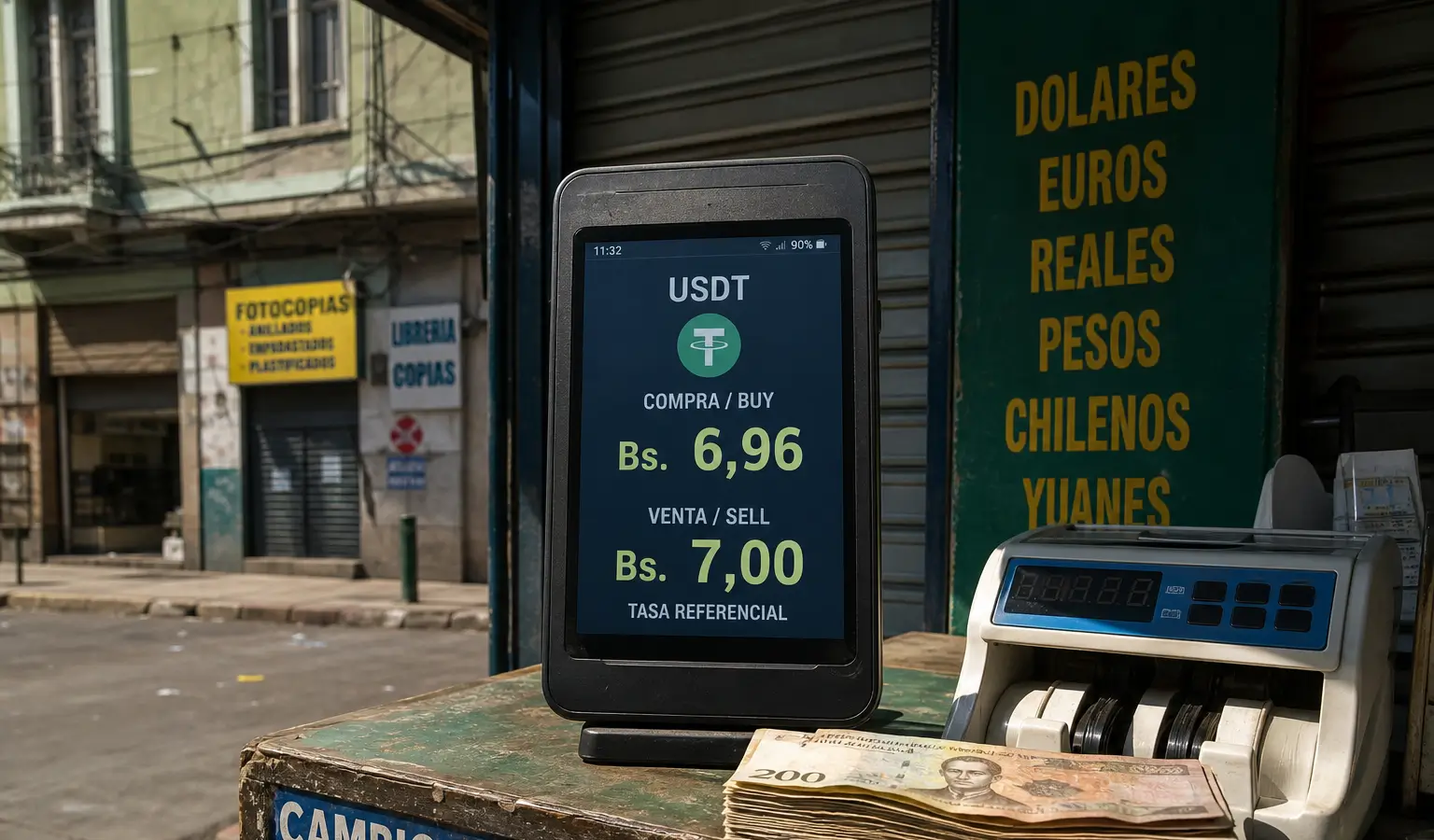
The IMF says the biggest risk shows up in fixed exchange rate systems: a visible USDT price can speed up a rush into dollars in places like Bolivia. That makes stablecoins useful in calm periods and risky when currency stress starts to build.
Key Takeaways
- The IMF warns that dollar stablecoins could speed up a currency crisis in countries with an overvalued fixed exchange rate.
- According to the paper, a visible stablecoin price can pull parallel markets into alignment and push households toward dollars faster.
- In Bolivia, virtual asset transactions grew twelve times after rules were loosened, and USDT became a daily reference for the parallel dollar.
A new working paper from the International Monetary Fund says dollarstablecoins could make a currency crisis move faster in economies that are trying to defend an overvalued fixed exchange rate. The IMF argues that a highly visible stablecoin price can bring together scattered signals from parallel markets, which may cause households to move into dollars more quickly.
Stablecoins as a Price Signal
When a country’s official exchange rate is far from the market rate, foreign currency tends to get scarce. At that point, trading often shifts into parallel markets, where street dealers, brokers, and banks may all quote different prices. The IMF says a dollar-pegged token such as Tether can cut through that fragmentation because its price on crypto exchanges is always visible and can become a common benchmark.
That can be helpful when conditions are stable. Households may find it easier to access dollars and protect themselves from local currency risk. But the same public price can also help coordinate a run, since many market participants are reacting to the same signal at the same time.
The paper describes this as a state-dependent effect: stablecoins can improve welfare in calm periods, but they also raise crisis risk once a peg drifts too far out of line. The IMF has long said stablecoins can encourage currency substitution, which weakens demand for local money and puts pressure on monetary sovereignty.
Bolivia Shows the Effect
The paper uses Bolivia as an example. After the central bank loosened restrictions on virtual asset transactions in June 2024, those transactions in the financial system became twelve times larger between July 2024 and May 2025. From there, the USDT rate against the boliviano turned into a daily reference for the parallel dollar, and the central bank even began posting USDT prices on its website.
That lines up with broader IMF concerns about stablecoins. The institution has previously warned that they can fragment payment systems when interoperability is weak, and that they can make capital flows more volatile when people can get around capital controls. In a fixed exchange rate system, that matters because a stable token can become another channel for currency pressure.
What the IMF Model Suggests
Tan models three economies: one that relies on cash only, one where stablecoins simply lower access costs, and one where the public price is also more informative. In the model, average crisis exposure rises from 3.9 percent in the cash-only economy to 7.4 percent in the full stablecoin version. Under the most severe misalignments, that increases to 12.9 percent.
The paper also shows why this debate is still complicated. The welfare gain tops out at around 1.2 percent in calm conditions, but turns negative when the misalignment becomes severe. For European crypto readers, the main point is that this kind of analysis could make the stablecoin policy debate even sharper, especially as governments and regulators around the world build rules for dollar stablecoins and their role in payments. In Europe, that discussion is already picking up too, since the European Commission is taking another look at MiCA with stablecoins at the center of the conversation.