Trump Wants to Use Stablecoins to Boost Dollar Dominance
Washington sees USDT and USDC as a way to strengthen the dollar internationally, with extra demand for Treasuries as a possible side effect.
Key Takeaways
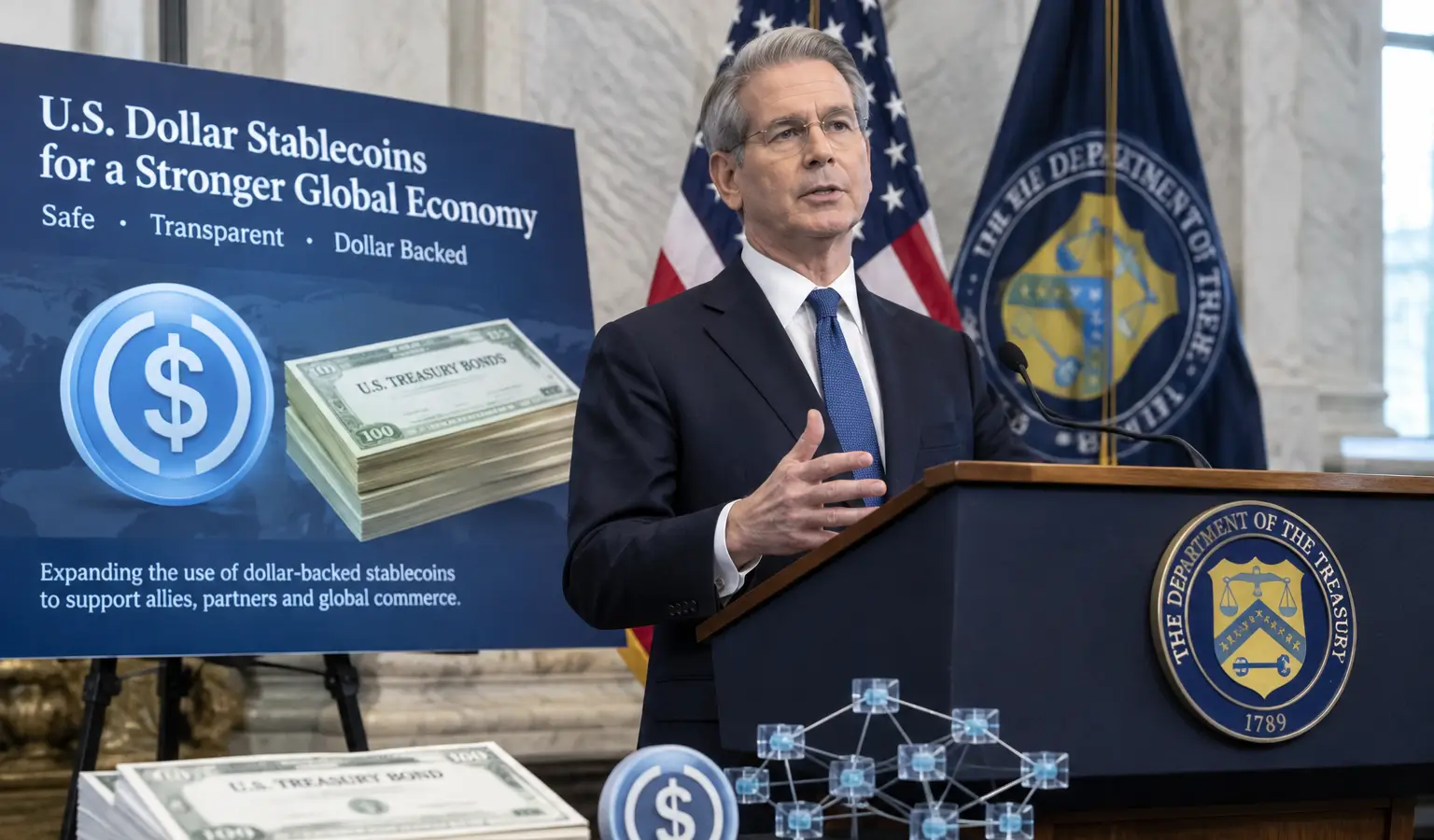
- The Trump administration is considering promoting dollar stablecoins internationally to strengthen the dominance of the U.S. dollar.
- The plan could create extra demand for U.S. government bonds, since stablecoin issuers hold reserves in dollars and short-term Treasuries.
- The IMF, BIS, and the Financial Stability Board warn that broad adoption of USD stablecoins could increase dollarization, capital flight, and financial instability.
Washington is looking at stablecoins as a way to strengthen the position of the American dollar as the dominant global currency. According to Bloomberg, the Trump administration is considering a plan that would involve joint ventures with private companies to promote dollar stablecoins abroad. The goal is not only to support the dollar, but also to create extra demand for U.S. government bonds.
Plan Around Dollar Stablecoins
The plan could involve the Treasury Department and the State Department, along with the U.S. International Development Finance Corporation. Stablecoins are blockchain tokens tied to an outside asset, usually the U.S. dollar. They are widely used for crypto trading and cross-border payments.
USDT and USDC, the two biggest stablecoins in the world, are both pegged 1 to 1 to the dollar. Together, they make up almost 90% of the total stablecoin market, which is worth $292.49 billion (€256 billion) according to the provided figures. Stablecoin issuers hold reserves for this, including dollars and short-term U.S. government bonds.
Under the Genius Act, stablecoin issuers must hold reserves in things like dollars and short-term Treasuries. Treasury Secretary Scott Bessent previously called dollar stablecoins a tool to support the dollar’s dominance. He also pointed out that the dollar makes up nearly 90% of currency transactions. Banks and payment companies are also continuing to build out this market: major banks are working on their own dollar stablecoin as demand and regulation increase.
Why This Matters for Crypto
For the crypto market, this matters because stablecoins are one of the main links between traditional money and crypto. If the U.S. government actively promotes dollar stablecoins internationally, that could further expand the role of stablecoins in payments and trading. At the same time, it shows that stablecoins are not just a crypto product, but are also becoming a geopolitical tool.
Risks for Emerging Markets
The downside is mainly for emerging economies. The IMF, the BIS, and the Financial Stability Board have previously warned that broad adoption of USD-pegged stablecoins could strengthen dollarization, bypass capital controls, and put pressure on financial stability. In countries with a current account deficit, that could increase the risk of capital flight.
That is because stablecoins move money over blockchains, outside traditional banking channels. That makes it harder for central banks and governments to track and steer those money flows. If dollar stablecoins are also used more widely in everyday payments, that could further reduce the room for local monetary policy.