U.S. Bank Tests USBDC Stablecoin on Stellar
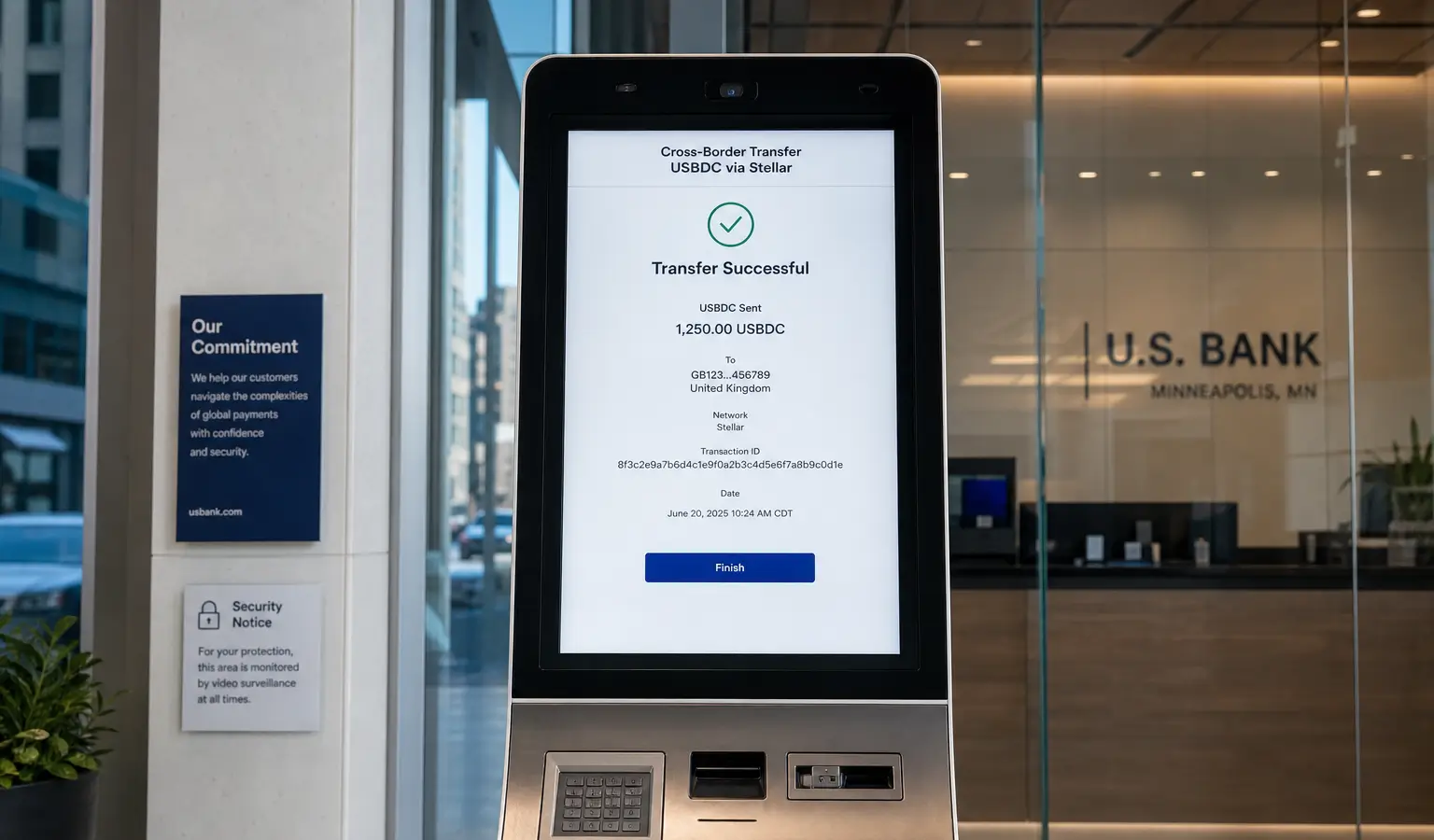
The bank tested the coin on Stellar for a live cross-border payment between North America and Europe. U.S. Bank is now also exploring uses for treasury and liquidity management.
Key Takeaways
- U.S. Bank tested its USBDC stablecoin with a live cross-border payment between North America and Europe.
- The test showed that USBDC can be minted, redeemed, frozen, and recalled through the Digital Asset Platform.
- U.S. Bank is exploring broader uses for payments, treasury, and liquidity management, but it has not named a commercial launch date yet.
U.S. Bank is putting its own USBDC stablecoin further on the map after a live cross-border payment between bank units in North America and Europe. The bank is now exploring broader uses for payments, treasury, and liquidity management, but it has not given a date for a commercial rollout yet.
Live Test With USBDC
The Minneapolis-based bank said the transaction showed that USBDC can be minted, redeemed, frozen, and recalled. In doing so, U.S. Bank tested not just the coin itself, but also the internally developed Digital Asset Platform that connects blockchain networks to systems for finance, compliance, risk, and operations.
According to CEO Gunjan Kedia, the pilot shows that the bank can make global cash management and money movement faster. The test ran on the Stellar blockchain and followed the November announcement that U.S. Bank is experimenting with its own stablecoin issuance together with the Stellar Development Foundation.
More Banks Are Getting Involved
The move fits into a broader trend among major financial institutions. Last week, 21 banks and financial firms, including Bank of America, Citi, Goldman Sachs, and UBS, announced plans to set up a company together for a dollar stablecoin. That group is aiming for a launch in the first half of 2027 and may later add other currencies.
Interest in stablecoins is also growing in Europe. In May, European banks formed the Qivalis consortium to develop a euro-backed stablecoin. For banks, the appeal is clear: stablecoins can make cross-border payments and digital asset settlement easier, while also being useful for treasury and collateral processes.
Why This Matters
For European crypto followers, the key point is that stablecoins are increasingly being tested outside the crypto market itself. If major banks use these tokens for payments and liquidity, that could further narrow the gap between traditional finance and blockchain. At the same time, the commercial rollout of USBDC is still undecided, so the practical impact remains limited for now.
Other major players are also using stablecoins more and more for international payments. For example, Circle bought a payments platform in Asia to position USDC better for cross-border business flows and stronger payment rails in the region.