XRP Demand Cools, But Funding Signals a Possible Rebound
The slowdown is showing up in wallets, futures, and U.S. spot XRP ETFs, while deeply negative funding rates are hinting at a possible rebound.
Key Takeaways
- On-chain activity on the XRP Ledger slipped in July, with fewer active wallets and the weakest new-wallet creation since November 2024.
- The futures market and U.S. spot XRP ETFs also softened, with lower open interest and a net outflow of $7.29 million on July 8.
- Analysts say extremely negative funding rates could signal too much bearish positioning, even though the market is still split.
XRP started July with weaker demand across the board. Activity on the XRP Ledger slowed, futures trading became less active, and inflows into spot ETFs also dried up. At the same time, deeply negative funding rates suggest traders may have leaned too far into the bearish side.
Less Activity on the Ledger
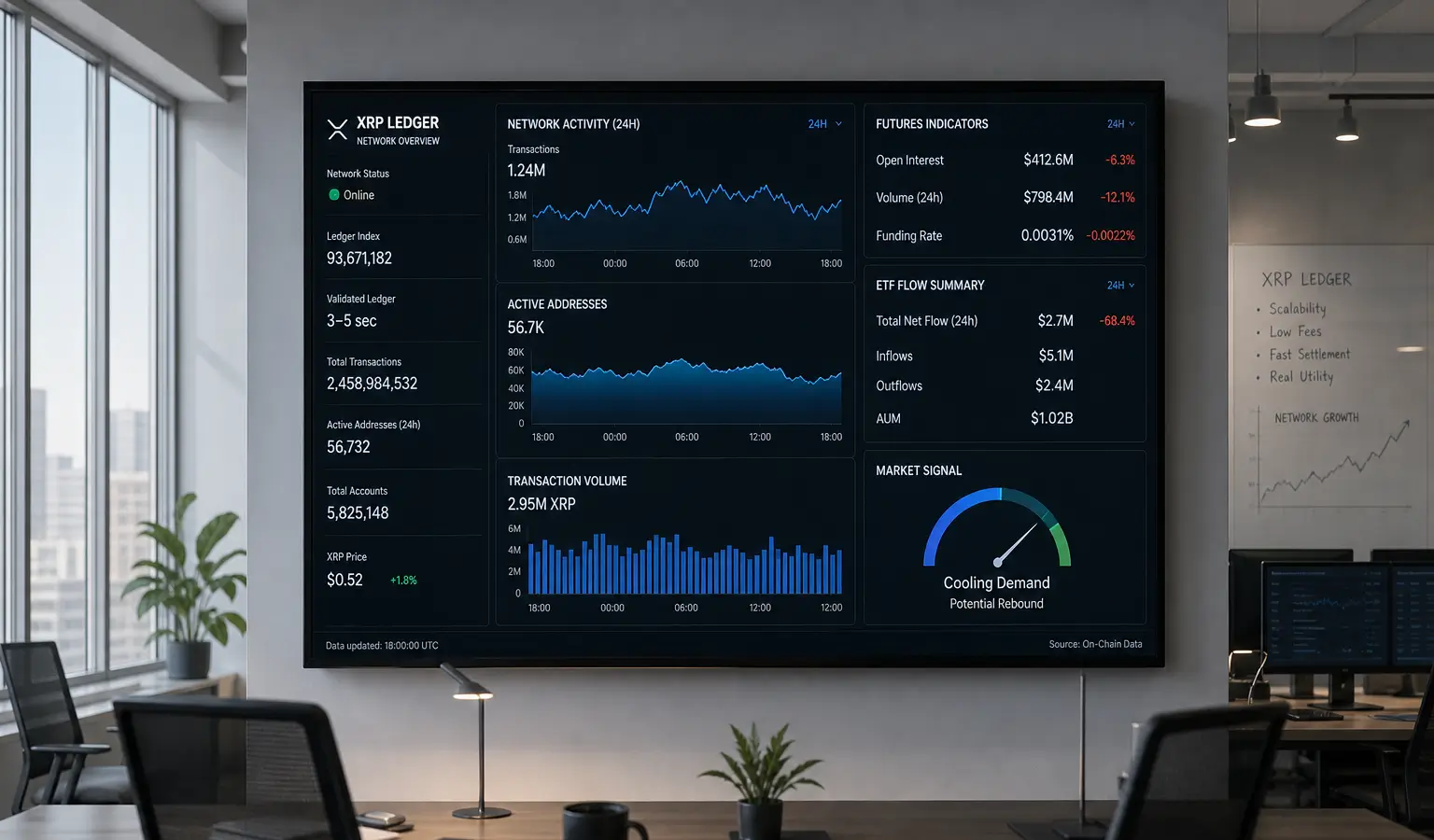
According to Santiment, active wallets on the XRP Ledger dropped to 25,350 in July, which was the second-lowest daily reading of 2026. New wallet creation also fell to 2,130, the weakest level since November 2024.
That slowdown fits a broader pattern of traders waiting for stronger confirmation before stepping back in. Santiment said the dip buying seen in late June has faded, and many market participants are now looking for a real catalyst instead of chasing a small bounce. That also ties into the wider discussion around the network, including the rollout of new XRP Ledger software and whether those upgrades are being adopted quickly enough.
Futures and ETFs Weaken
Derivatives activity also cooled. Open interest in XRP futures on Binance slipped to about 397 million XRP, the lowest level in more than three months. When open interest falls during a price drop, it often means traders are cutting leverage and reducing risk.
The institutional picture was softer too. U.S. spot XRP ETFs recorded a net outflow of $7.29 million on July 8, the largest daily outflow since March. Over the same week, Bitcoin and Ethereum ETFs turned positive, while XRP posted a negative week and snapped a nine-week run of inflows.
Why Analysts Still See Room for a Rebound
Even with those weaker signals, some analysts still think XRP could bounce. Darkfost noted that 30-day funding rates on Binance have turned extremely negative after XRP fell about 70 percent from its July 2025 peak. When positioning gets that one-sided, it can sometimes set the stage for a rebound.
XRP has also pulled back sharply from its all-time high of $3.66 (€3.20) in July 2025, but the market now has more institutional infrastructure than it did a year ago. The CLARITY Act in May 2026 added more regulatory clarity and could make it easier for institutions to hold XRP at a larger scale, while growth in tokenized assets and payments use could make the network more relevant over time. In Europe, Ripple also recently received a full MiCA license in Luxembourg, which further strengthens its broader institutional positioning.
For European crypto readers, the main takeaway is that XRP is no longer being driven by price alone. Liquidity, ETF flows, and activity on the ledger all matter now. If one of the catalysts above starts to gain traction again, demand could improve quickly, but for now the setup remains mixed.